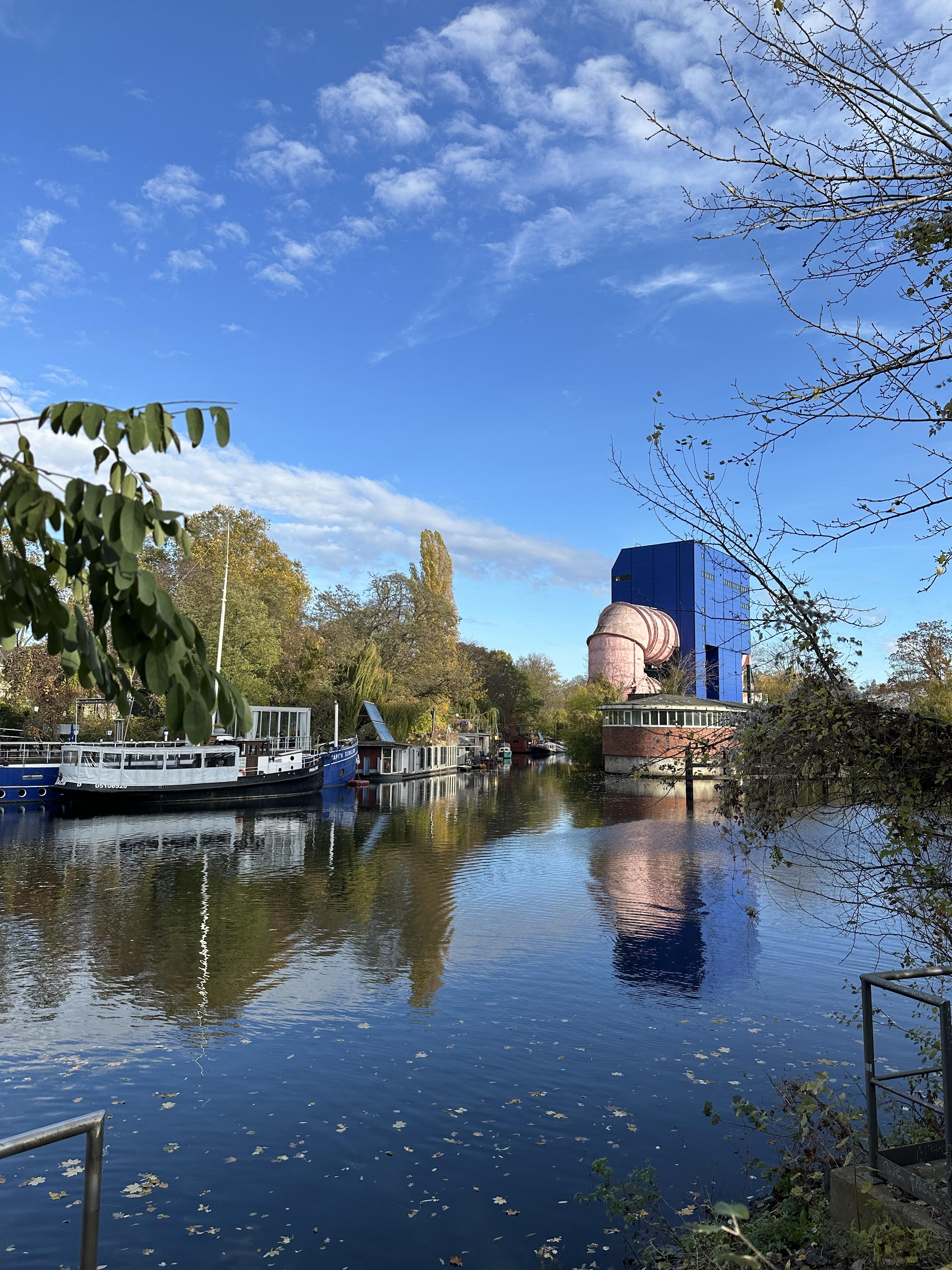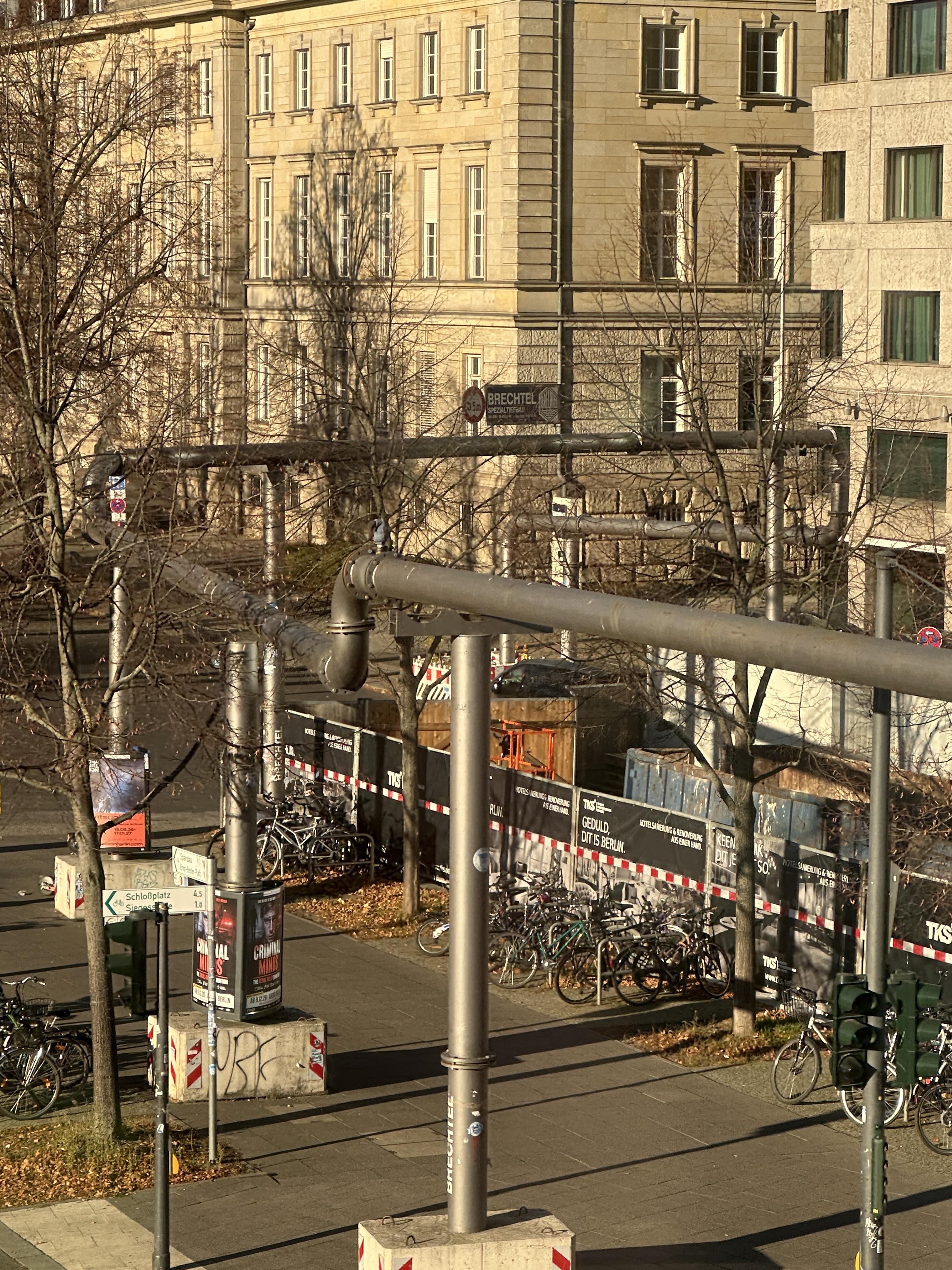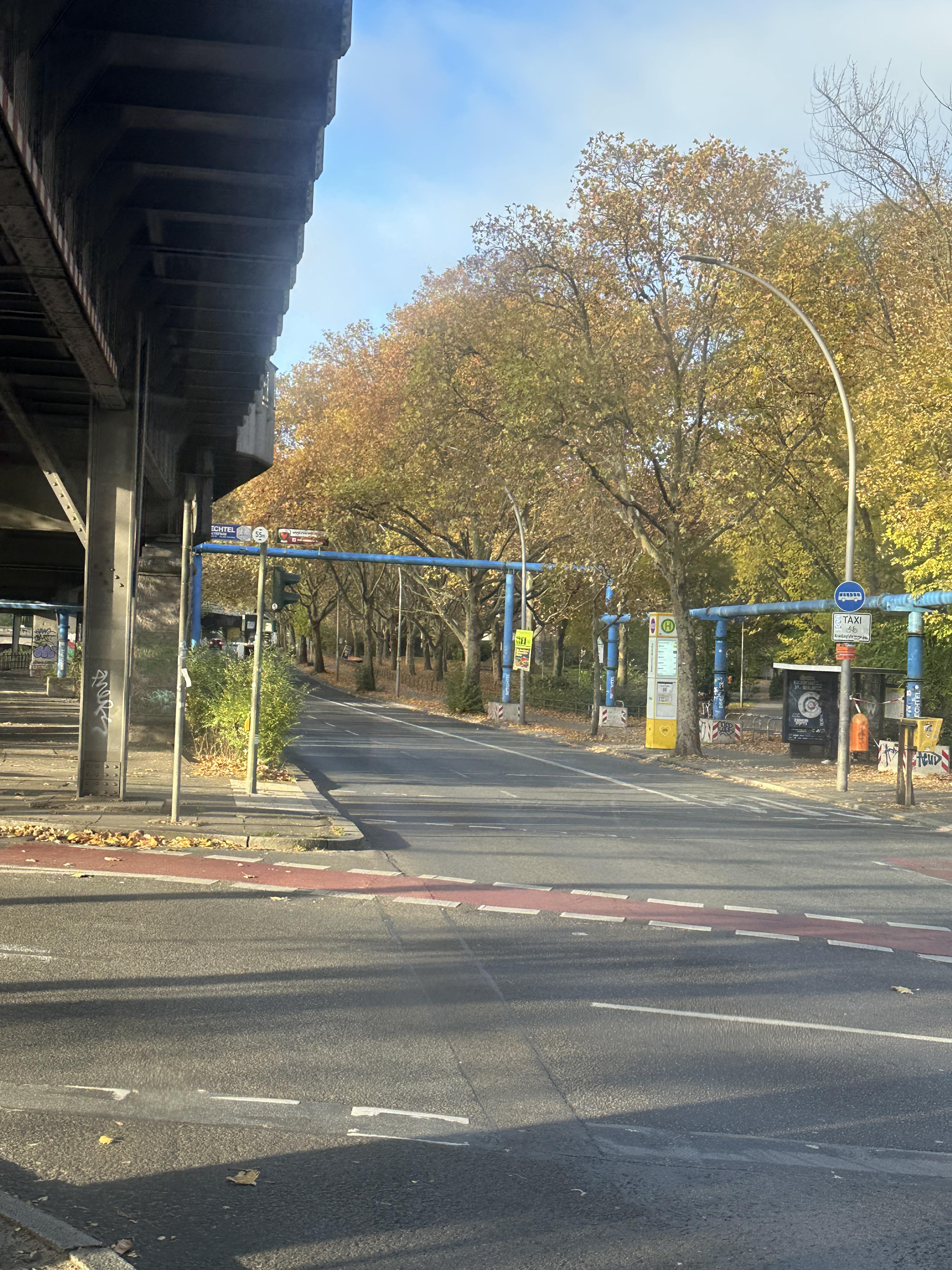
To keep construction sites dry, engineers pump groundwater out of the ground and redirect it through large colorful pipes, often toward a nearby river like the Spree. Since construction projects can take years to complete, these pipes can end up becoming a permanent part of the city!
While there are multiple pipe colors, the most common one you'll see is a pink one. But, why are they pink? The company, Pollems, has been supplying Berlin with a majority of the pipes and wanted to choose a color that invoked fun and youthfulness. It's certainly done its part in being a quirky part of the city that sparks conversation. Nowadays, other pipe companies have introduced new colors such as blue and purple! I've got to say, these colors are way better than having standard gray pipes. These wacky sprawling tubes feel like art pieces and add a lot of charm to the city!
James Hobrecht and the Radial System
During the Industrial Revolution, Berlin was named the capital of Germany and became a focus for expansion. This meant more people, more homes, more factories, and way too much sewage waste. To solve this problem, urban planner and engineer James Hobrecht developed a new sewage system in the 1870s called the Radial System.
Hobrecht divided Berlin into 12 zones, each with its own pumping station. Underground pipes collected wastewater from homes, businesses, and streets and transported it to these pumping stations. From there, wastewater was pumped outside the city to enormous agricultural fields called Rieselfelder (sewage farms). Berlin spread the wastewater across specially prepared fields. The soil and plants helped filter the water, while nutrients in the wastewater could be used to fertilize the land.