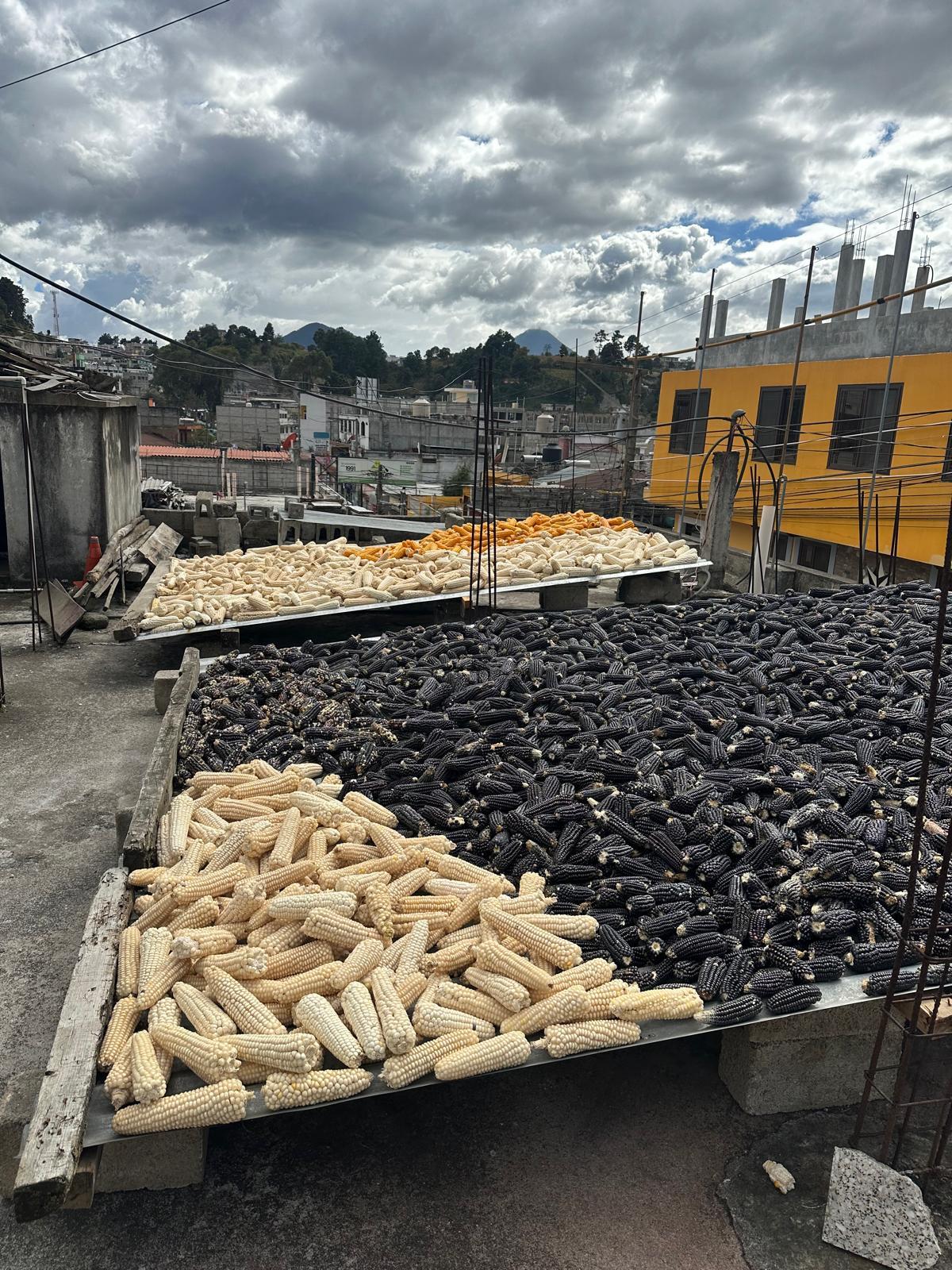
What they knew came from cultural practices passed down from generation to generation, which they knew worked because it produced healthy corn. These practices include adding cow manure to strengthen the soil, putting in the correct amount of corn seeds to maximize the number of ears you can harvest from your corn stalk and adding horse bean seeds when planting, which somehow helps get nutrients to the corn. I'm not exactly sure how it works, and neither were my local informants, but the corn seems to grow fine on its own after that. You only truly have to step in to check whether any outside forces are trying to stop your corn from growing.
So what are these outside forces? Being someone with significantly little environmental knowledge, I only know the basics. Despite this, I know that there are plenty of things that can harm your corn. For one, you have pesky weeds trying to steal nutrients from the soil that your corn needs to grow big and strong. As for another, you have animals that might wander onto your crops, like rats, worms or even dogs. The biggest issue I see affecting corn, though, is climate change. Climate change has gotten so bad worldwide that locals in my community, and even I, have noticed it. The biggest way this has affected corn is that the rainy season is no longer consistent. Now, it still rains around the same time every year, but the number of rainy days has significantly decreased. What this looks like is that, instead of 20 days out of 30 in a month of steady rain, it is now 12 days of stronger storms and higher winds. Corn needs water consistently throughout the week to survive.