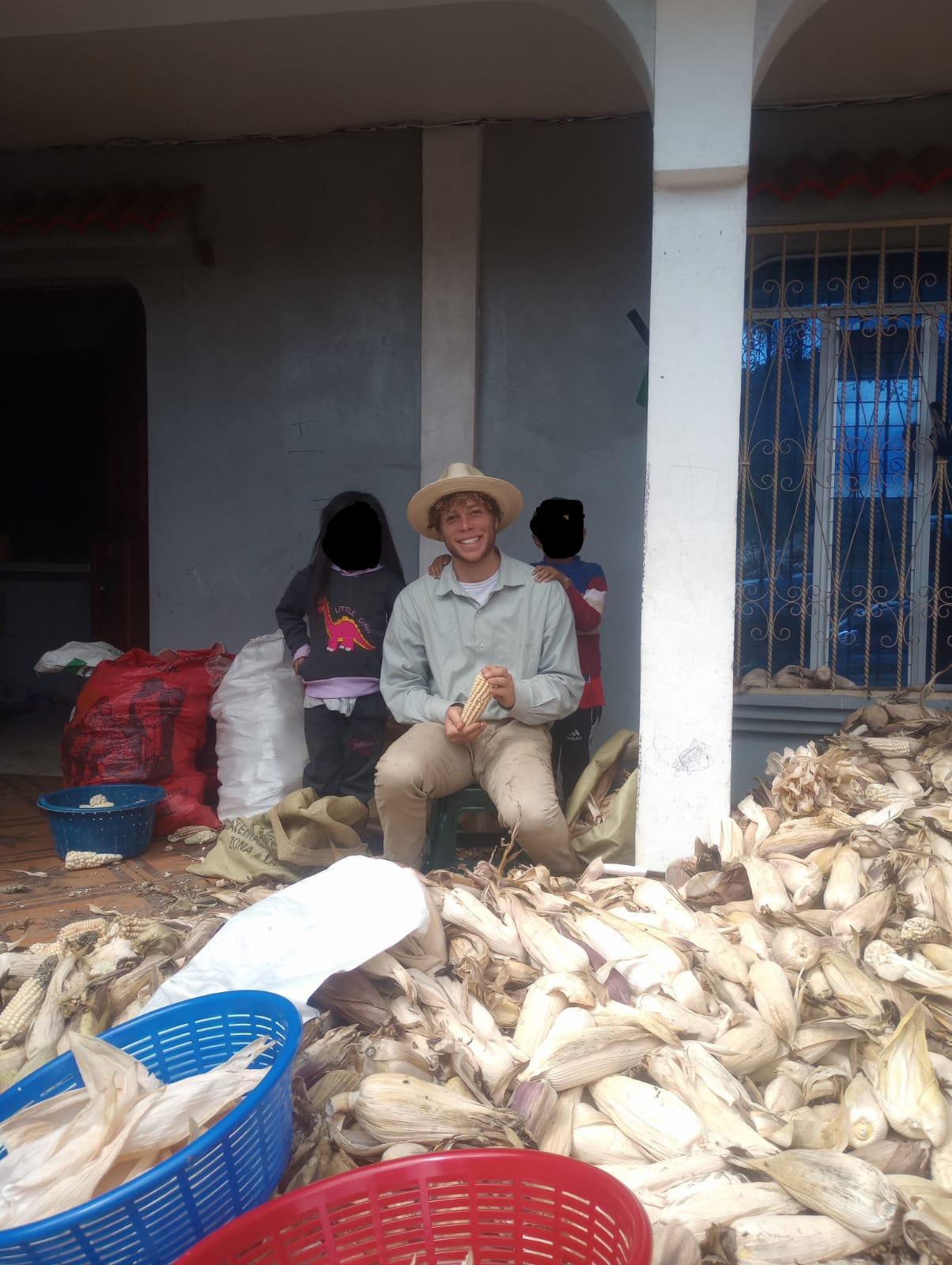
It doesn't just need it in big doses, but spread out so the soil can remain moist and the plant can grow. Because the number of rainy days is slowly decreasing, corn production is slowly going down due to the lack of rain. This hasn't necessarily affected the big farms with the best locations or Guatemala as a whole, to my knowledge, but it has affected the small local families who are just growing it out of their backyards. Sometimes, rain isn't as generous for them, and they lose a significant proportion of their crops. Corn can take up to four months to grow, and if these families lose just one rainy season, it is a significant setback to their corn production and their livelihood. Thus, though it might not be a big problem to Guatemala as a whole yet, it is still an issue that is affecting small families who need to be supported either by new, innovative farming techniques to account for the lack of rain, government support when corn production is slow or changes in environmental practices to combat climate change.