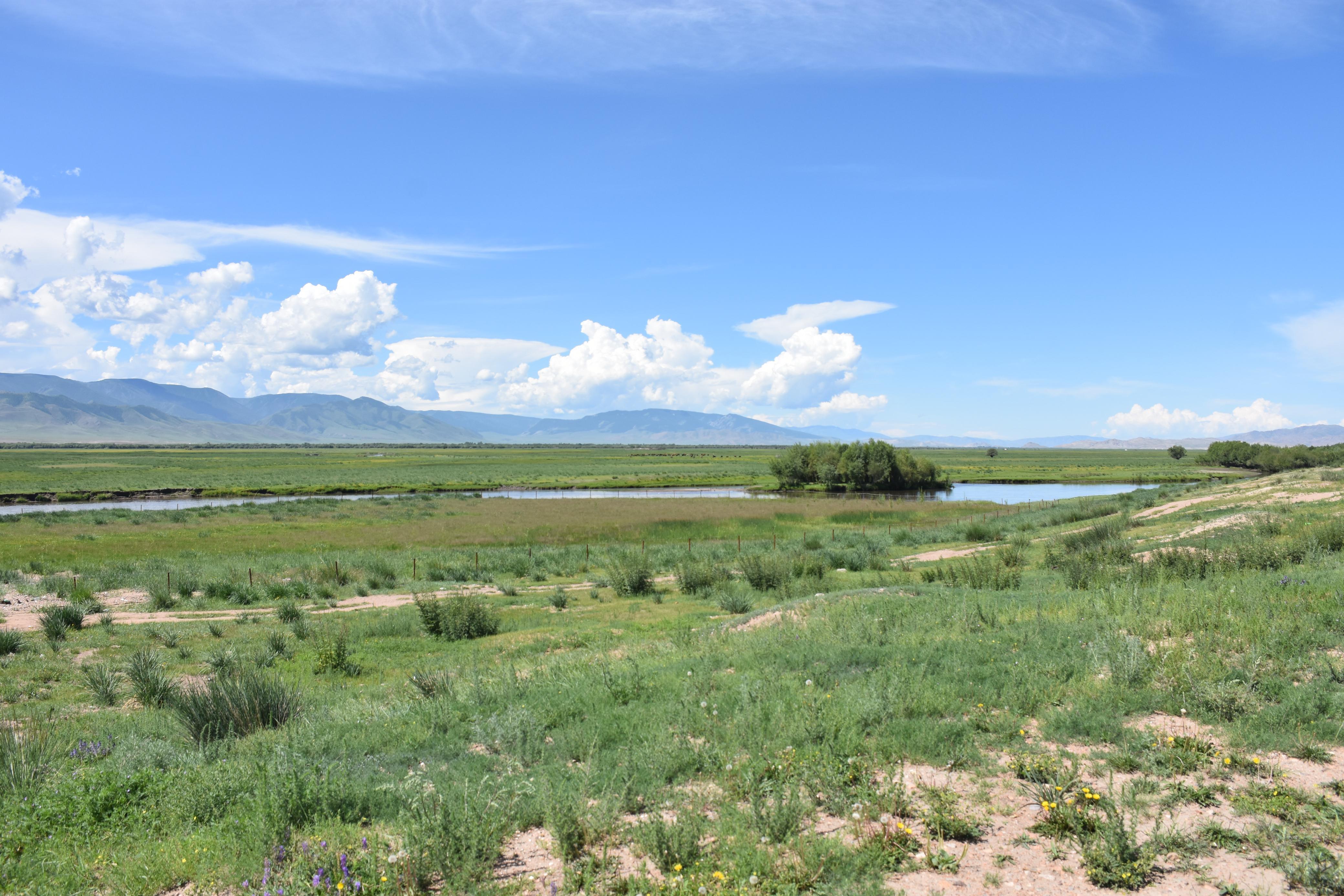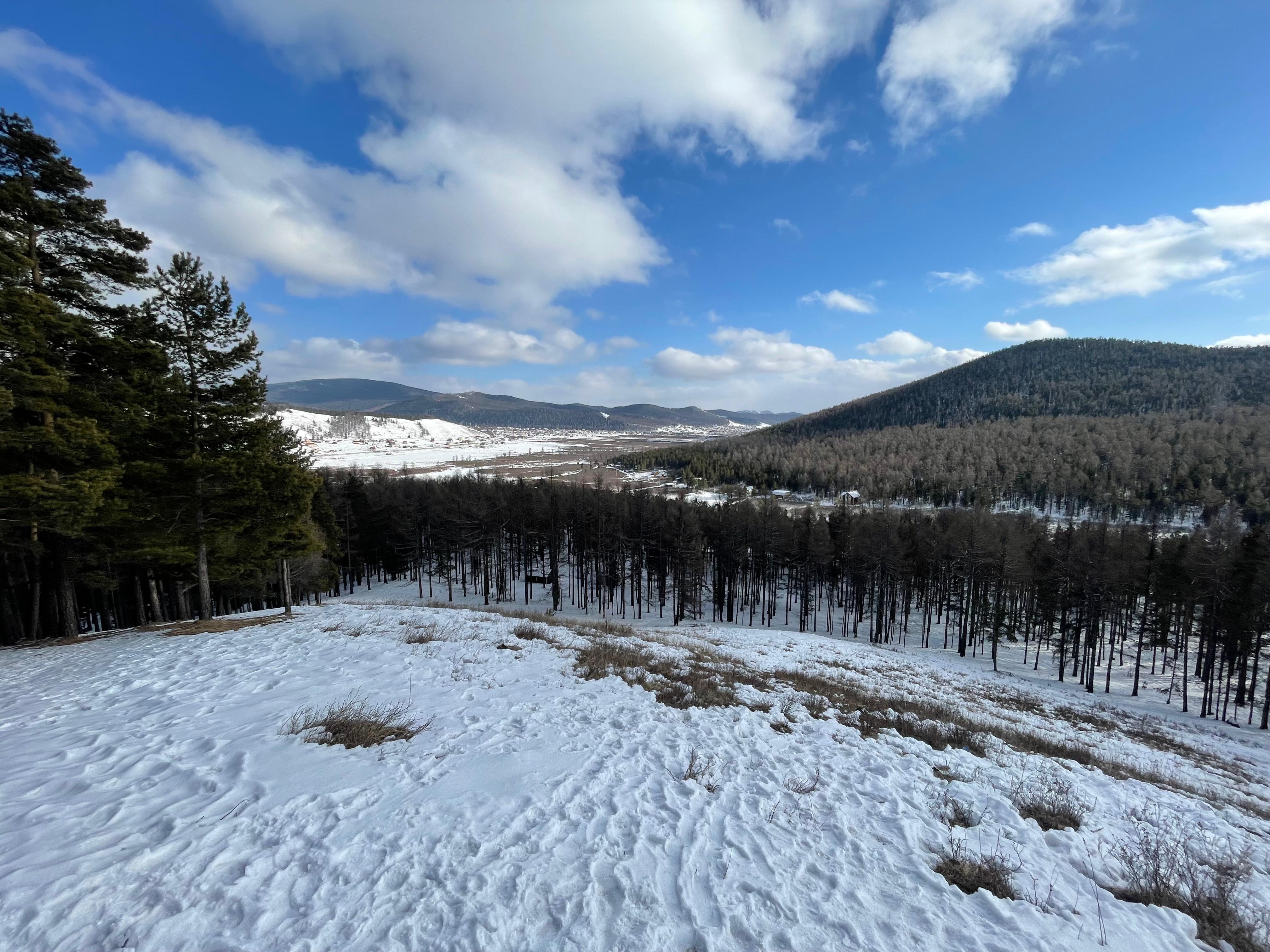
Something I did not know about Mongolia before moving here was that the entire country is at a higher elevation. In fact, over 80% of the country is more than 1,000 meters above sea level!
Due to the harshness of the environment, it is extremely difficult to do traditional farming in Mongolia. However, the grasses of the steppe are perfect for raising livestock. This is why Mongolians traditionally lived a nomadic lifestyle. The grasslands are vast, and this allows people to move with their flocks to find pastures and water sources. The kinds of livestock that are raised are also built for the environment, so utilizing their wool, leather and other parts of the animal helps Mongolians live in this climate. Mongolia is also home to cashmere goats, which are native to this high-altitude environment. Cashmere is the fine hair of the undercoat of the goats that helps these animals stay warm in the cold winters. In the springtime, Mongolians collect this undercoat hair to spin it into yarn for clothing, keeping them warm in the winter. In fact, this cashmere is known to be the highest quality in the world. This centuries-old tradition, born out of a need to stay warm, is still practiced today and is a significant part of the Mongolian economy!
There are many challenges to living in this environment, most notably the “dzuds.” Dzuds describe different kinds of weather disasters that can drastically impact life here. There are several types of dzuds including: