Food is a wonderful way to get a glimpse into a culture’s history, and Mongolia is no exception. Mongolian cuisine reflects the country’s environment, climate and lifestyle. Because Mongolia has extremely cold winters, short summers and limited farmland, Mongolians traditionally lived a nomadic lifestyle that depended on raising livestock. Families moved with their animals to find better pastures and water sources, often traveling across vast distances. Traditionally, Mongolians raised what are known as the “five snouts”: sheep, goats, cattle or yaks, horses and camels. Since they were constantly moving, their meals needed to be filling, simple to prepare and able to last a long time without spoiling (going bad).
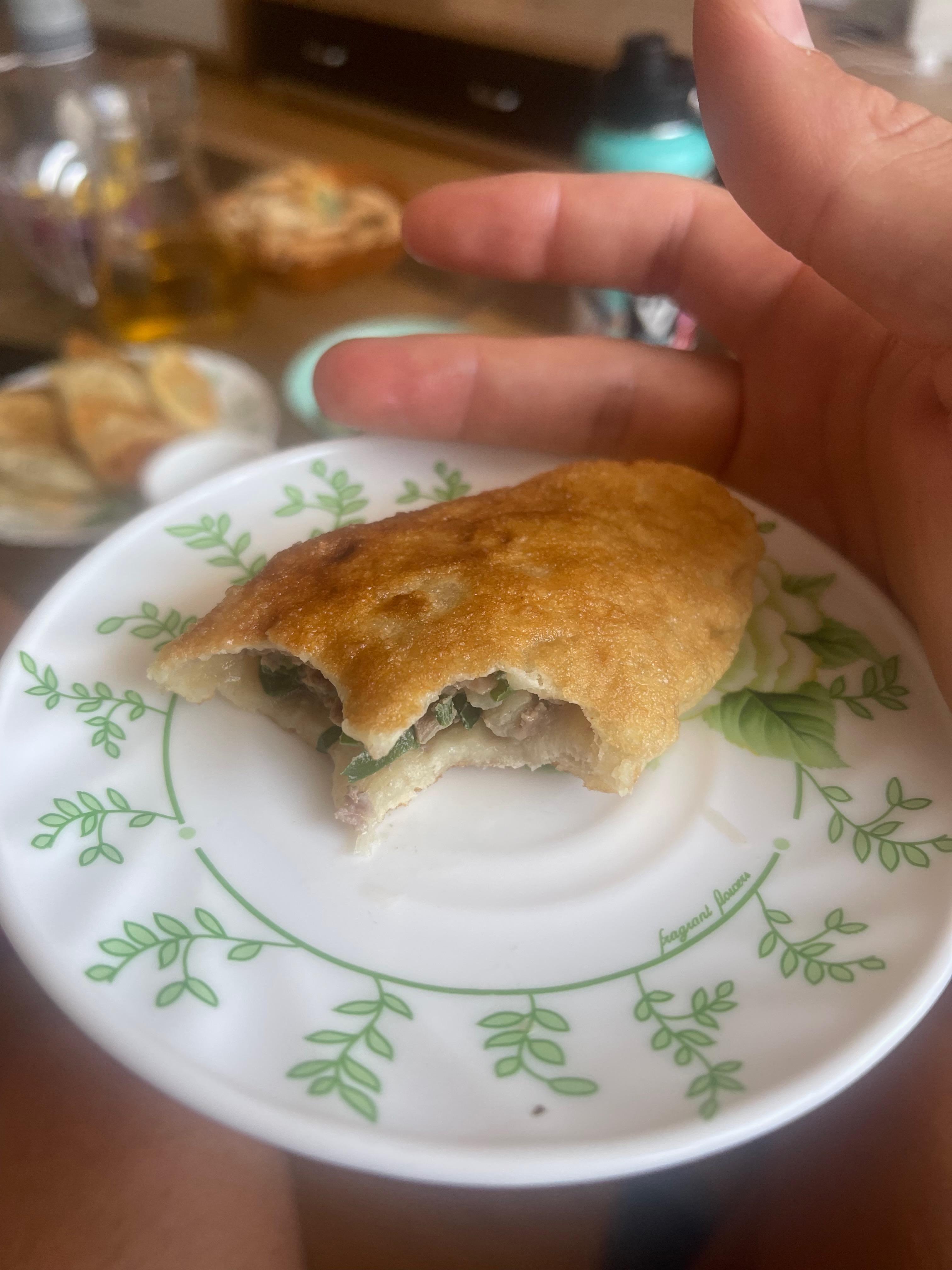
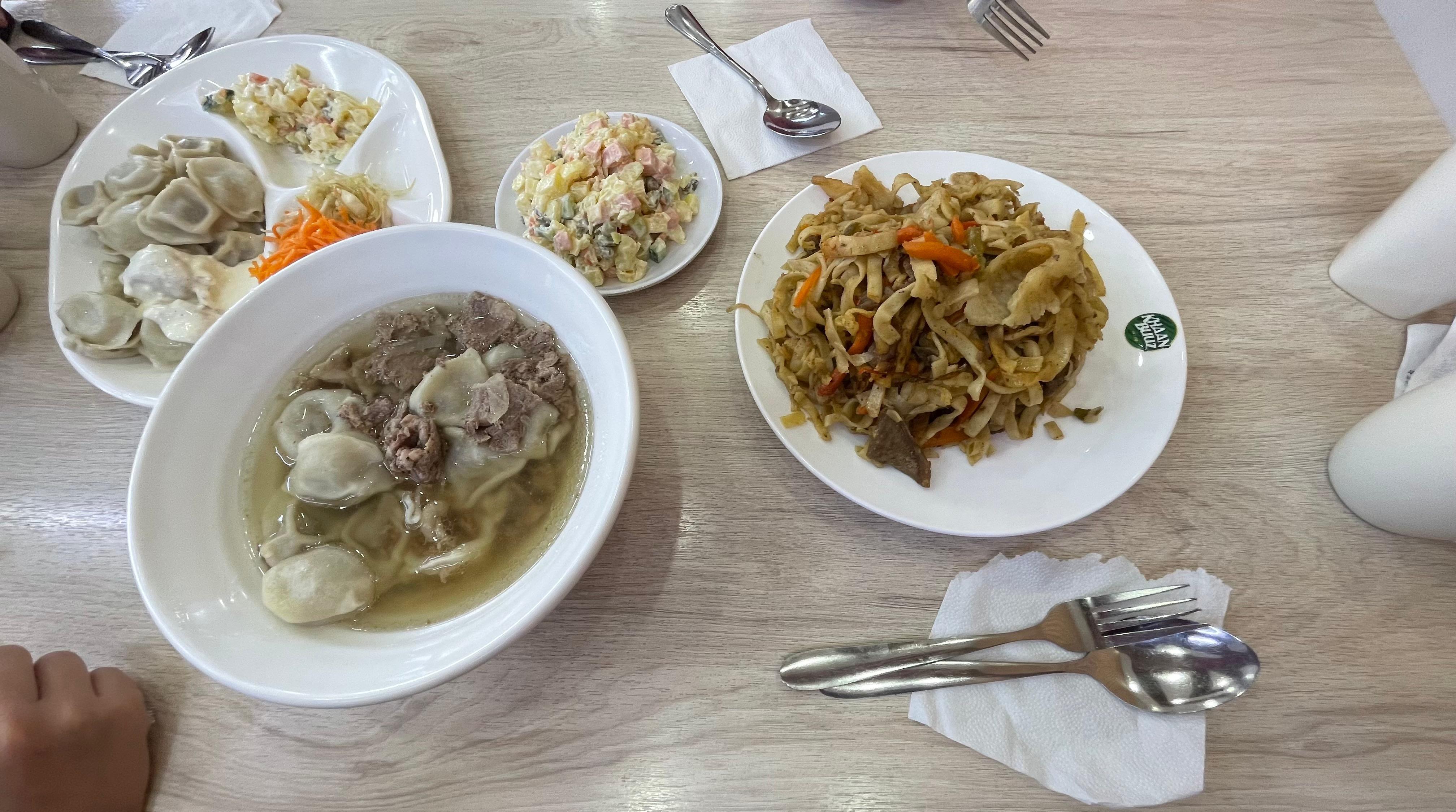
Two of the most popular Mongolian foods are buuz and khuushuur. Buuz are steamed dumplings usually filled with mutton, while khuushuur are similar dumplings that are fried. My favorite Mongolian dish, though, is tsuivan, a hearty stir-fry made with handmade noodles, meat, potatoes, onions and carrots. In winter, I especially enjoy suutei tsai, or salted milk tea. The salt might sound unusual, but it is warm, comforting and perfect for cold weather. For something sweet, I love sea buckthorn juice, made from a bright orange fruit I had never tried before coming to Mongolia.