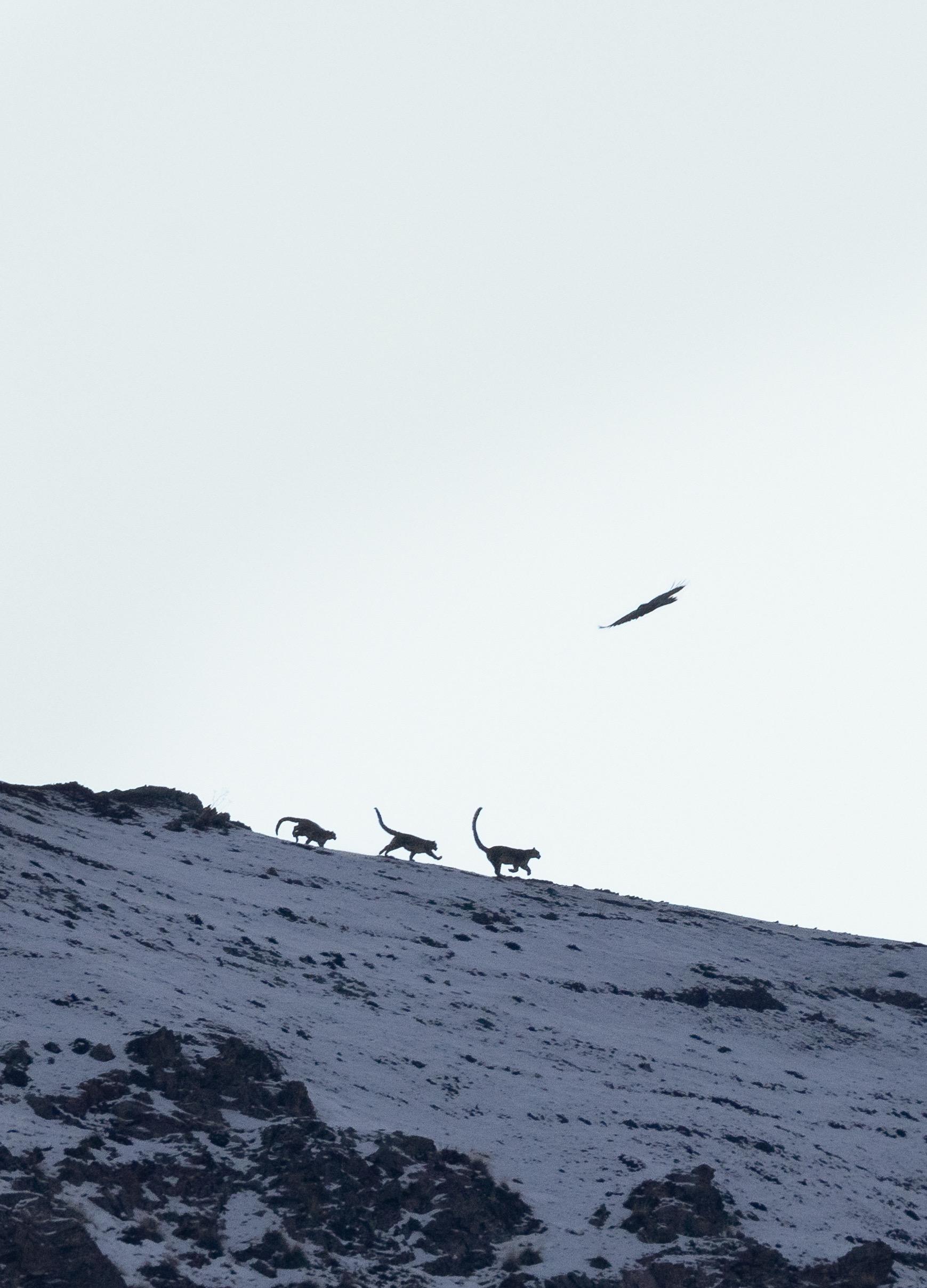
One of its most striking features is its long, thick tail, which helps with balance while navigating steep slopes and also wraps around its body for warmth when resting. Its wide paws act like natural snowshoes, spreading weight across the snow and ice. The snow leopard’s face is broad, with pale green or gray eyes and short, rounded ears that reduce heat loss.
Seeing a snow leopard, even briefly, creates a moment that feels unreal. After hours of scanning empty cliffs, the sudden realization that a living creature is moving among the rocks is overwhelming. There is an instant rush of excitement, followed by intense focus and stillness. Every movement slows, and every breath feels louder. Emotionally, the experience brings awe more than adrenaline. Knowing how rare and elusive these animals are makes the sighting feel like a privilege, like it’s almost something we weren’t meant to see. There is a deep sense of humility in witnessing a creature so perfectly adapted to an environment that humans struggle to endure. The moment also carries a sense of fragility, an awareness that such encounters depend on careful conservation and respect for wild places.
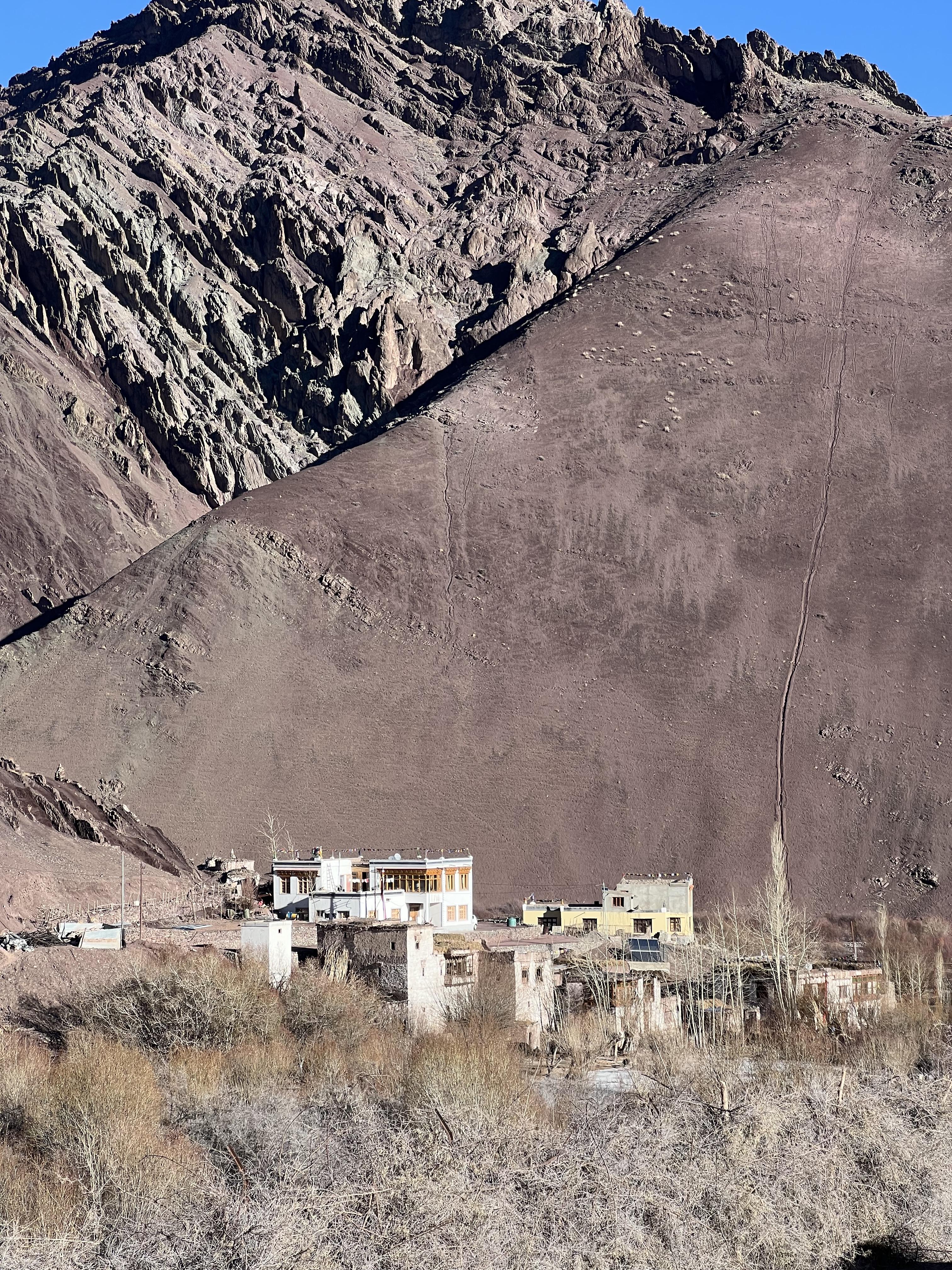
Snow leopards live in high-altitude mountain ranges across Central and South Asia, including the Himalayas, Karakoram, and Pamir Mountains. In Ladakh, they live in remote valleys, steep cliffs, and rocky ridgelines between roughly 9,000 and 18,000 feet above sea level. These areas are cold, dry, and often covered in snow for much of the year. The terrain is rugged and sparsely vegetated, dotted with patches of lichen and shrubs.