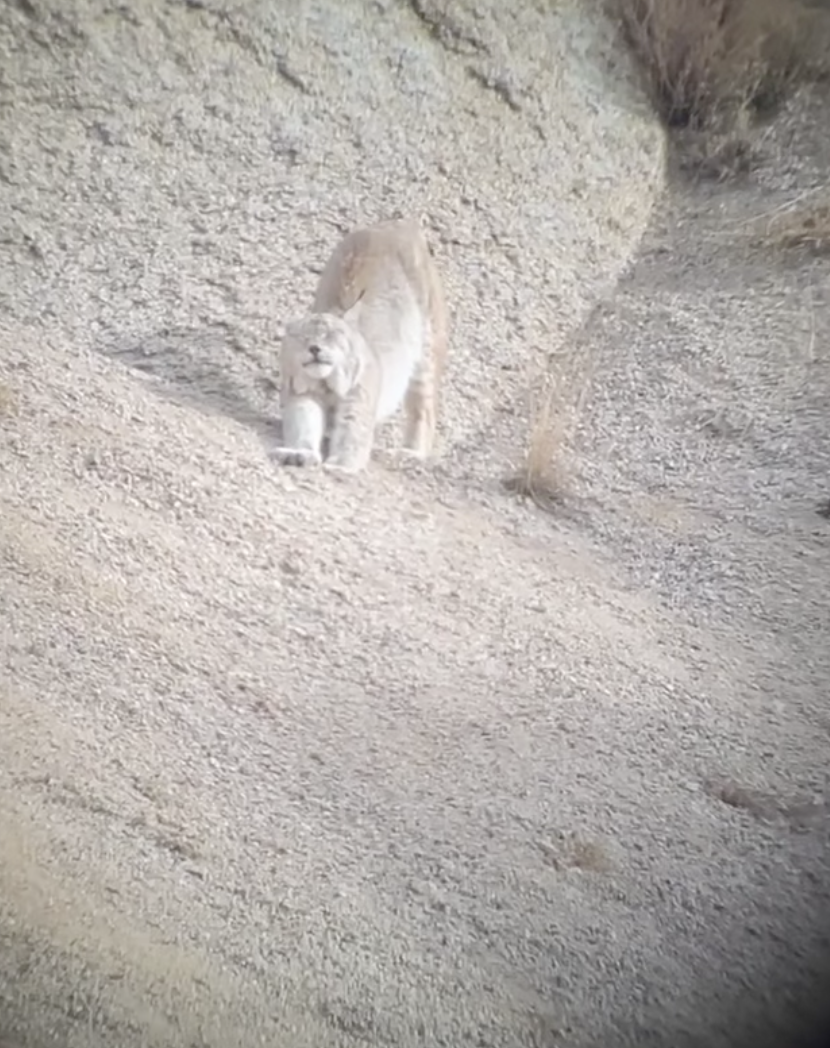
Snow leopards prefer landscapes with broken rock, ledges, and cliffs that allow them to remain hidden while stalking prey.
Snow leopards depend completely on their environment for both camouflage and hunting. Their spotted fur mirrors the texture and color of rocky slopes, allowing them to remain unseen even in open terrain. They use steep cliffs and narrow ledges as natural vantage points, waiting patiently above herds of blue sheep or ibex before launching sudden attacks. The cold, thin air reduces competition from other predators, giving snow leopards exclusive access to these high-altitude hunting grounds. Their long tails help them balance while moving across ice and stone, while their wide paws prevent them from sinking into snow. They also travel enormous distances across rugged terrain, using natural ridgelines and valleys as pathways.
Snow leopards face several serious threats, many linked to human activity. As communities expand into high mountain regions, habitat loss and increased contact lead to conflict. When snow leopards prey on livestock, herders may retaliate, sometimes killing the animals to protect their livelihoods. Feral dogs that make their way into snow leopard habitat can be a problem too: while one dog isn’t an issue, a full pack can scare a leopard away, preventing them from eating. Missing a meal can be really dangerous for a cat that has to hunt in the mountains! Climate change is also altering fragile alpine ecosystems, affecting prey availability and shrinking suitable habitat. Poaching remains another concern, driven by illegal trade in fur and bones.