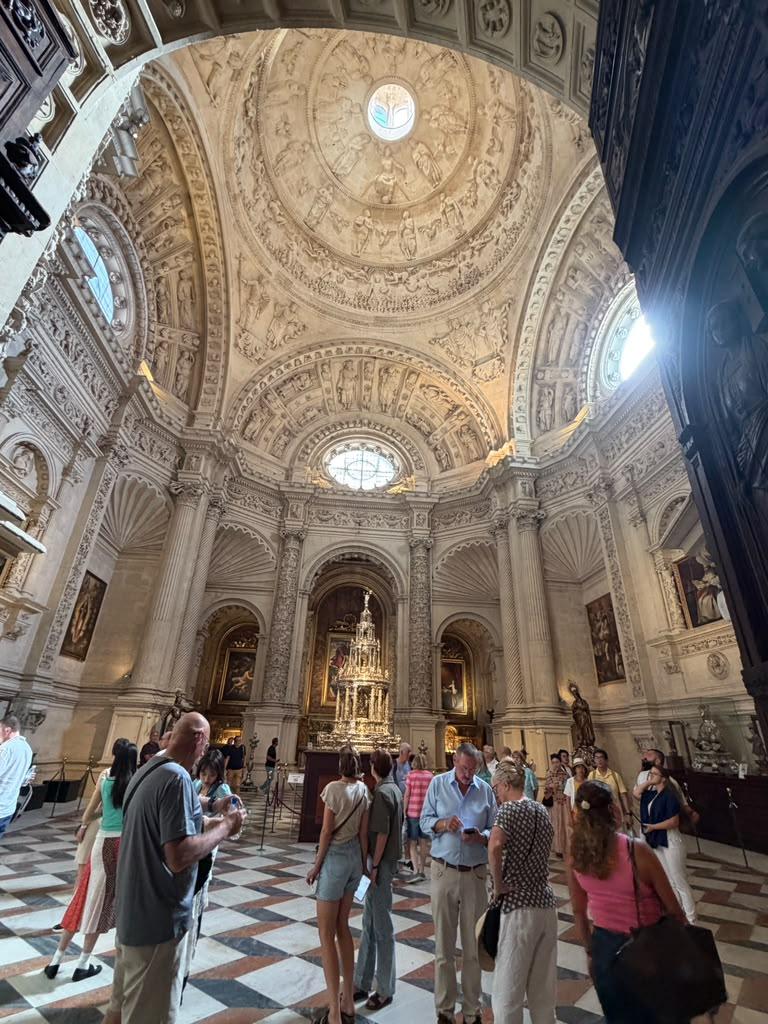
There is even psychology involved! Why build something this big? Imagine living in Seville 500 years ago. Most buildings around you would have been relatively small. Then you walked into a room with stone columns towering above you and a ceiling more than 100 feet overhead. Even today, with skyscrapers, stadiums, airplanes, and huge bridges all around us, the cathedral feels enormous. What must it have felt like to someone in the 1500s? The building was designed to create an emotional reaction. Scale, light, sound, artwork, and architecture all work together to make you feel small inside a very large space.
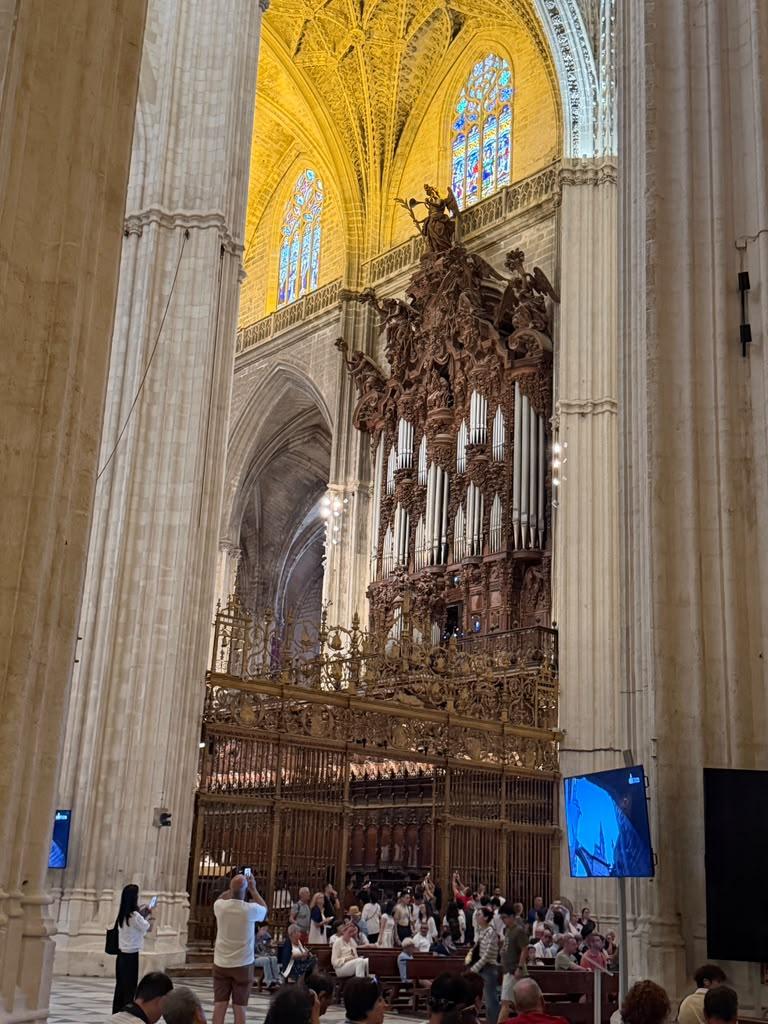
Then there is music. I stopped to look at the cathedral's enormous organ and the choir area. Music inside a stone cathedral sounds very different from music in a normal room. Sound waves reflect from the stone walls, columns, and vaulted ceilings, creating long echoes and reverberation. So now we have music connected to physics.
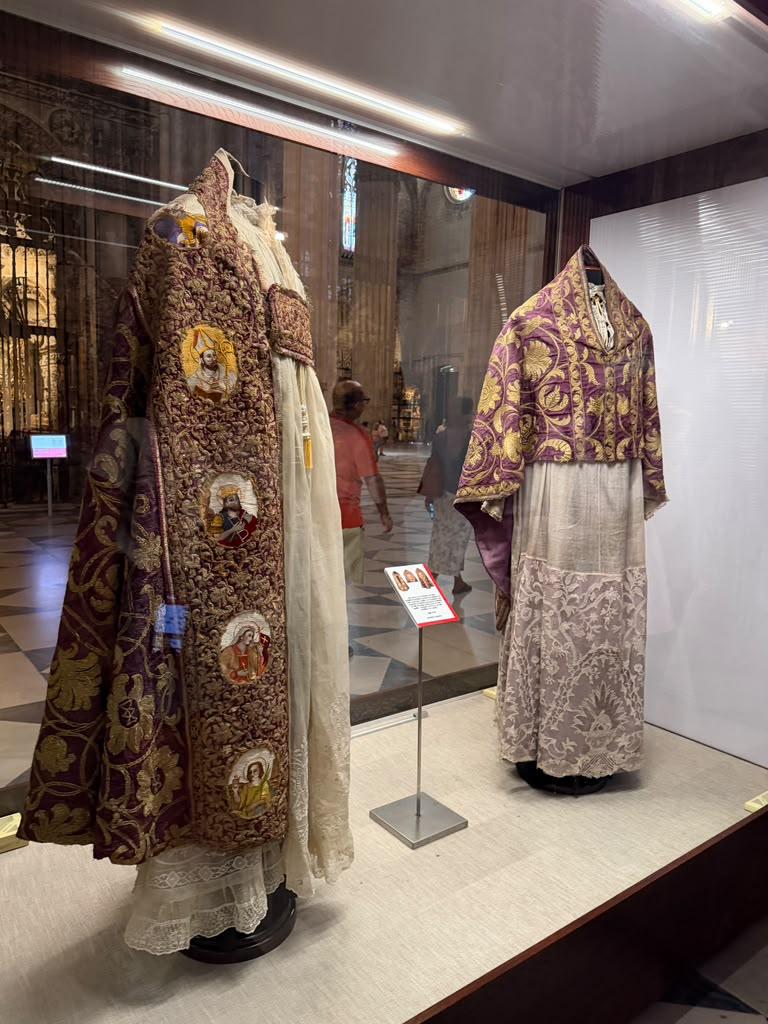
Even clothing and design are represented. Paintings and sculptures show what people wore centuries ago. You can study fabrics, colors, armor, robes, shoes, and changing styles. Artwork becomes evidence of how people once lived.
That is what I find fascinating about places like Seville Cathedral. You can walk into one building and find history, engineering, physics, mathematics, architecture, geology, art, chemistry, psychology, music, and design. Things that might seem separate in a classroom suddenly connect in the real world.
And as I stood underneath those enormous stone vaults, I kept coming back to one question: How did they do this 500 years ago?