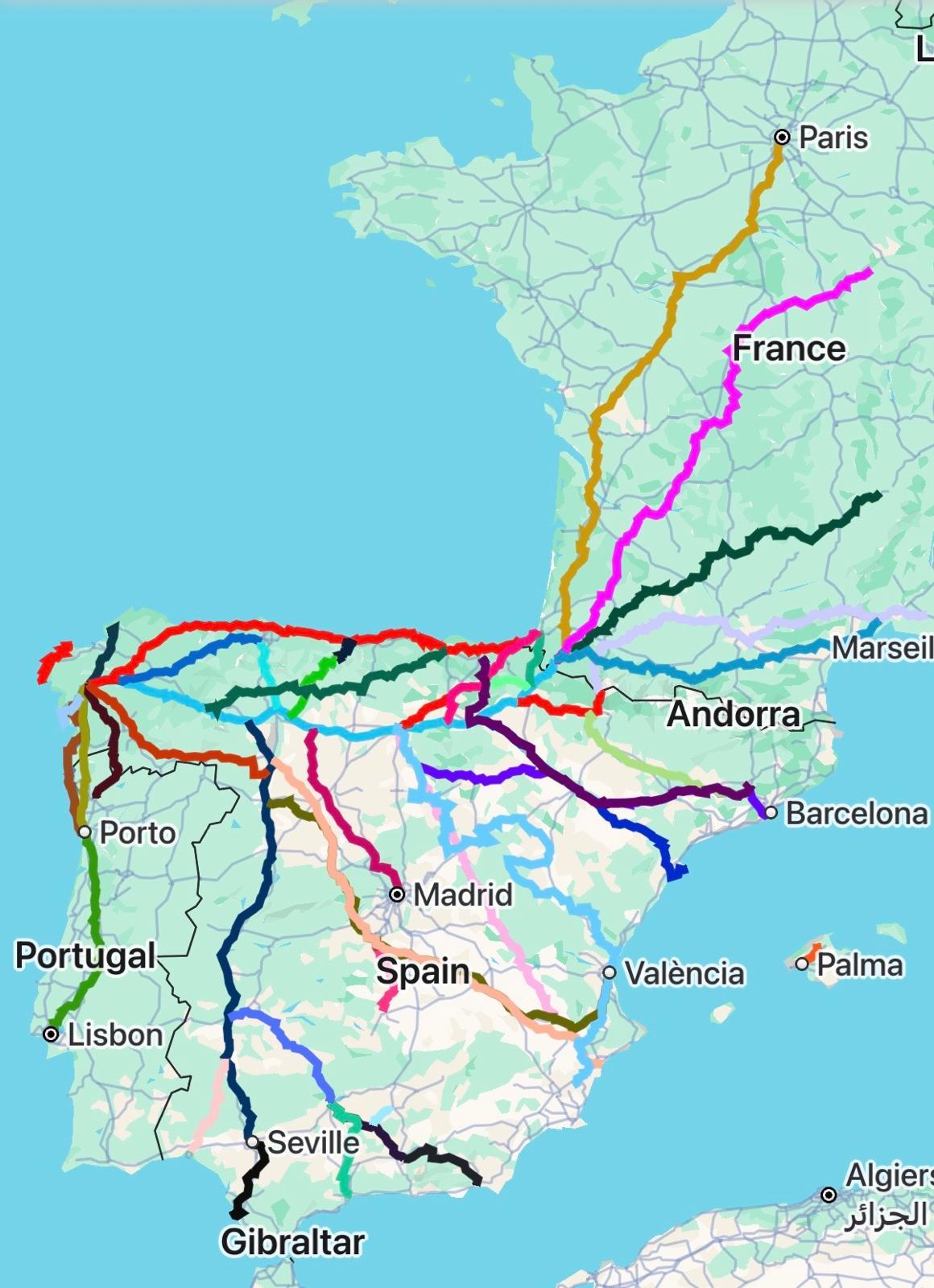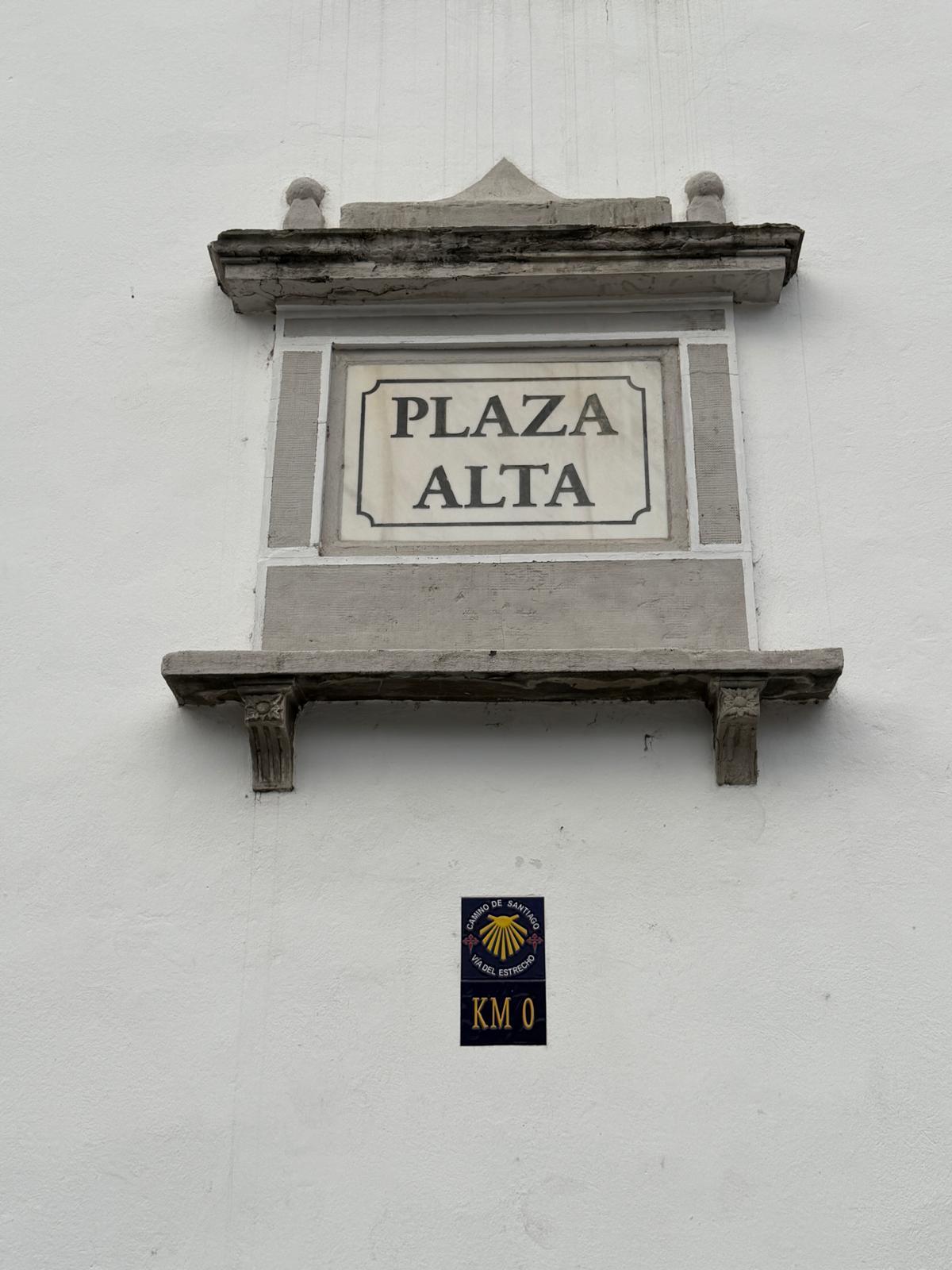
Imagine traveling hundreds of miles across a country, following yellow arrows painted on buildings, sidewalks, and stone markers. Along the way, you pass ancient castles, Roman bridges, medieval villages, and mountains. You meet travelers from around the world, all heading toward the same destination.
This is the Camino de Santiago, one of Europe's oldest travel traditions.
During my Pedal to Port expedition, I cycled across Spain following four different Camino routes before arriving in Santiago de Compostela on October 14, 2026. It was my third visit to the city, having previously completed Caminos in 2015 and 2024.
The Camino de Santiago, or Way of St. James, is a network of pilgrimage routes leading to Santiago de Compostela in northwestern Spain.
A person making a pilgrimage is called a pilgrim. In ancient and medieval times, pilgrims traveled long distances to places considered sacred, often as an expression of their religious beliefs. These journeys could take months or even years and were sometimes dangerous. Today, pilgrims still make these journeys, but their reasons can include adventure, history, personal challenges, and experiencing different cultures.