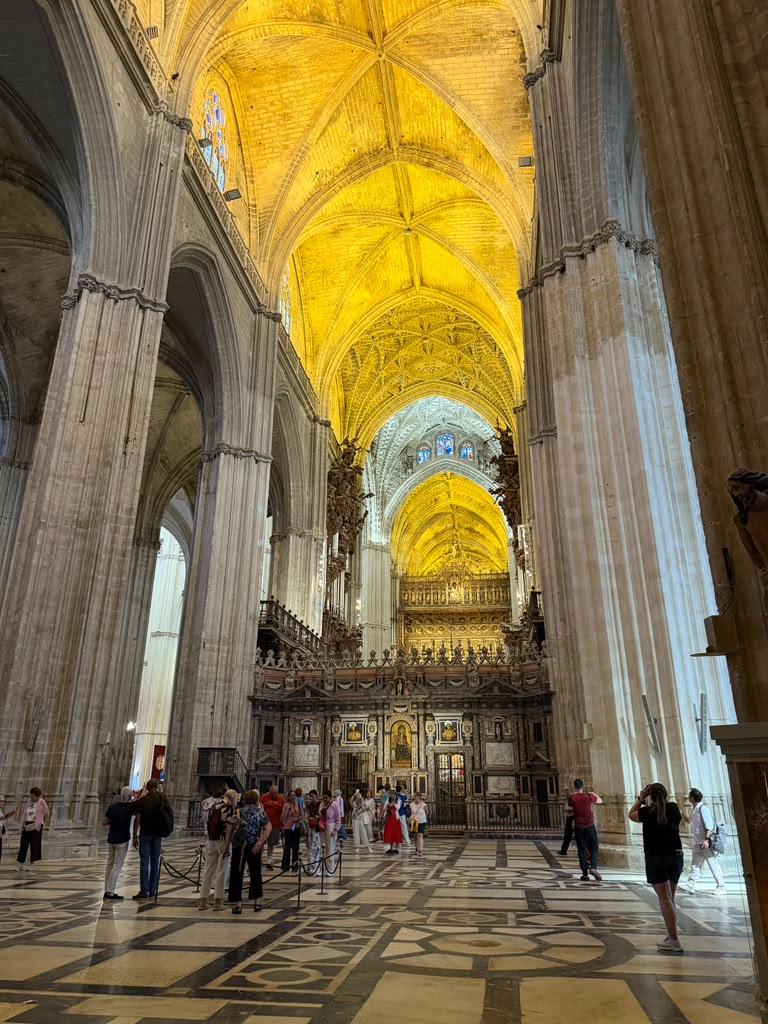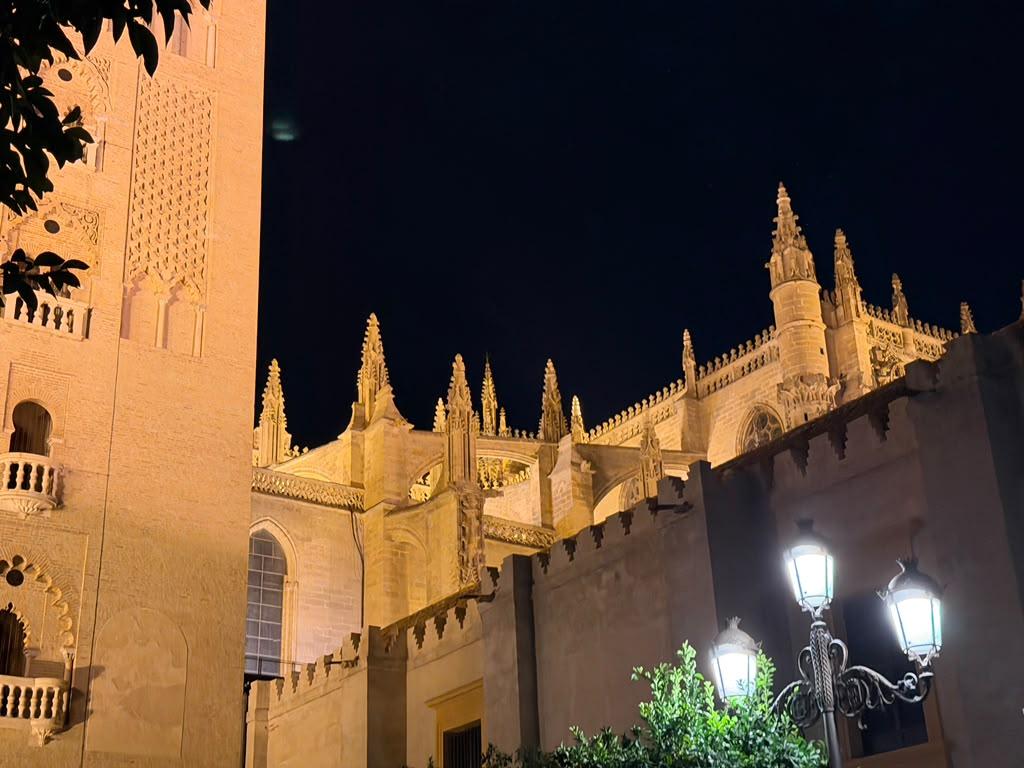
Inside the cathedral is the tomb of Christopher Columbus, connecting this one place to the voyages across the Atlantic that changed world history.
Then there is engineering and physics. Look up. The central vaults rise about 40 meters, or 130 feet, above the floor. The builders had to figure out how to support the enormous weight of all that stone without steel beams, modern cranes, computers, or power tools.
How do you think they moved stone blocks weighing 1000’s of pounds hundreds of feet in to the air? They used columns, arches, vaults, and buttresses to move the weight downward and outward toward the ground. Gravity was the same 500 years ago as it is today. The engineers simply had different tools for dealing with it.
That connects directly to architecture and mathematics. Measurements had to be accurate. Arches had to meet correctly. Columns had to be positioned in the right places. If the angles or proportions were wrong, sections of the building could fail.
Then look at the stonework. Every column, arch, statue, and decorative detail had to be shaped by hand. That brings in geology too. Builders needed to understand which types of stone were strong enough for construction and which could be carved into detailed designs.
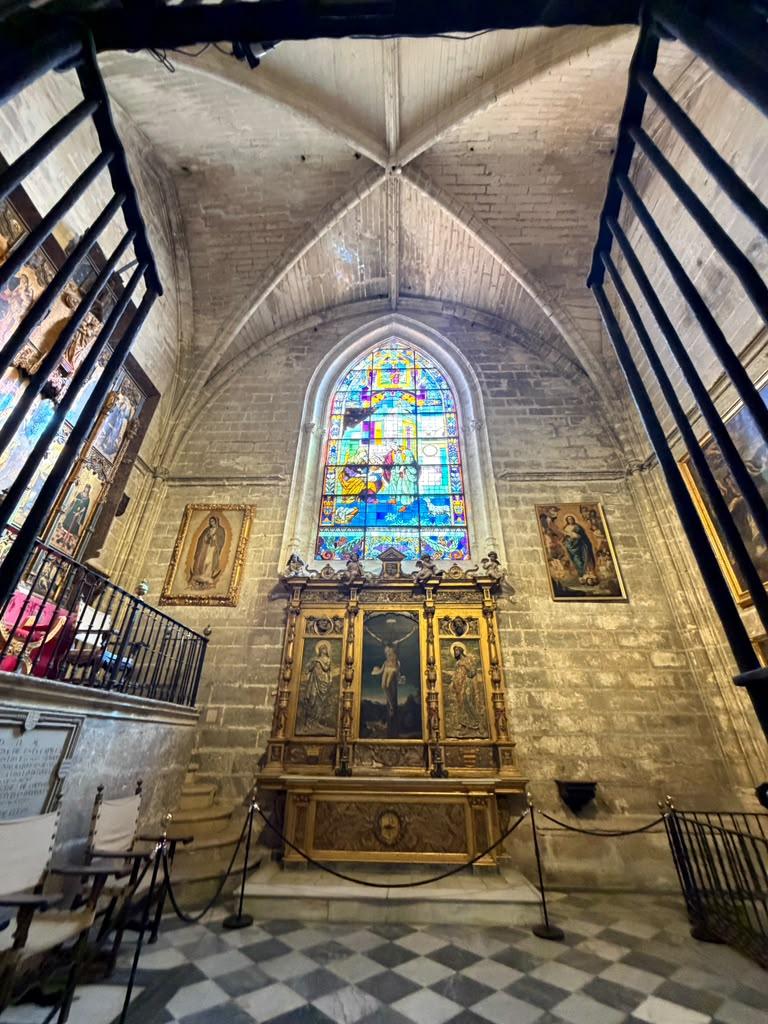
There is also art everywhere. The cathedral contains paintings, sculptures, stained glass, wood carvings, and metalwork. Even the way sunlight enters the building is part of the experience. Stained-glass windows do more than show pictures. They change the color and intensity of the light entering the room.
That connects art with physics and chemistry. Different minerals and metals were historically used to create different colors in glass.