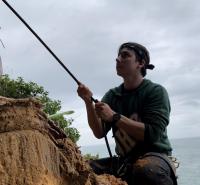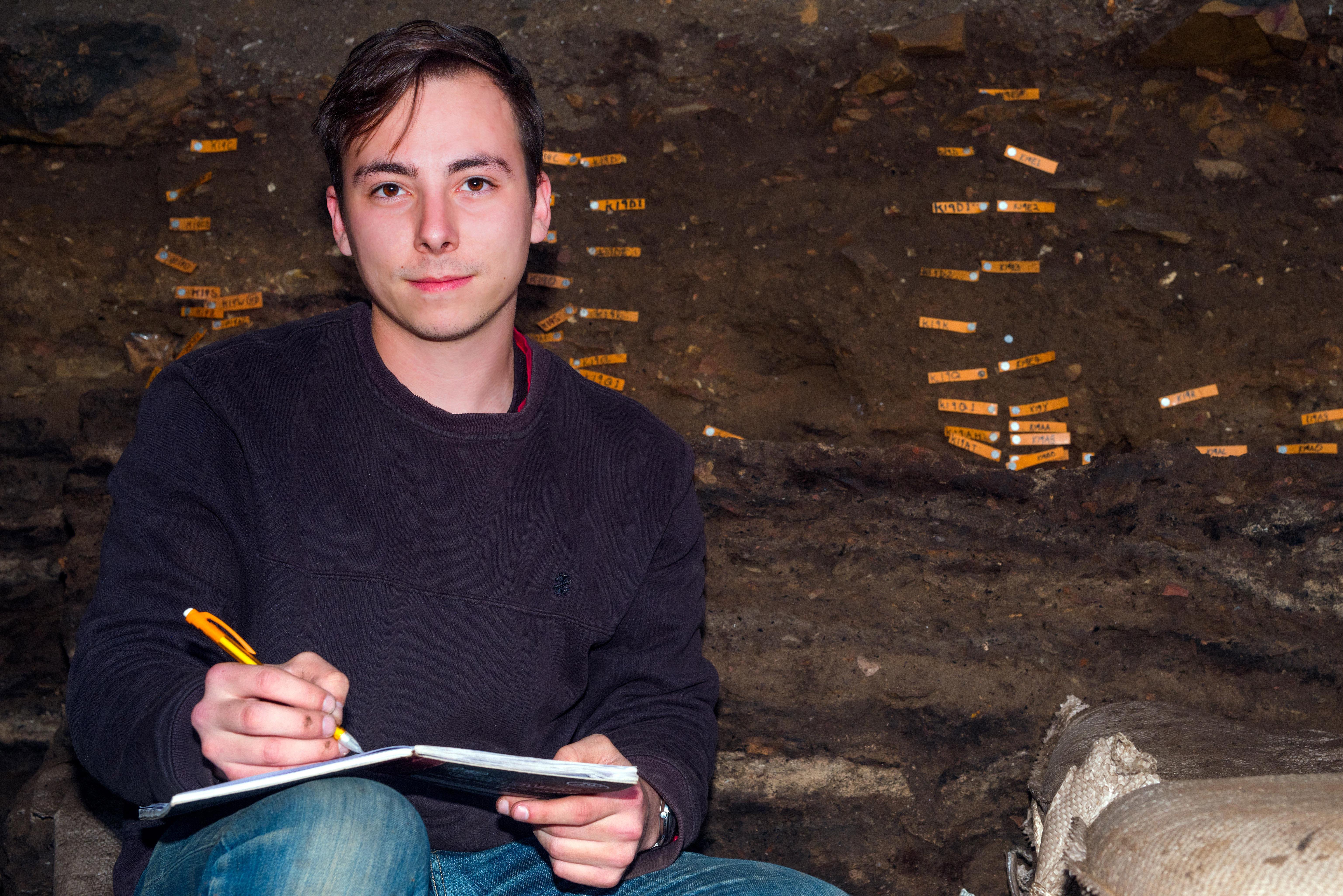
Boomplaas Cave is a site that was first discovered by archaeologists in the 1970s. The site is famous for the discovery of artifacts that show humans lived in the cave for over 70,000 years! A team of archaeologists, including myself, is returning to the cave to use modern high-tech methods to get new clues about the ancient people who lived there.
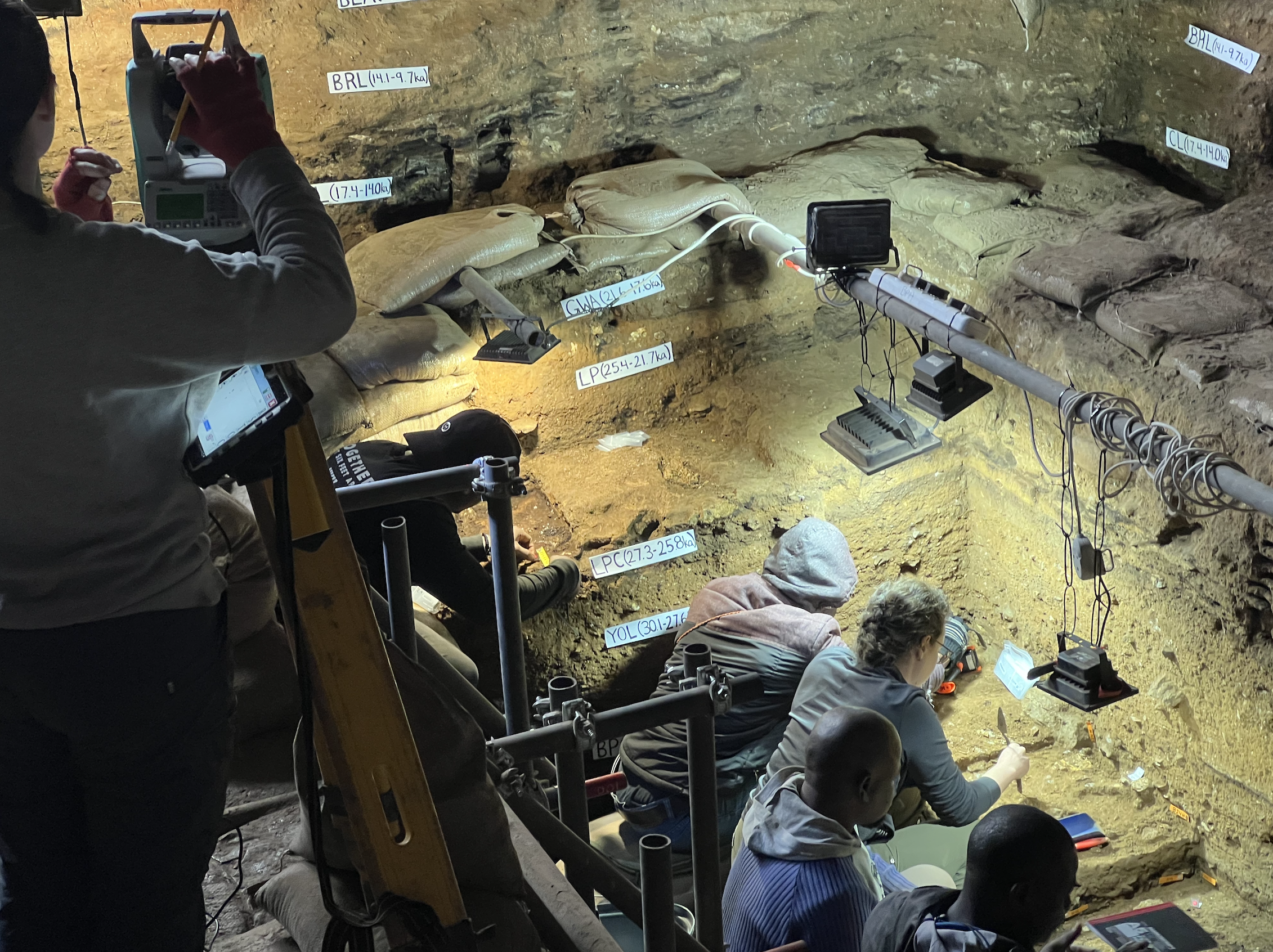
2. Dig and discover clues: The second step of an archaeological investigation is to excavate the site. Excavations are where archaeologists slowly and gently dig to uncover evidence. All the things that ancient people left behind are slowly buried over hundreds and thousands of years. That’s why we must dig to find them, and the deeper we dig, the older the clues we find. While we dig, we record everything. Archaeologists don’t just collect the artifacts and fossils, but we also take pictures and lots of notes about where we found them. The main types of clues we find at Boomplaas are stone tool artifacts, animal fossils, ostrich eggshell beads and even ancient fire pits buried beneath the ground.
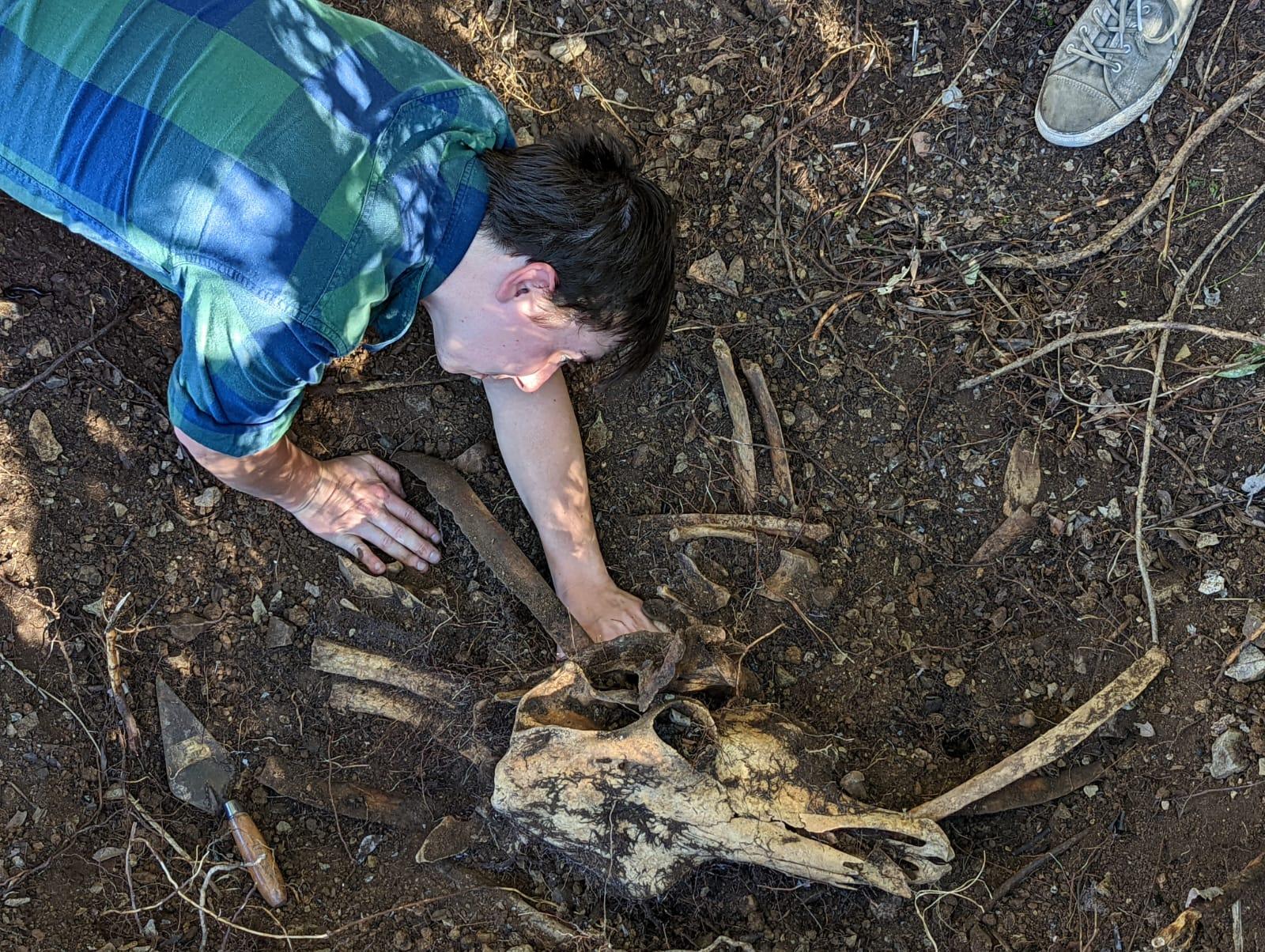
3. Study the clues: After the excavation, we bring everything we found back to a laboratory. Experts study each type of clue along with the notes taken during the excavation. I am an expert on animal fossils, so I study all the animal fossils that we found while excavating. Many of the fossils from Boomplaas are from the last Ice Age, and some are of extinct animals or animals that don’t live in the region today.
4. Tell the story of the past: The final thing archaeologists do during their investigation is put all the clues together like a puzzle to form a story of the people who once lived at the site.