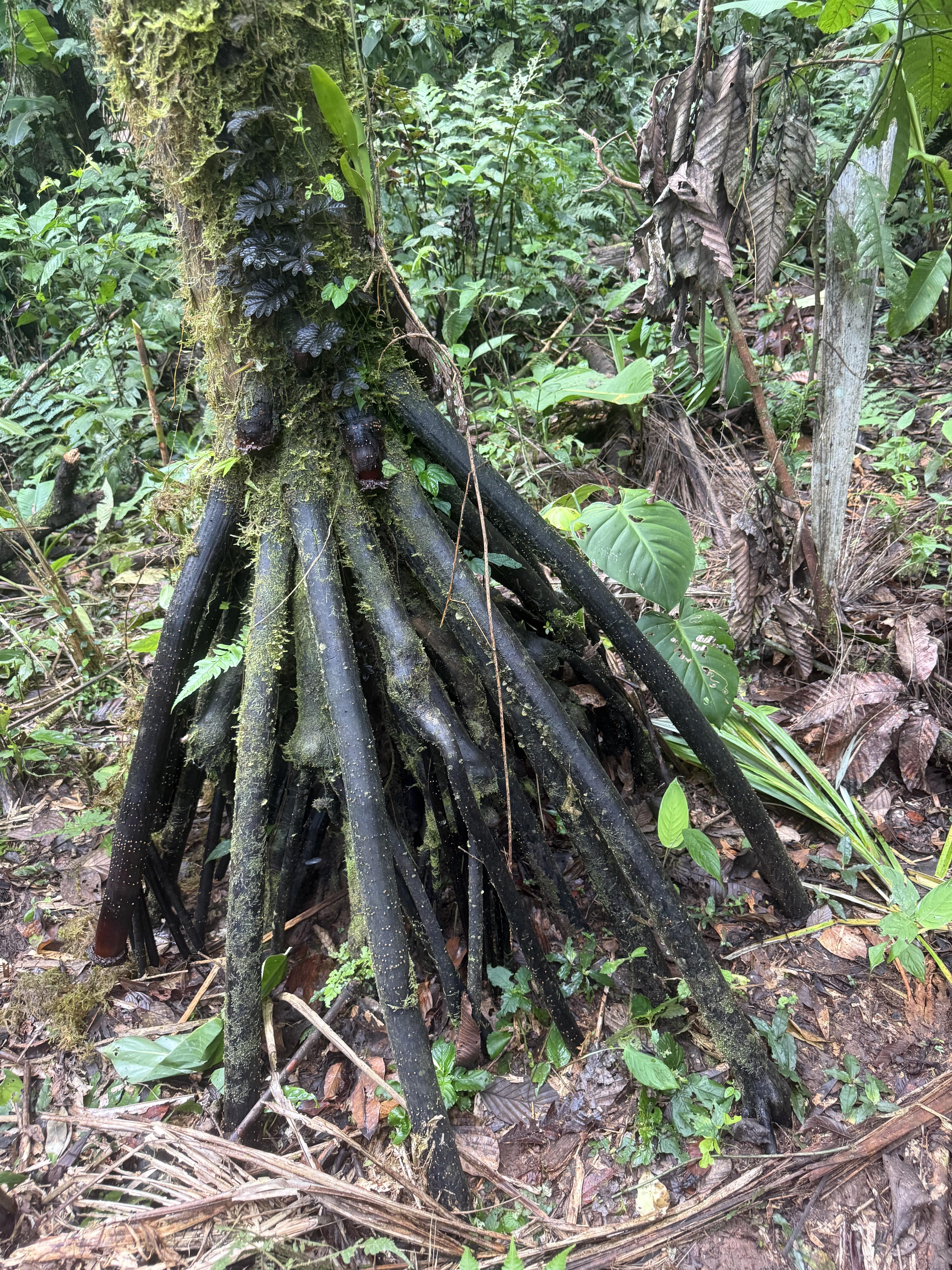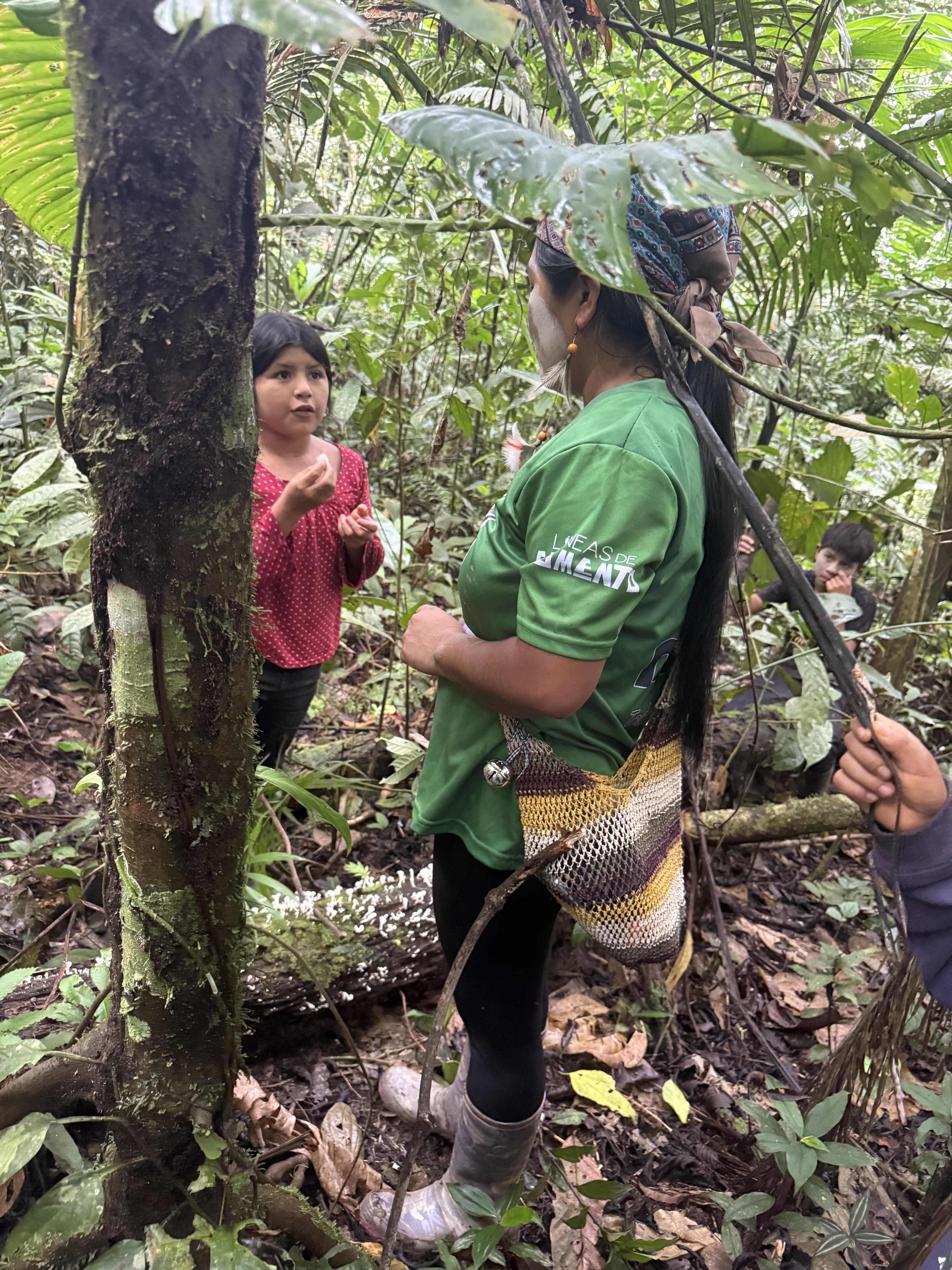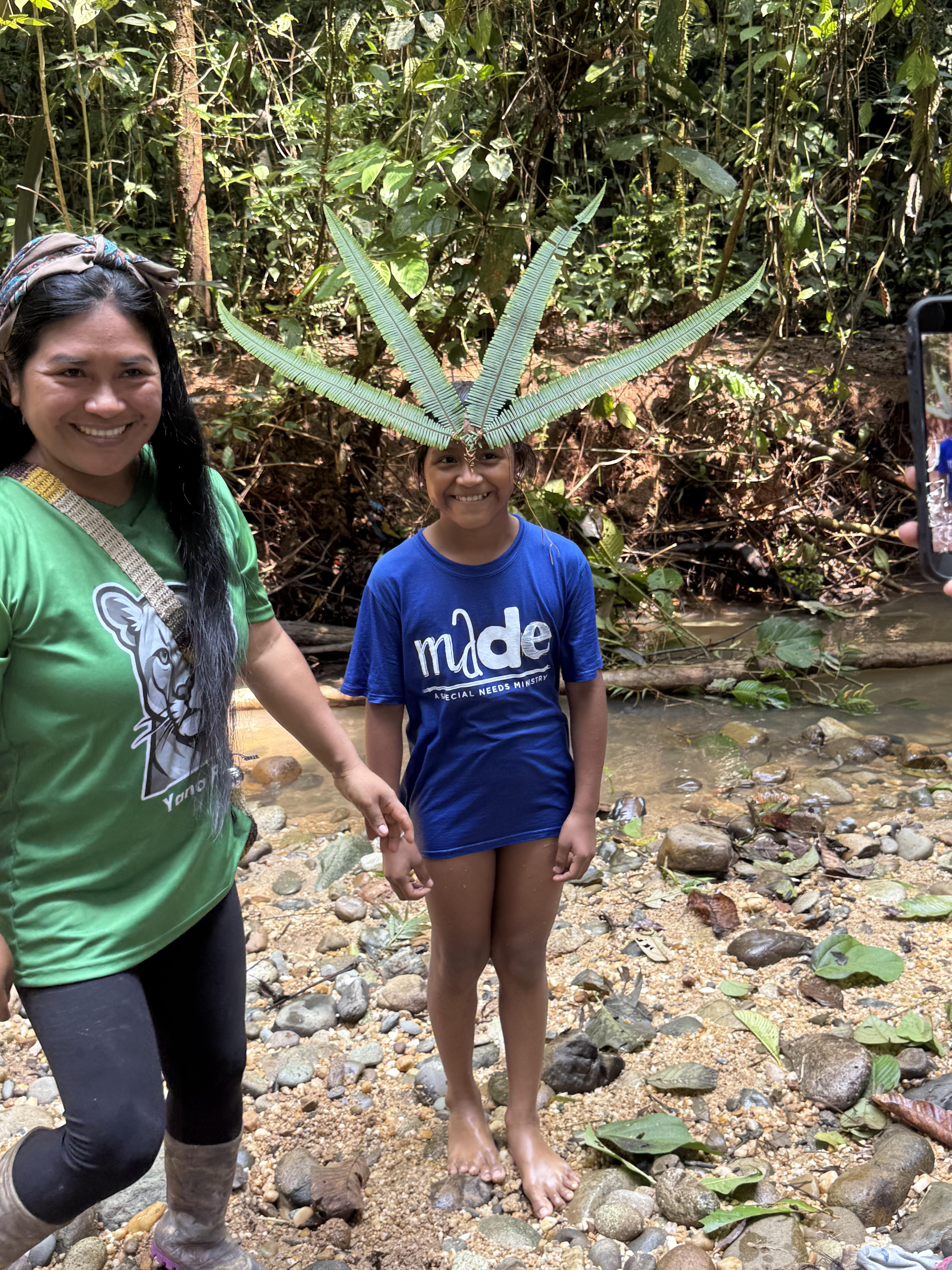
They eat what they find, they feed themselves. This helps them in the future in two ways. First, to become empowered, and second, to be able to survive with what Mother Nature offers us. For example, as children we learn about a palm, a pambil (pam-beel) palm, which is a refuge in itself. There is a legend our ancestors told that says the roots of the pambil are protection. If you're in the jungle and you come across a jaguar, you can go inside the roots to save yourself. So we learn these things from childhood. Walking, swimming, getting dirty and even touching the earth, that's how we learn. That's what we share, and what I pass on to these children: living in the land, living within our environment.
Nora: What percentage of your life, food, medicine, everything, comes from the jungle?
Meliza: Well, I would say 100%, but it's more like 85% or 90%. Things like sugar, oil, rice, Western medicine or yerba mate... some of those things come from the city. But we have more here in the forest, like medicine, fruits, produce, yucca, plantains and our water. We don't have to buy anything because we already have it in our home.
Meliza: Living in the Amazon, we face many challenges. Right now, we have river pollution and the large mining companies that exist in the Amazon today. Not only those who extract minerals, but also those who extract oil and cut down trees. For us, it's so hard that not everyone has the awareness to support or protect our Mother Nature. Many people are governed only by economic interests.