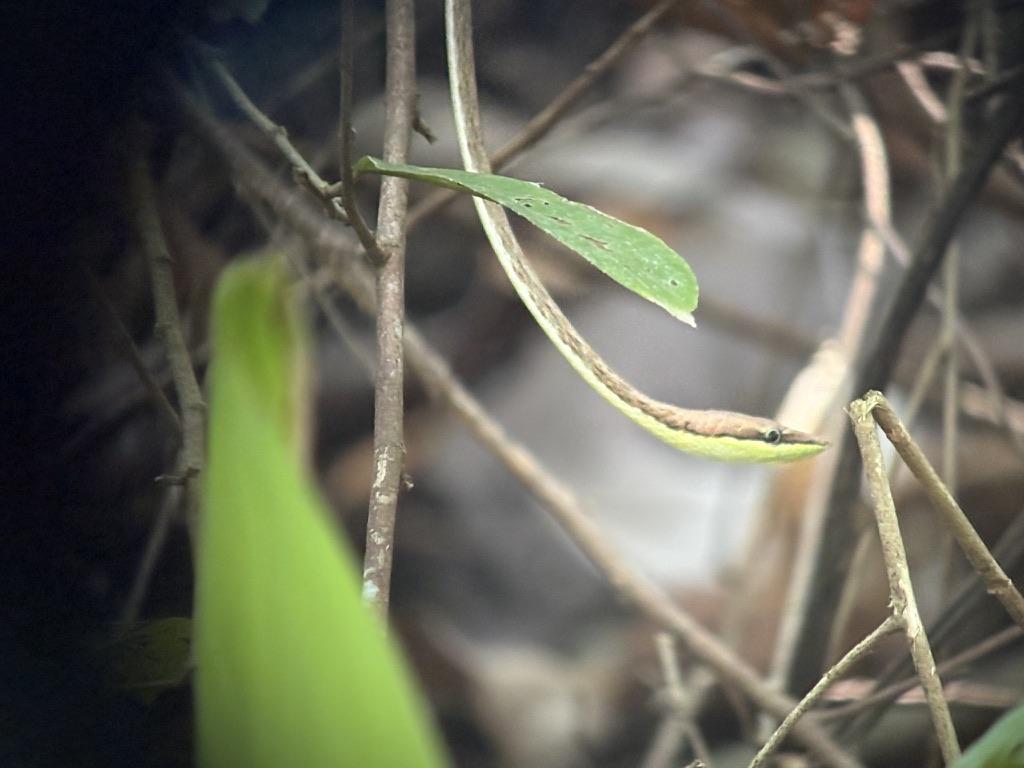
Our tour guide told us that these holes are made by the crabs, and they hide suprisingly deep in the ground--about three feet down. Additionally, many animals utilize the shady structure of the mangrove forest for protection. The sloths stay high up in the trees, making them especially tricky to spot. Birds, bats, snakes, frogs, and many more small animals rest in the trees during the day. It's interesting to learn more about the animals and to understand why they live the way they do.
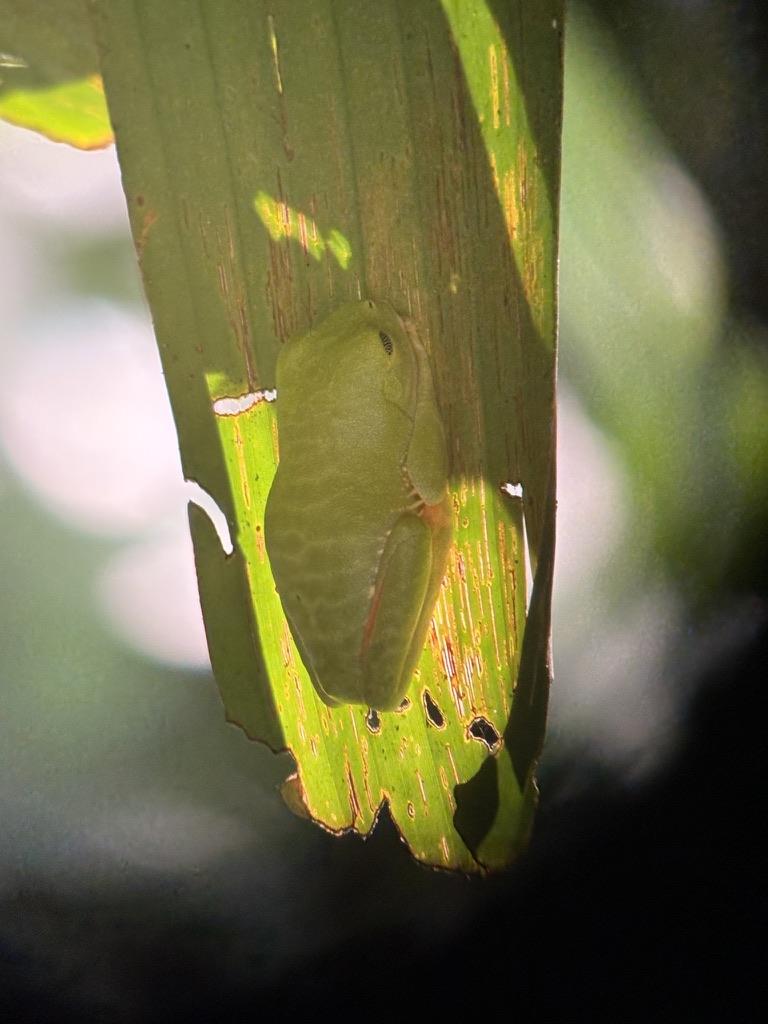
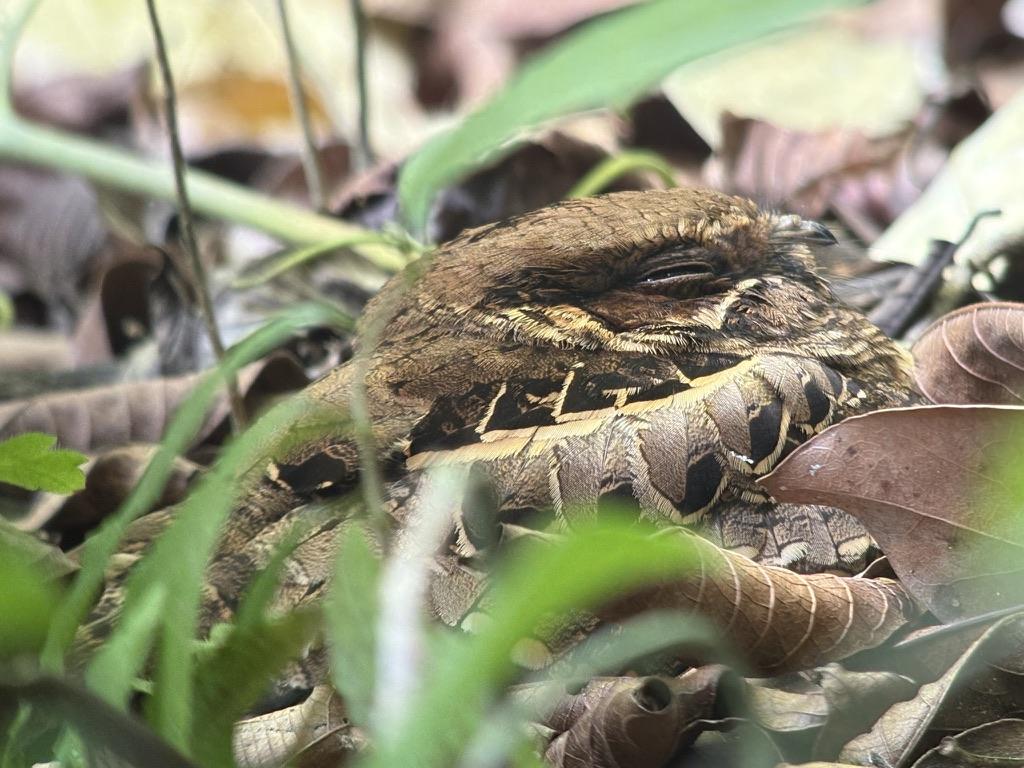
We saw some great examples of mimicry, including a bird called a Common Pauraque. This bird has feathers that look similar to the scales of a snake, so that predators will avoid it. There were also several frogs that blend in so well with the leaves and become almost invisible. We also saw and another tiny frog taking advantage of a tiny hole in the trunk of a tree. It was impressive that the guides were able to spot them!
On the beach, we spotted many hermit crabs of varying sizes. The crabs use the shells as their homes, with varying degrees of success. We spotted one hermit crab attempting to use a long, conical shell, and struggling to move due to its unwieldy nature. However, most of the other hermit crabs were more successful!
Our kayak guide told us about how many of the other tour companies feed the monkeys in order to attract them to the boat and entertain the tourists. He expressed his concern that this behavior is bad for the monkeys, and told us about how it disrupts the natural ecosystem.