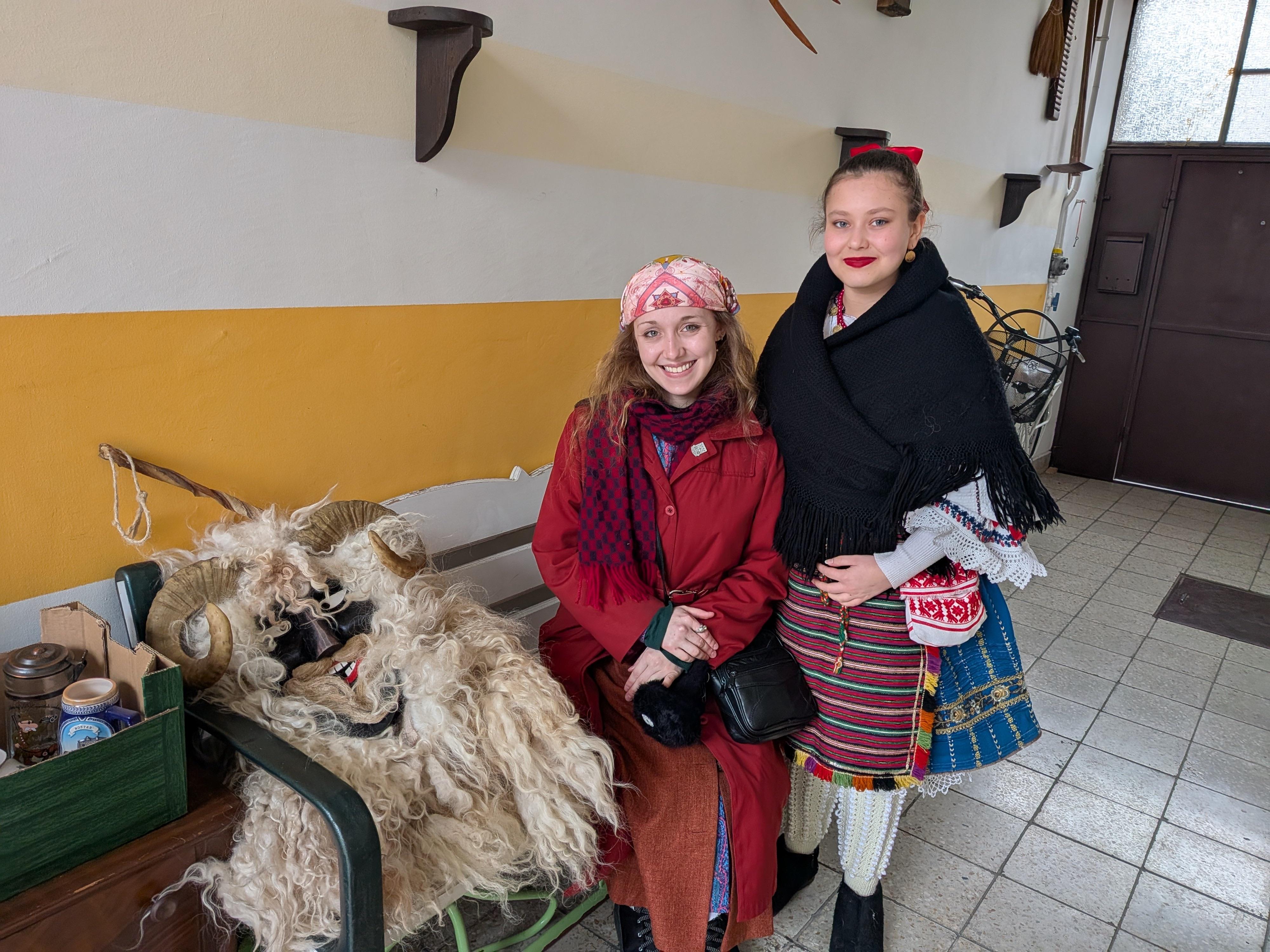
I avoid getting near most of them like the plague because I hate getting stuff in my long hair. The Busós are often accompanied by women in traditional dress and lace veils called the Nice Busós (Lipa Busà). They help the Busós move because, with the masks, they have limited visibility.
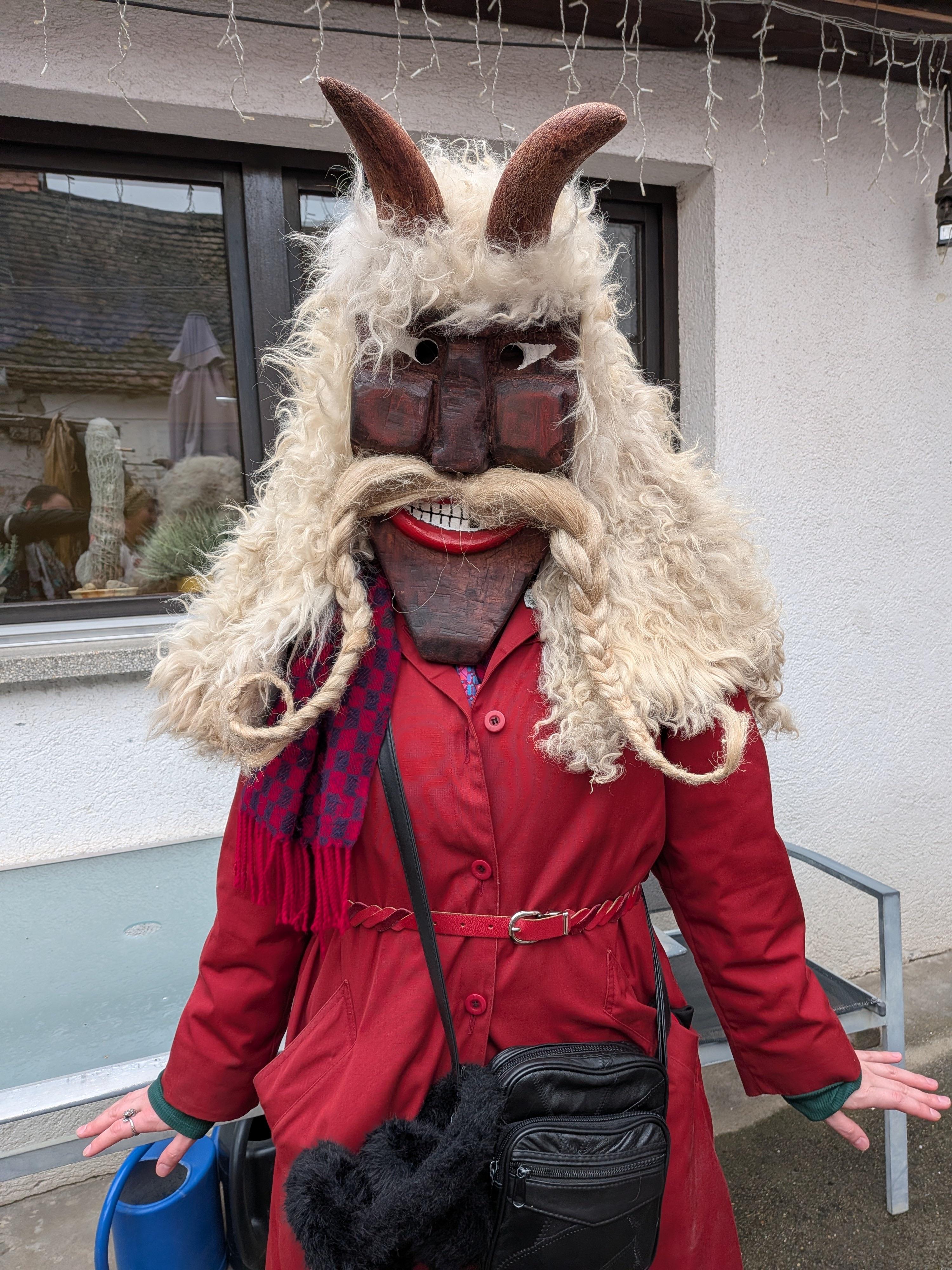
I was very interested by the masks and costumes because of my research project, so I went to several workshops on mask construction and even got to try some carving myself. The masks are made with spare wood that can't be used for larger furniture. Mask carvers will draw out a loose outline, then shave away wood to bring the features to life. Then it is refined and painted.
Buso costumes are often passed down for generations. I was lucky to get to try one on. These costumes are handmade and treated with care. They are very heavy, especially if they get wet. The family I visited was so kind and invited me in for a meal before the parade. I had bread with lard, onions and paprika--a Hungarian speciality. Then I went to the parade, which is the highlight of Sunday's festivities. Normally there is an event before it where the Busós cross the river in costume and in traditional boats, but the weather had other plans (you'll read more later). The parade showed many different groups of Busós. Some passed out candies, while others put flour and ash in people's hair. It was loud and joyous and it was cool to notice all the different details in each costume.
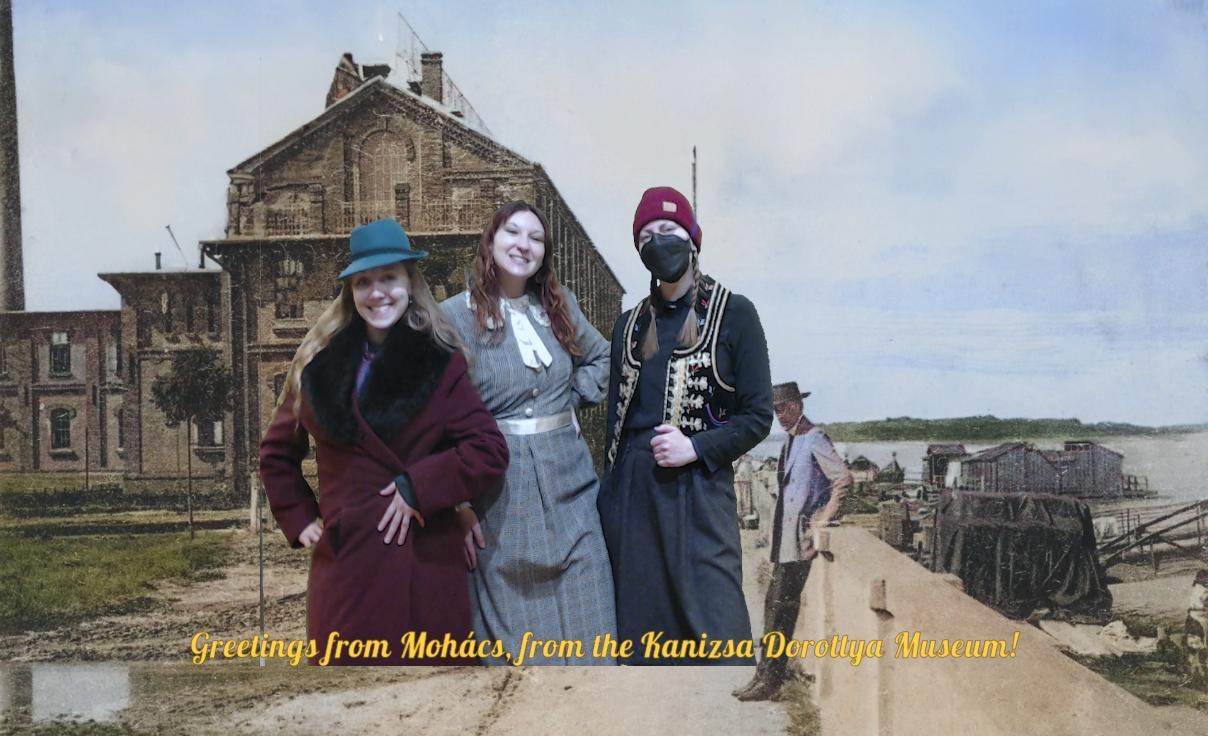
After that, some my Fulbright friends and I visited the Dorottya Kanizsai Museum and explored the history of the town and the festival. The night ended with a massive bonfire and celebration.