For example, one of the main dances is called the shacshas, and the people who dance it train for weeks beforehand. It is a pre-colonial tradition most likely linked to agricultural rituals, but practitioners claim that it was also used to make fun of the Spanish colonists.
Ultimately, Huaraz's Carnival is an opportunity for neighbors and neighborhoods to come together, for people to celebrate their Catholic faith, and for traditional cultural practices to have a spotlight.
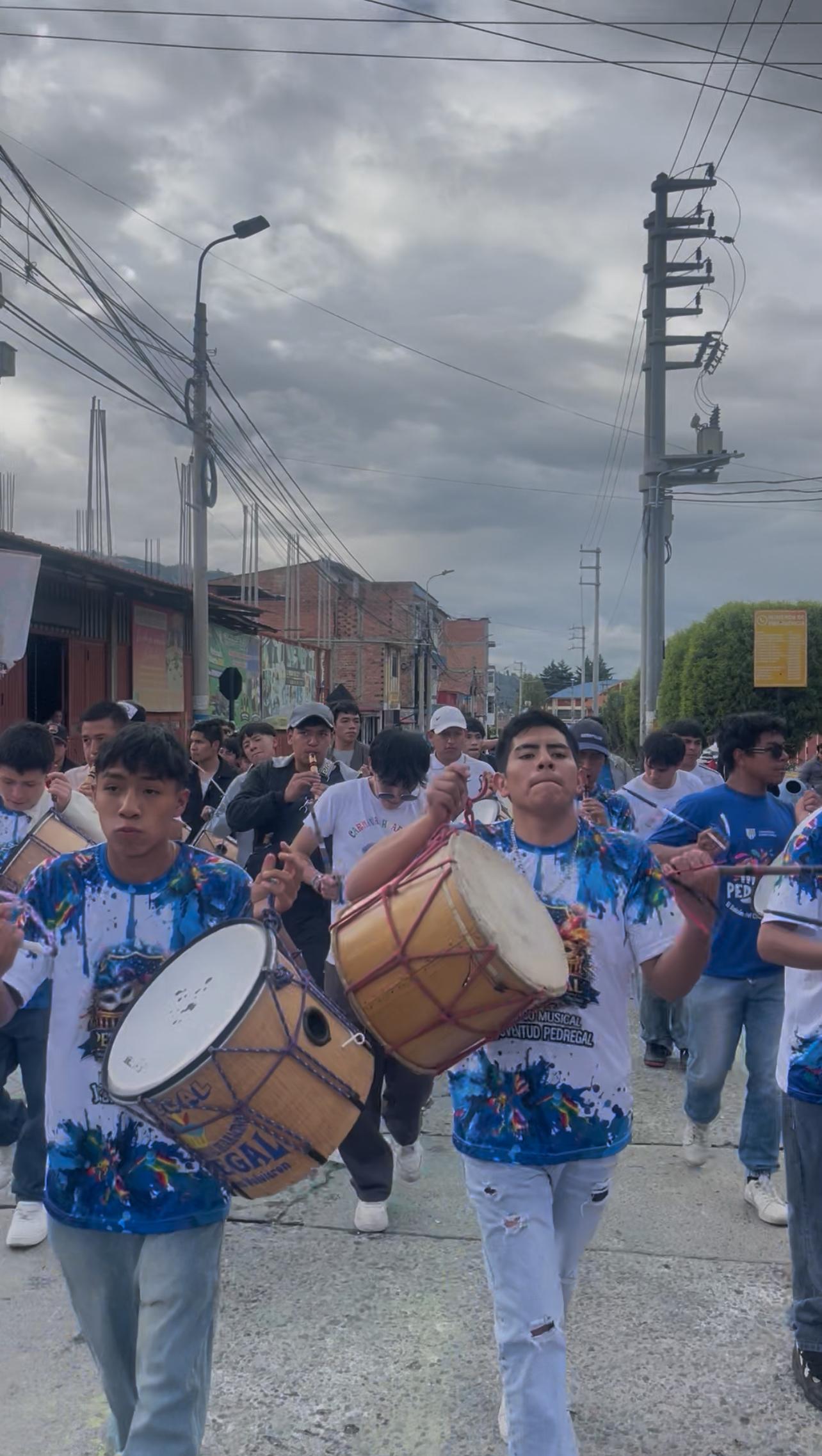
The tradition of Huaraz's Carnival is not necessarily linked to the natural environment, the different cultural practices and neighborhood floats are often linked to other communities around the Huaylas Valley. My neighborhood, Pedregal, pays homage to the city of Yungay with their float. After a massive earthquake and landslide wiped out Yungay in 1970, some survivors came to Huaraz and started a neighborhood. Nowadays their float depicts the memorial to the earthquake victims and Yungay's Christ statue.
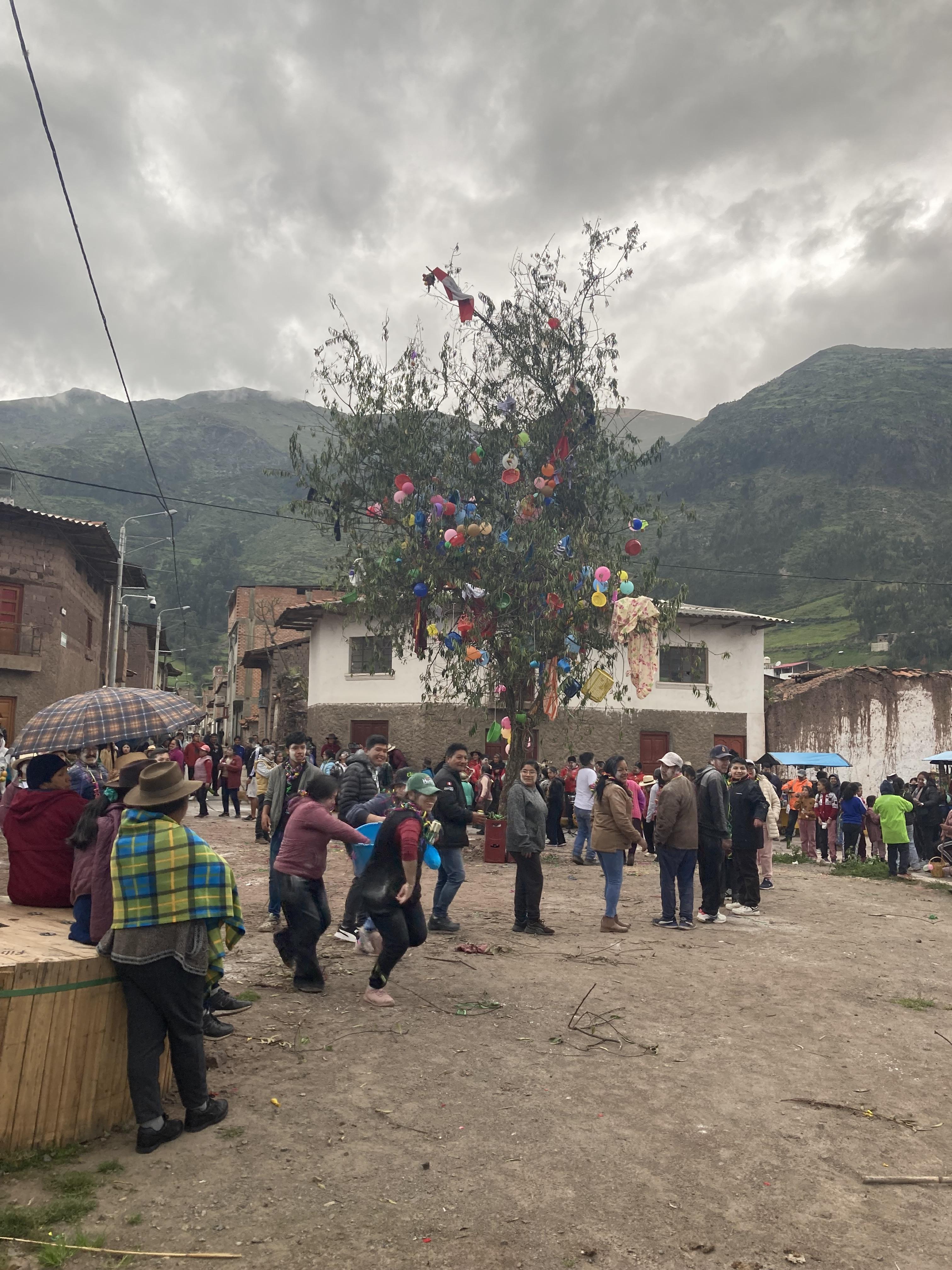
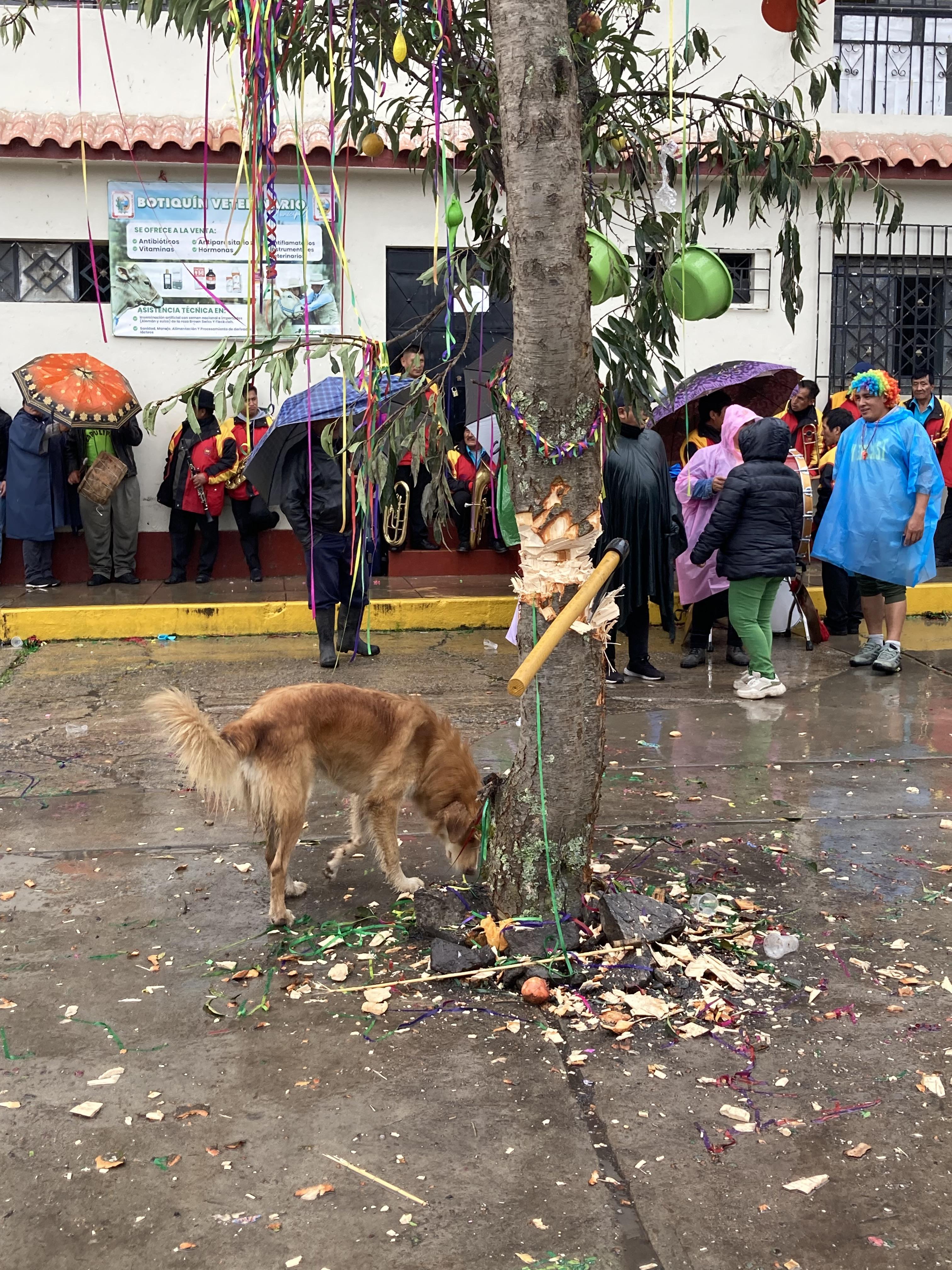
One tradition more directly connetced to the environment is the yunza. This is a dance and event in which a tree is cut and then set standing up, with various prizes attached to the limbs. People dance in circles around it with a partner, and couples take turns chopping at the tree with an axe or machete. Eventually, the tree falls and people rush to collect a prize. The person who delivers the final blow is responsible for paying for the whole thing the next year! Felling the tree represents a gift to Mother Earth, while the prizes symbolize a successful harvest.