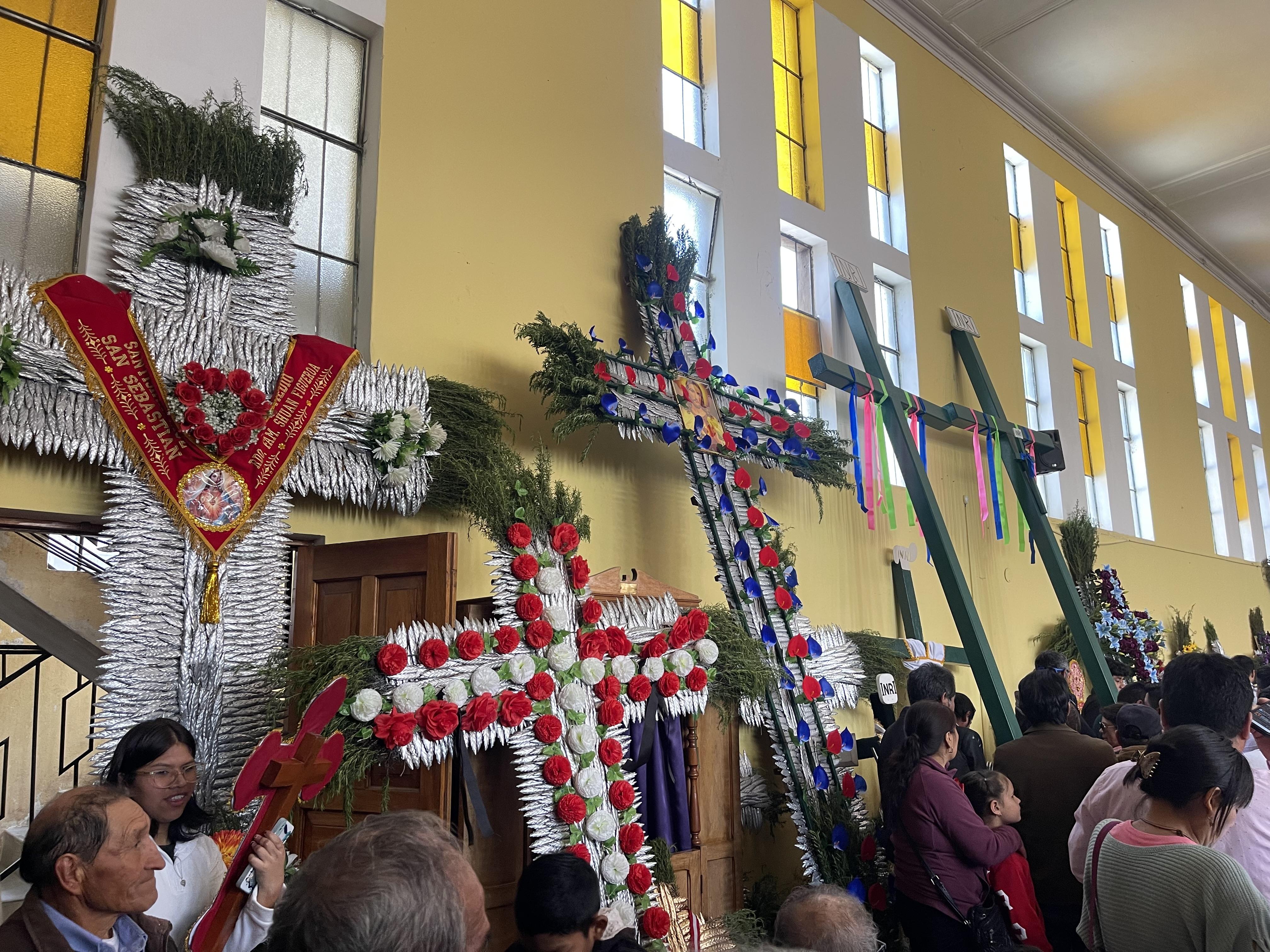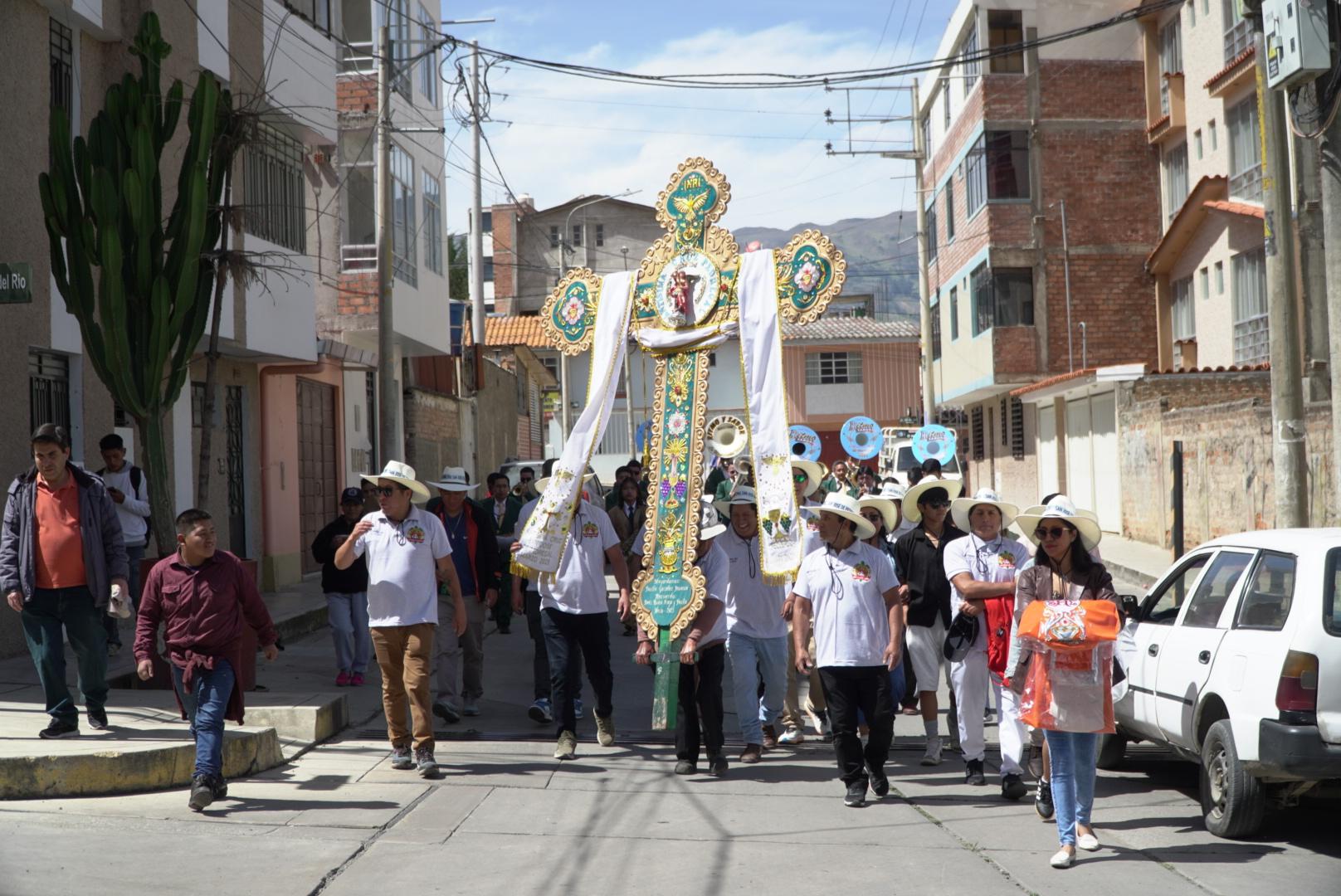
One of the main traditions around Carnival is the misa de cruces (Mass of the Crosses), in which the crosses decorated by each neighborhood are carried through the streets accompanied by a band. They arrive at a church and the crosses are left along the walls of the church, followed by a mass. Of course, there's a big party in the streets outside the churches.
Another famous part of Huaraz´s carnival is martes guerra (War Tuesday). This takes place on Fat Tuesday and it's basically just a paint party on every street. People dress in old clothes and throw paint and water on each other, with others throwing water balloons from their windows on the crowds below. This celebration is not supposed to be violent, but it is a little risky with thousands of people mobbing the streets.
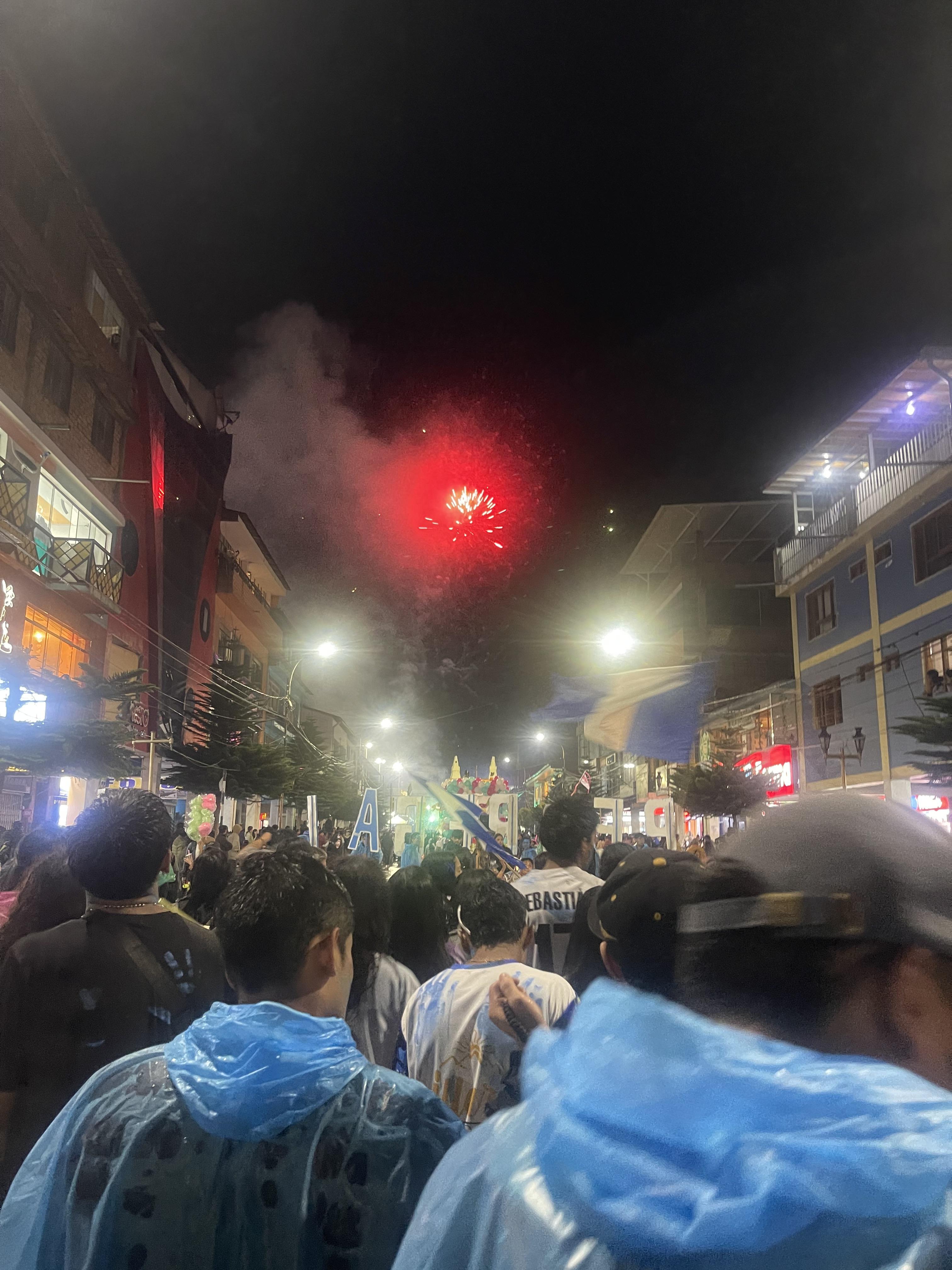
While martes guerra is maybe the wildest day of Carnival, the Sunday before Ash Wednesday is the most important. This is when all the barrios parade through the city for hours, finally arriving in the main plaza where the float and parade crew is presented to a panel to be judged. During the parade, people on the street throw water and water balloons at the paraders, and the paraders dance, play non-stop music, and shoot off fireworks.
Over three quarters of Peruvians are Catholic, so Catholic holidays are always heavily celebrated. However, Peruvian Carnivals also incorporate many traditional dresses, customs, and music. Parades serve as a showcase for floats with Inca imagery and for traditional dances through the streets.