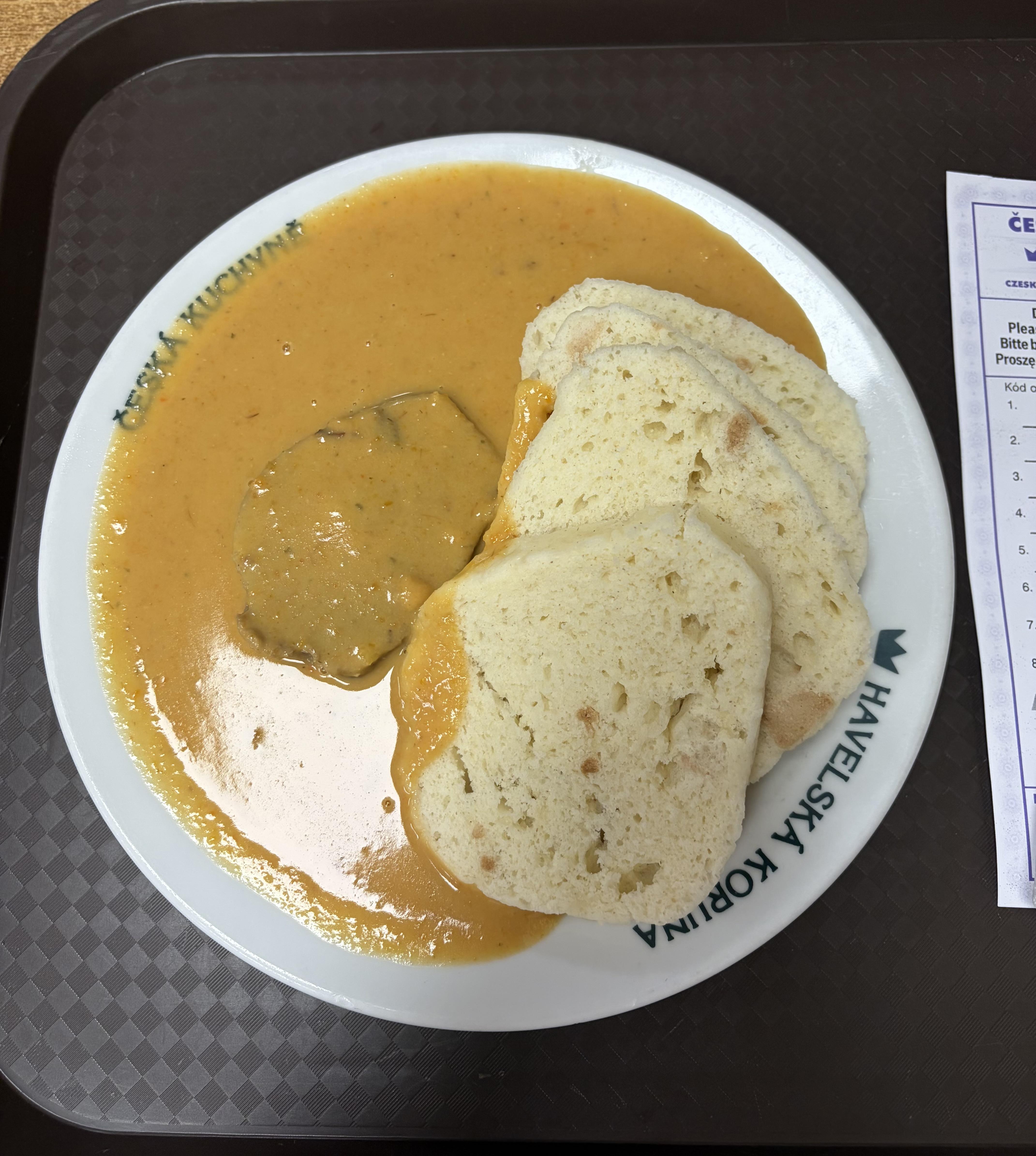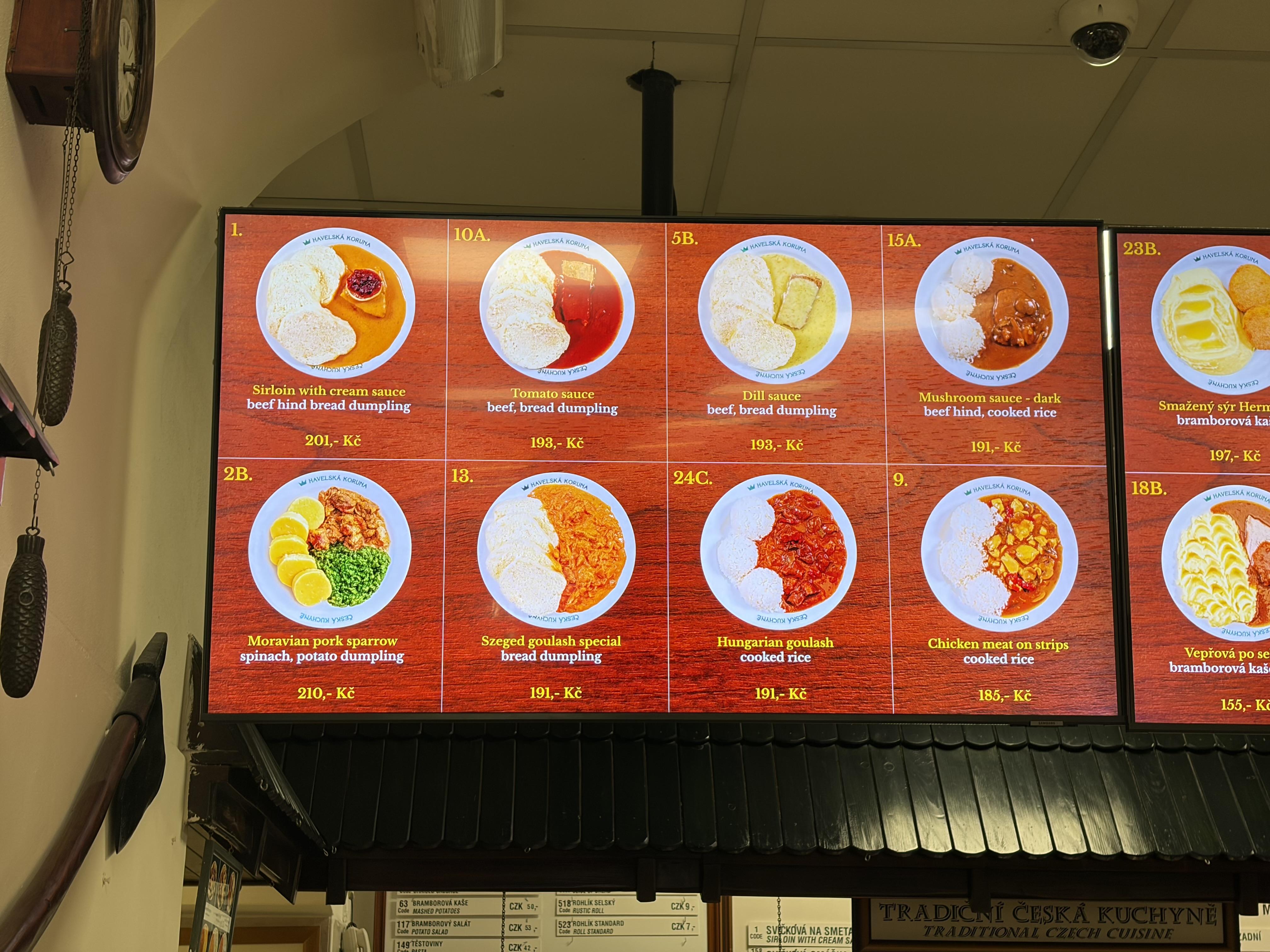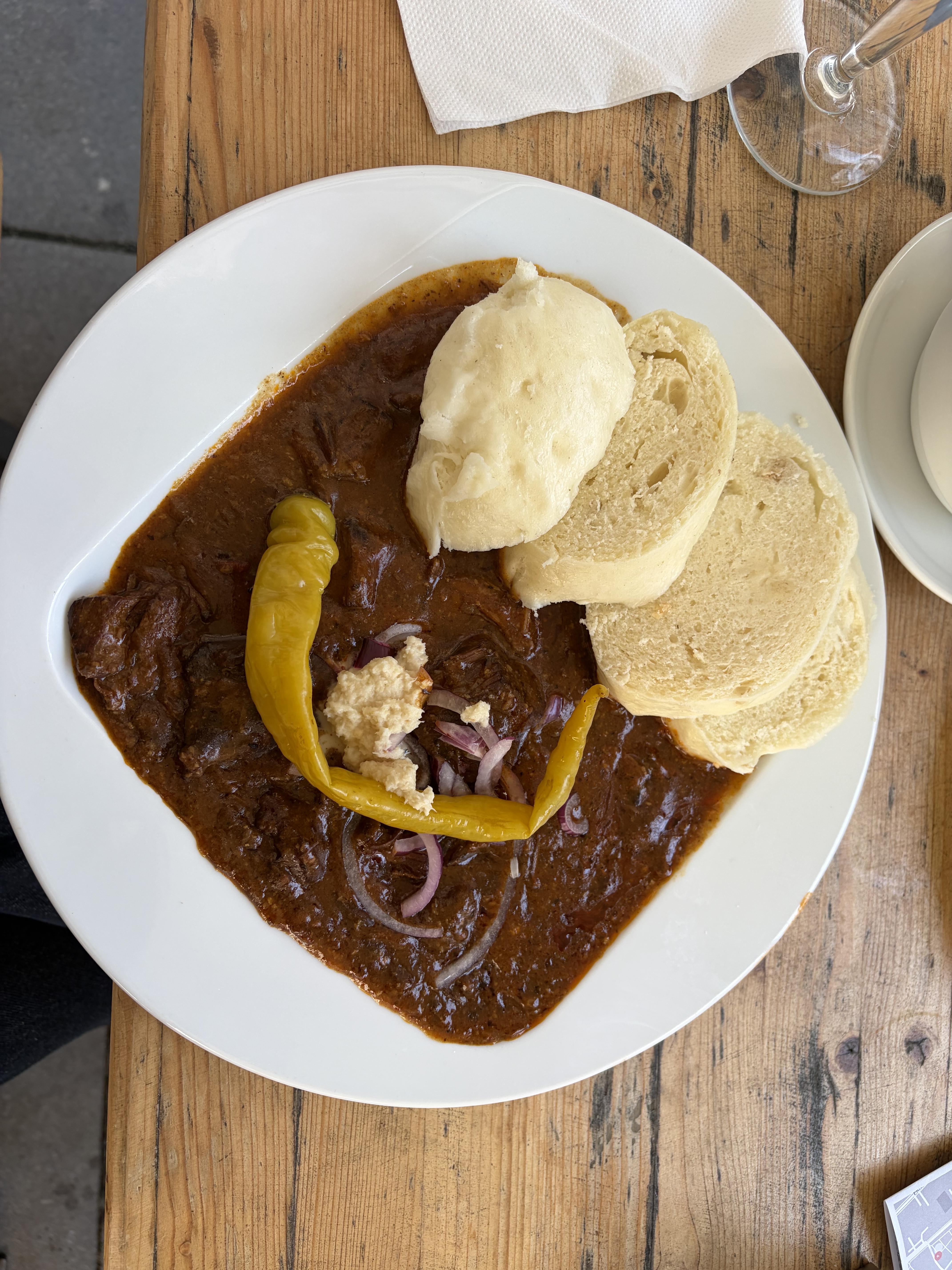
Svíčková is frequently made differently by different chefs, and it can often even come off as quite sweet. Families have passed down recipes over time, and their craft has become so diverse that each meal of svíčková I've tried tastes quite different. Regardless of the discrepancies in recipes, multiple hours of cooking the meat and handmaking the dumplings are always required. Bread dumplings, or knedlík, are frequently served with Czech main dishes. Their bread acts as a sponge for the rich, heavy sauces that are often the magic of Czech food. The dish is often topped off with a dollop of whipped cream and cranberries to balance the rich sauce, though I prefer the dish without that extra garnish.
Bread dumplings became popular in the Czech Republic during the world wars, as the ingredients to make them were quite cheap and accessible. Bread dumplings tend to be very filling, and as meat rations during the wars were limited, bread dumplings became essential for satisfying hunger. Despite the country’s economic and social bounceback, many Czech people continue to serve bread dumplings regularly. Bread dumplings have transformed from a necessity to a customary tradition. Meals are often served with four to six bread dumplings, and they are essential as a vessel for the unique Czech sauces that tie the dishes together.