In my host family's home, we ate our meals outside on a tapchan, a raised wooden platform covered with cushions where everyone sits cross-legged around the food. There was not a single chair in my host family's home!
Finally, qurutob is prepared using pieces of flaky bread called fatir, soaked in a warm, tangy sauce made from qurut, or dried balls of fermented dairy. It's often topped with onions, tomatoes, herbs, and sometimes other vegetables.
One of the most interesting things I've learned about food in Tajikistan is how closely it is connected to the local environment and the changing seasons.
What is available in grocery stores and bazaars depends heavily on the time of year. As the seasons change, what is sold changes too. In the bazaars, much of the food is grown just a couple of miles away.
Tajikistan has very hot summers and frigid winters. During the colder months, it's often too cold to grow fresh fruits and vegetables outdoors, which helps explain the importance of grains, dairy products, and meat in traditional Tajik cooking.
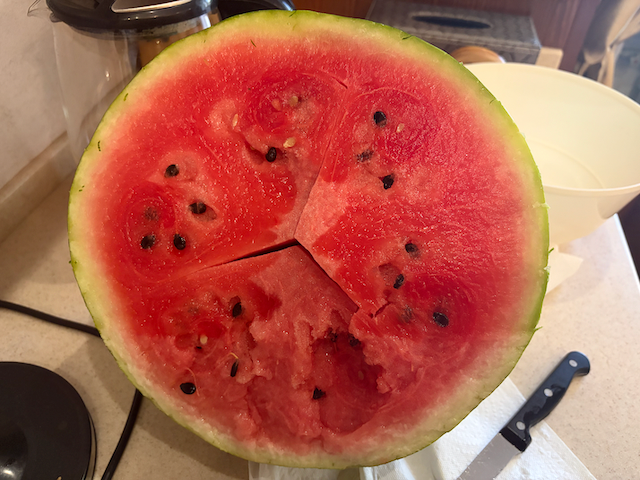
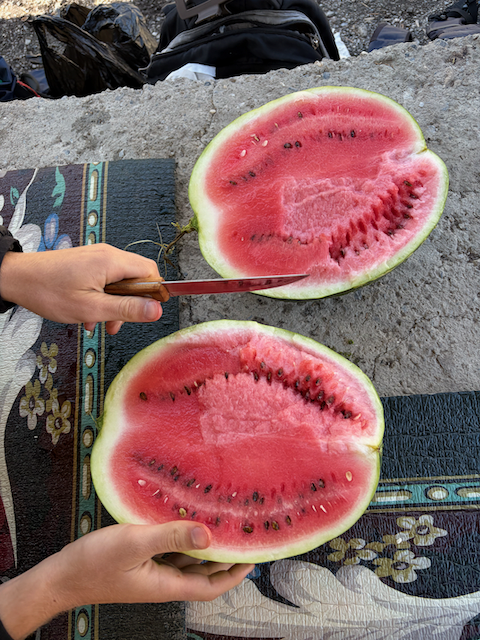
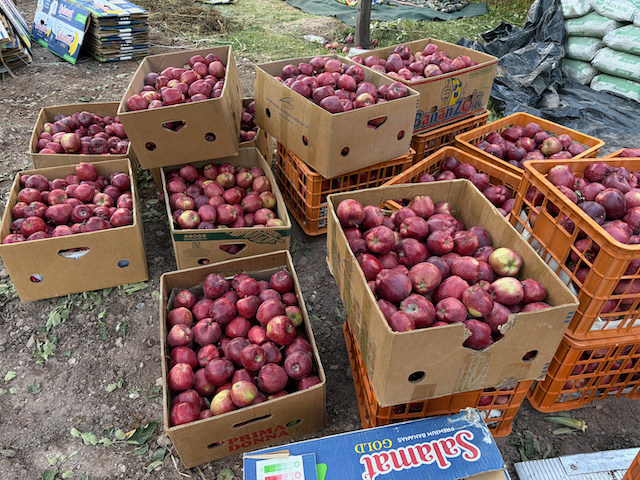
In just two months, I've watched the markets transform. First, there were enormous piles of watermelons. They were replaced by leeks, followed by pumpkins and mountains of apples! In California, you can buy an orange no matter the month. In Tajikistan, many items only appear in the grocery store for a few weeks at a time.
Tajikistan's long, sunny summers create perfect conditions for watermelons. The watermelons here are unbelievably sweet, red, and crunchy. During the summer, I ate two entire watermelons every week!