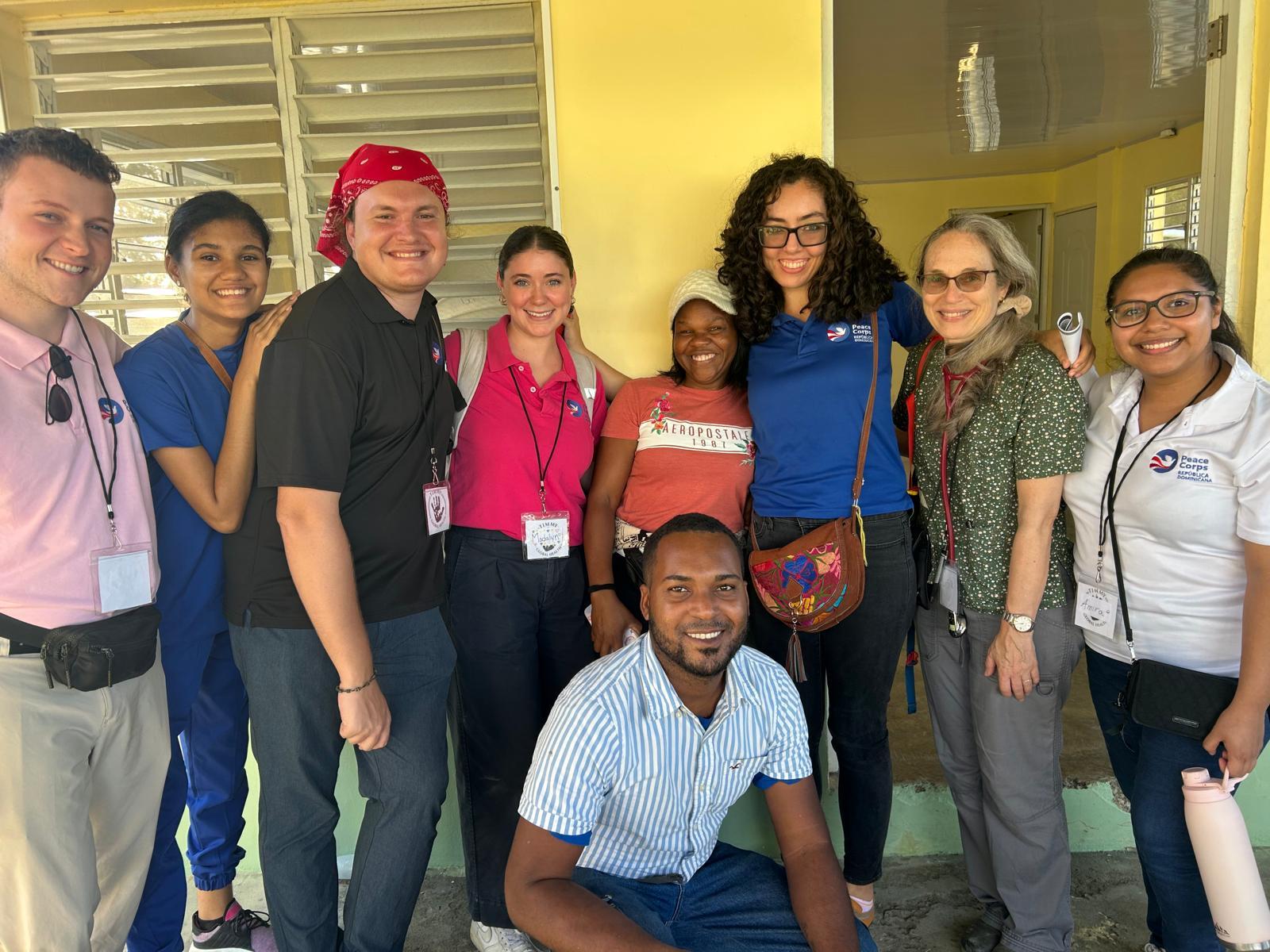
I was hearing on a podcast the other day about how constant climate control in the United States has wrecked our bodies, making us burn calories less effectively. We live in an environment with pitiful food waste that does not help make us more grateful for our food. In many ways, we live in a fake, augmented reality that only superficially goes away when we pay money to come help the people losing from that reality. What I love about these medical missions is that they offer the opportunity for Americans to get to know Dominicans on a human level, at least to a certain degree.
I was not expecting that I would also get to know the Americans on a more human level, and that my judgments about them -- as well as some Haitian interpreters -- would be challenged. When I was in Monte Cristi, we did not have access to Haitian interpreters that spoke English. In order to translate what the Haitian patients said to the doctors, the Haitian patient had to speak to a Creole-Spanish interpreter who then spoke to us, the Spanish-English interpreters who translated for the doctors. There were also days where most of the patients were Haitian, which made sense since we were so close to the Haitian border. I was not expecting to see the same amount of Haitians, if not more in Jarabacoa. I was also not expecting there to be so many Haitian interpreters that could speak Creole, Spanish and English, and would be so educated and interesting to talk to.
With one Creole interpreter, we talked about how we just wanted to make more of an impact with our day-to-day work. I asked him which missionary he felt made the biggest impact on his childhood, and he gave me the names of two Americans.