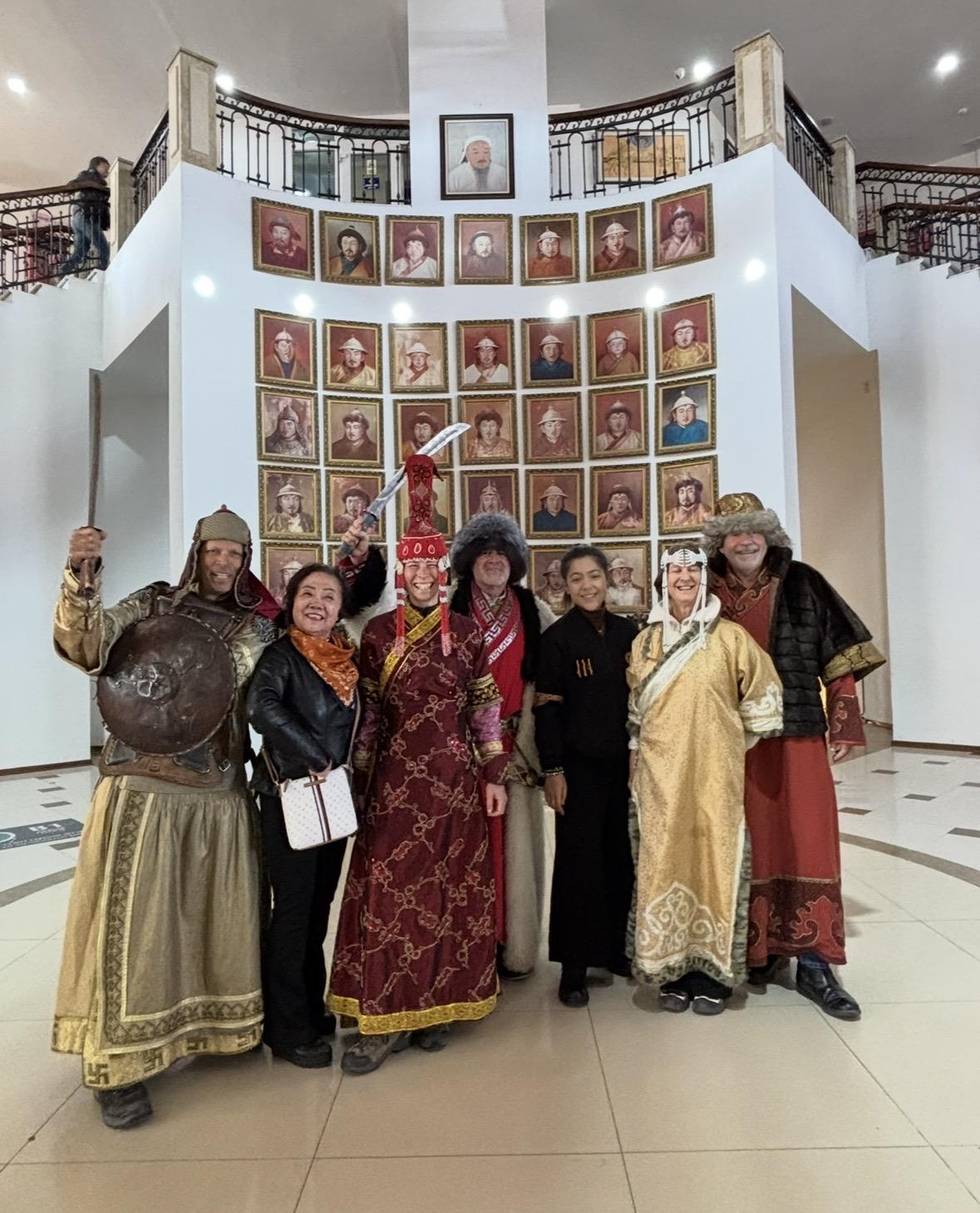
Throughout the day, there was a clear structure to the rituals: people dressed in deels, greeted each other in order of age through zolgokh (the traditional Mongolian formal greeting), and exchanged blessings and small gifts. Afterward, guests shared food, milk tea and vodka, along with customs like passing the snuff bottle.
Tsagaan Sar comes from nomadic and Buddhist traditions and celebrates surviving the harsh winter and welcoming a new year. It’s also a practical time for reconnecting. For families and relatives who may live far apart, they make an effort to visit each other during this time. This holiday helps maintain relationships, pass down customs and reinforce respect across generations. It also dates back thousands of years, tracing back to early Mongolian history in the Xiongnu era (around 2000 BC)!
Yes, very much so. Tsagaan Sar lines up with the end of Mongolia’s long, harsh winter and the transition into spring. Historically, this was a time when survival through the cold was not guaranteed, so gathering, sharing food and checking in on others was essential. Even today, with Mongolia being such a large country and families often living far apart, the holiday still reflects that same need for connection and mutual support after months of isolation.