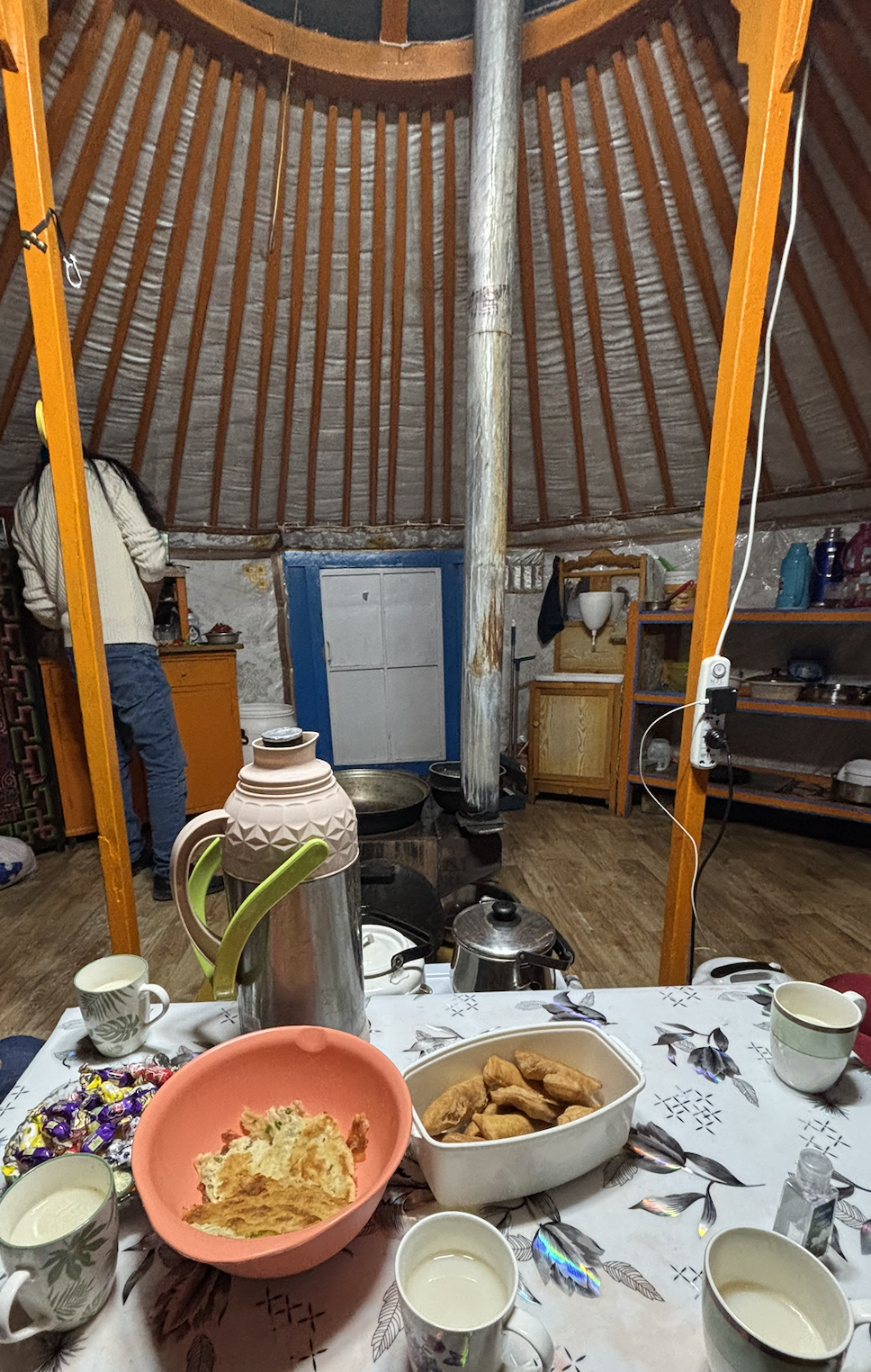
Food is an important way to learn about a place and its culture. When we think of American food, you might picture burgers, hot dogs, mac and cheese or peanut butter and jelly sandwiches. But what comes to mind when you think of Mongolian food?
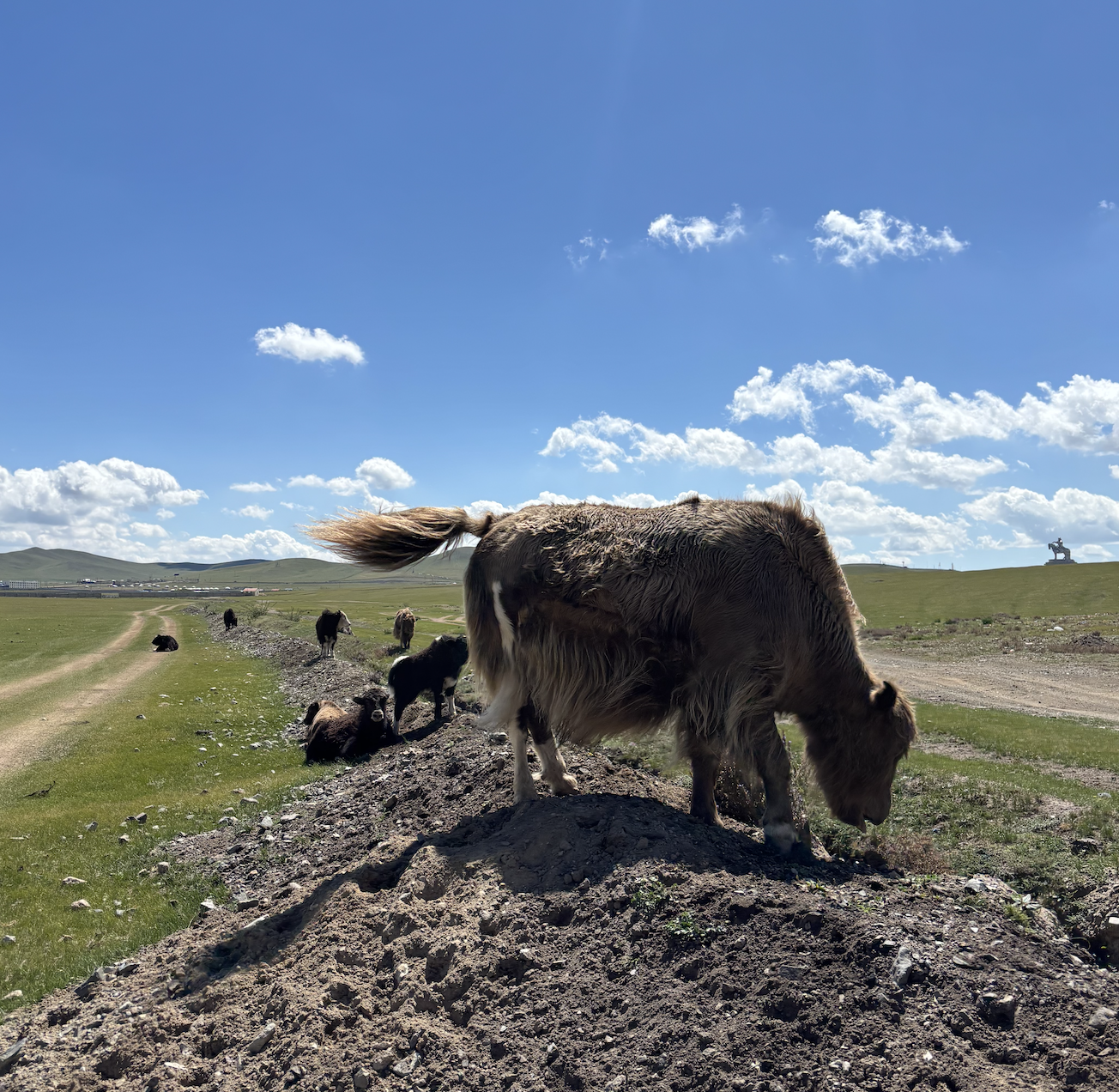
Because of its long history of nomadic herding and its location between Russia and China, Mongolian cuisine relies heavily on meat, dairy and animal fat. Mongolia has a harsh climate where few vegetables can grow, and families have traditionally moved with the seasons to care for their animals. For this reason, Mongolian herders raise animals such as cows, sheep, horses, goats, camels and yaks.
Vegetables are also part of Mongolian meals, partly because of trade and cultural exchange with China. Common vegetables include potatoes, onions, carrots and cabbage. This influence can even be seen in the Mongolian language. For example, the Chinese word for cabbage became бакцай (batsai, cabbage) in Mongolian, and the word for radish became лууван (luuvan, radish).