Each species has adaptations that help it survive:
• Zebras use striped camouflage to confuse predators.
• Waterbuck guard water sources to control territory and mating access.
• Warthogs use tusks to dig for buried roots and insects.
• Hippos stay in water during the day to prevent overheating.
• Giraffes use their height to reach untouched leaves high in trees.
• Elephants use their trunks to strip bark and branches for nutrients, sometimes creating “tree graveyards” by removing bark to access moisture and fiber.
• Leopards climb trees to rest safely and store prey away from scavengers.
• Wild dogs rely on cooperation - hunting and defending pups as a coordinated pack.
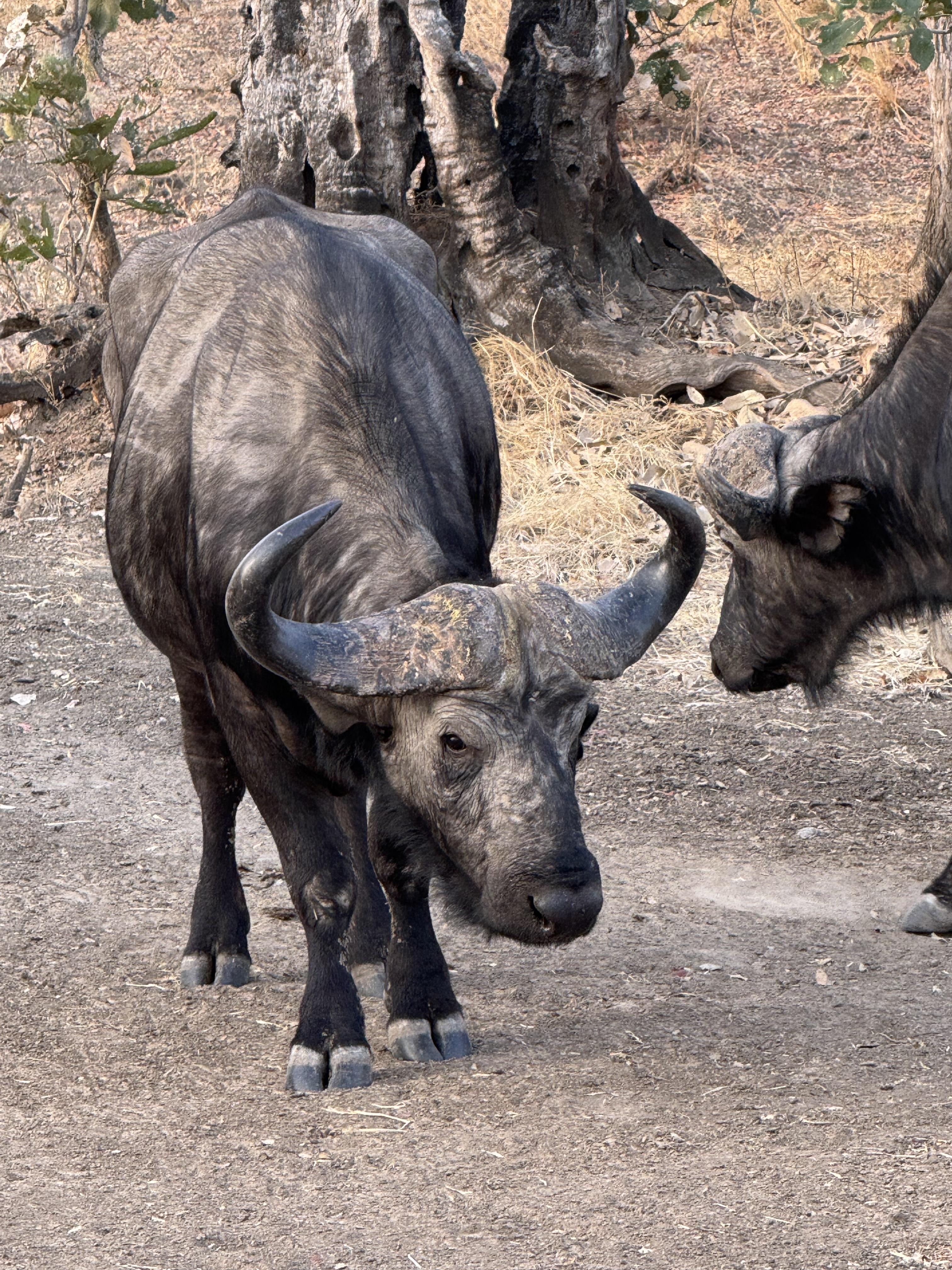
In this ecosystem, lions are the top predators and can hunt almost any animal, though even they may avoid elephants to escape being gored by tusks. Male lions sometimes kill cubs from rival prides to reduce competition. Dry season itself is a major threat. As water disappears, animals grow exhausted and dehydrated. Some die simply from thirst, especially the larger animals that are kicked out of their herd and wander solo, often the older males.
Beyond natural dangers, poaching remains a serious concern. Park rangers patrol the area, and some lions are fitted with GPS collars to monitor and protect them. Conservation efforts are strong here, but these ecosystems are fragile. Climate change, habitat loss, and illegal hunting could disrupt the balance.