Unique ecosystems shape the plants and animals that live within them. In southern Africa’s savannah, survival depends on water, shade, and teamwork. During the dry season in South Luangwa National Park, I saw how animals adapt to heat, dust, and predators, and how their lives are tied to the land and river around them. Here are a few of the many animals that we saw over our two trips there.
When you see these animals online or at a zoo, their patterns seem bold and unmistakable. But in the dry season, the savannah turns brown and dusty. Almost nothing is green except the tops of tall trees—and even those leaves are coated in dust. Suddenly, camouflage makes sense.
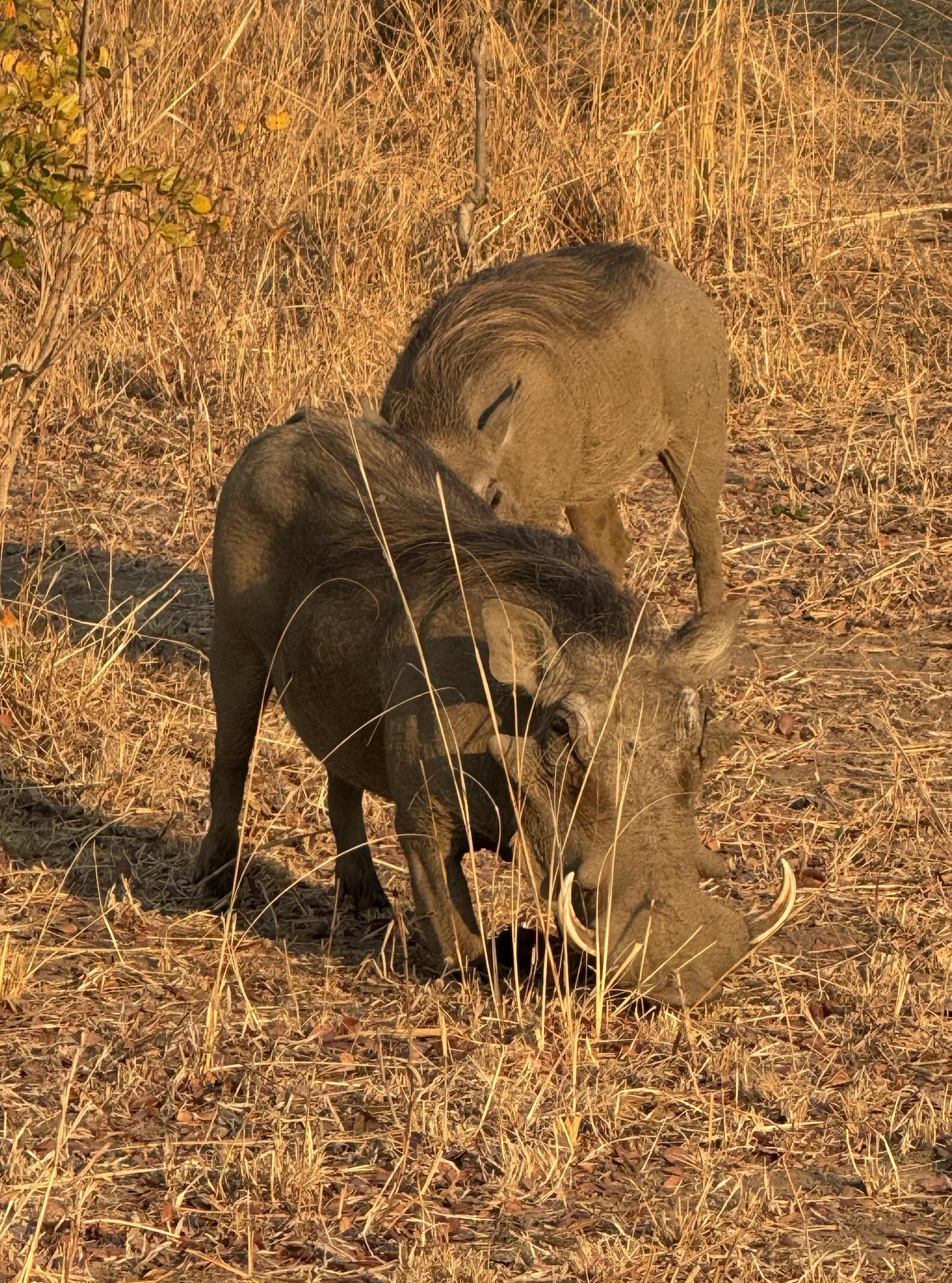
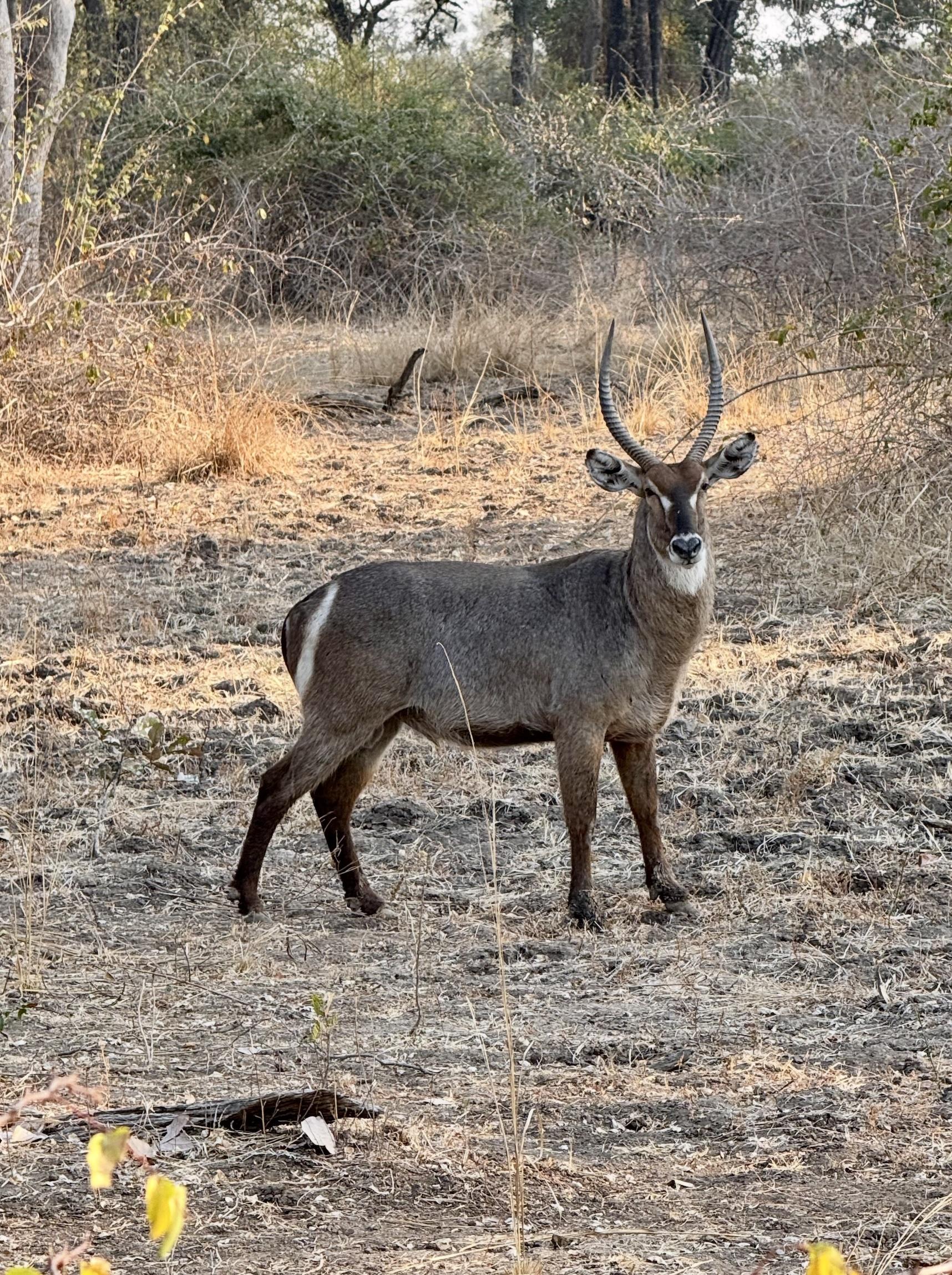
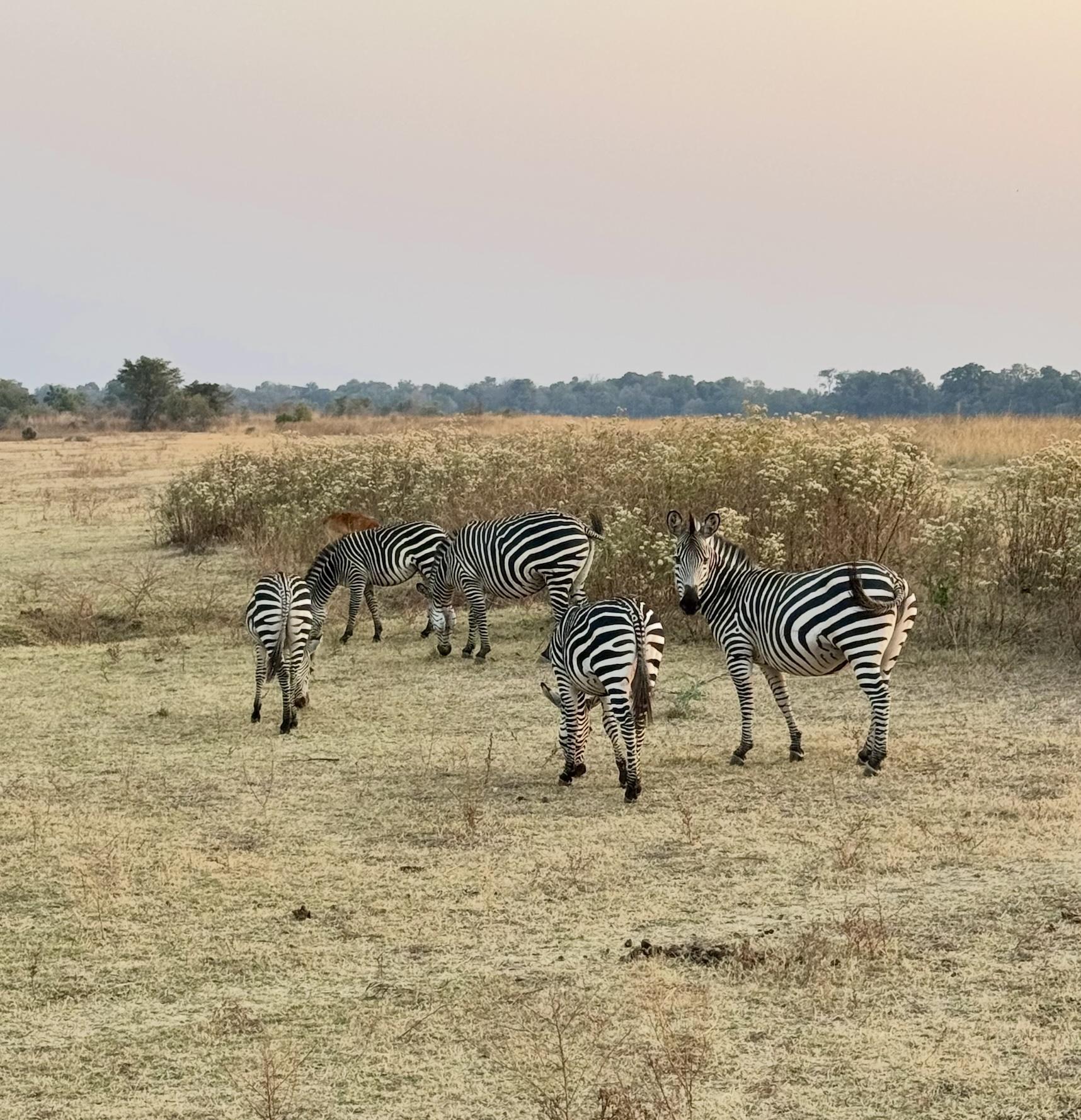
Zebras look striking alone, but when several stand side by side, their black-and-white stripes blur together. From far away, it becomes surprisingly hard to tell where one zebra ends and another begins. For predators with less sharp eyesight, that confusion can be the difference between catching prey and going hungry. Waterbuck resemble large deer you might see in Michigan, but they are bigger, with curved horns and a shaggy coat. Males are territorial and often guard small water sources to attract females.Warthogs may be the silliest-looking animals: four tusks, bristly hair, and knobby faces.