Watching one climb a tree and move silently through the branches felt like witnessing something perfectly designed, far from my clumsy orange cat at home who I've watched fall backwards off my couch. The wild dogs were surprisingly emotional to watch once we found them right after dawn... about fifteen adults were guarding eight or so puppies. When we approached, we actually saw a hyena coming into the area and getting constantly chased away from the adults while the puppies played in a dried out river bed.
Every afternoon we would go for a second game drive where the last hour or so would be after sunset. Being in Chicago at home, it makes it easy to forget how much the light pollution impacts our ability to see the stars. We would wait for the water truck to get us to drive across the river to our lodge and we could just stand and stare at the Milky Way... I've never seen stars as clearly as here except in New Zealand, where there are limits on the light allowed in the area around Lake Tekapo.
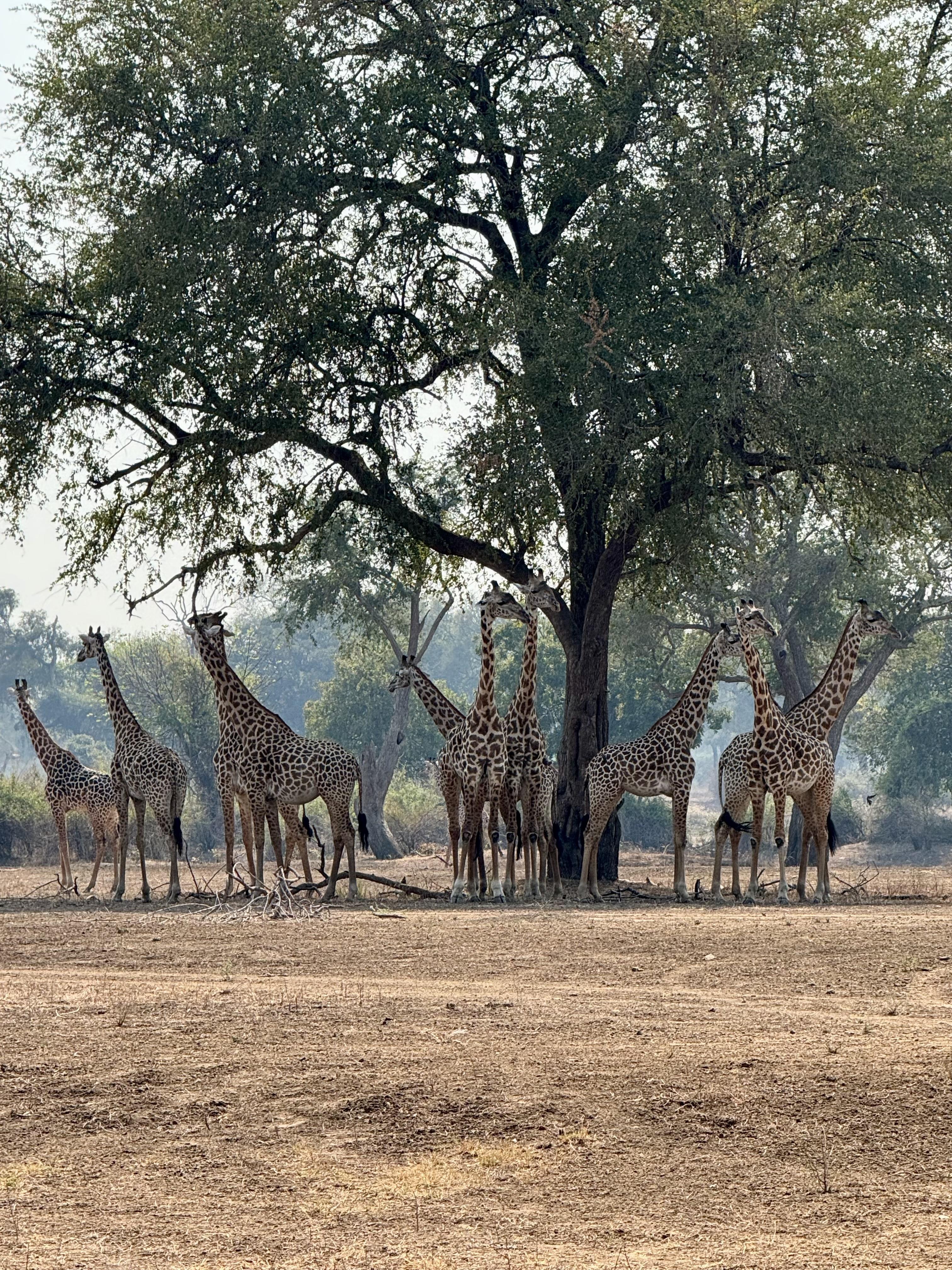
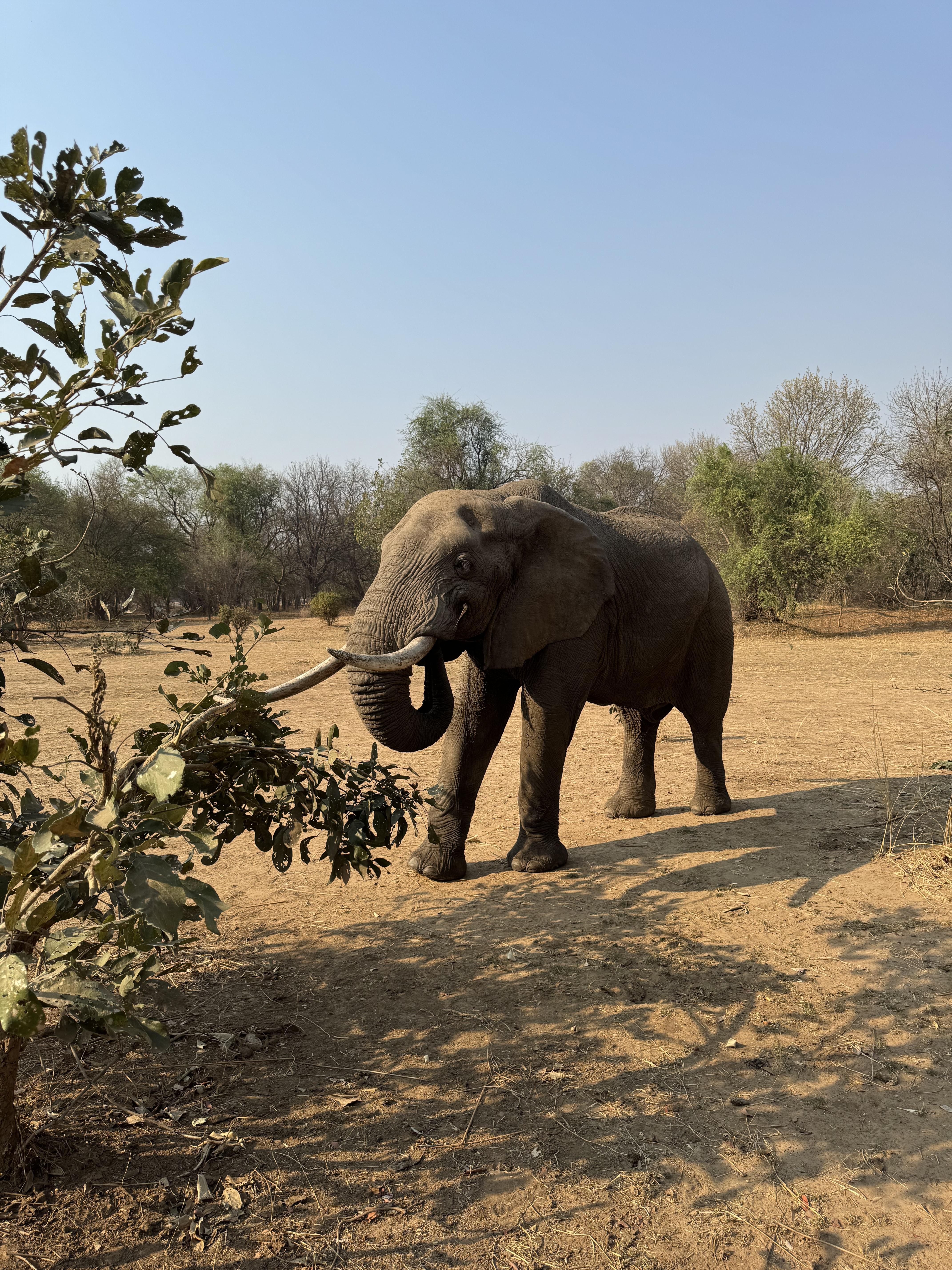
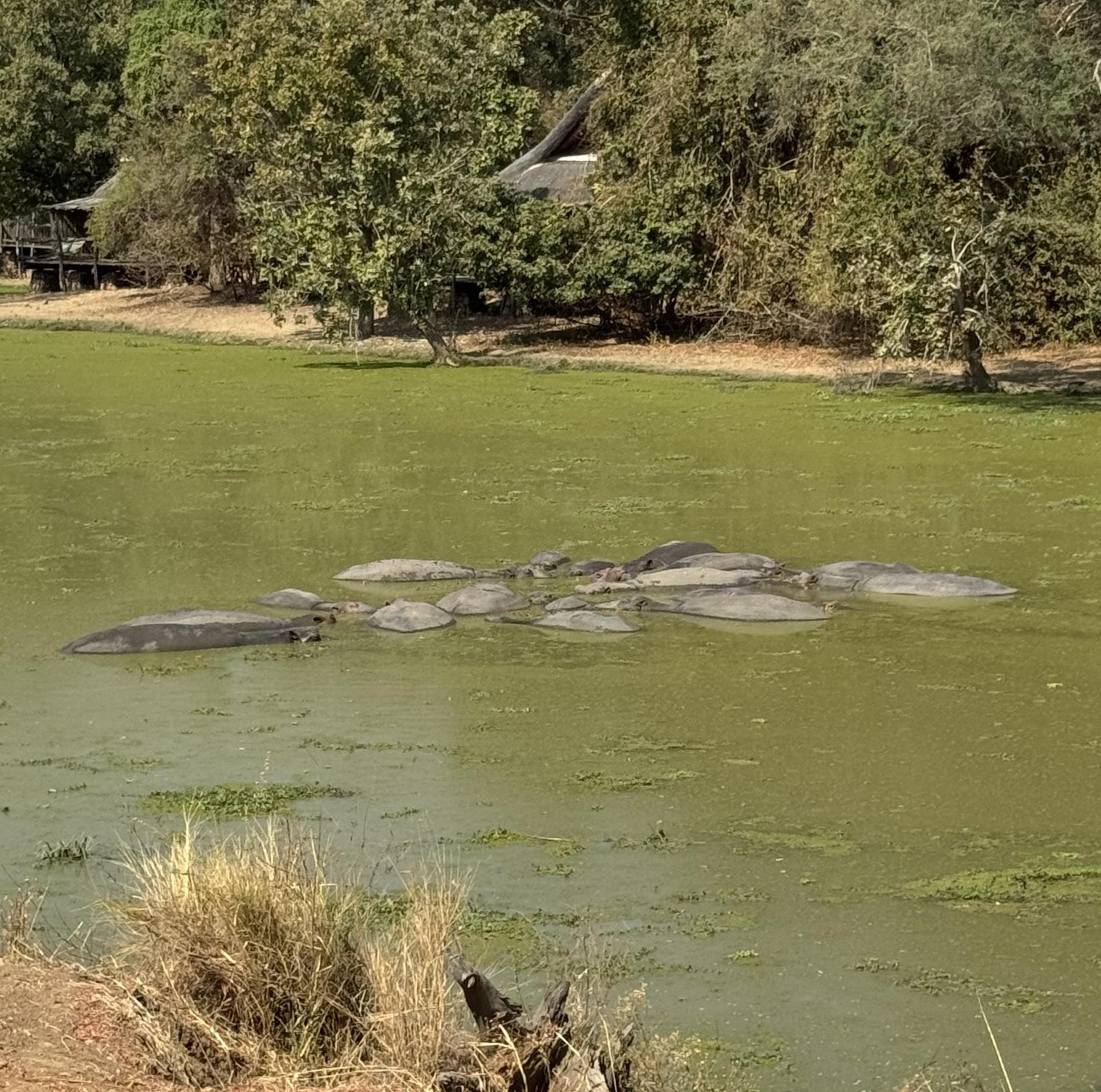
These animals live in the savannah ecosystem of South Luangwa National Park. The Luangwa River runs through the park and shrinks dramatically during dry season, dropping what looks like 15–20 feet in depth from May to September. The entire ecosystem revolves around water. As it becomes scarce, animals gather near the river and make it much more densley packed than during rainy season. Predators follow. Hippos spend the day standing in shallow water to stay cool and protect their sensitive skin. Leopards rest in trees and may ambush prey from above. Buffalo, elephants, giraffes, and antelope travel in herds to increase safety.