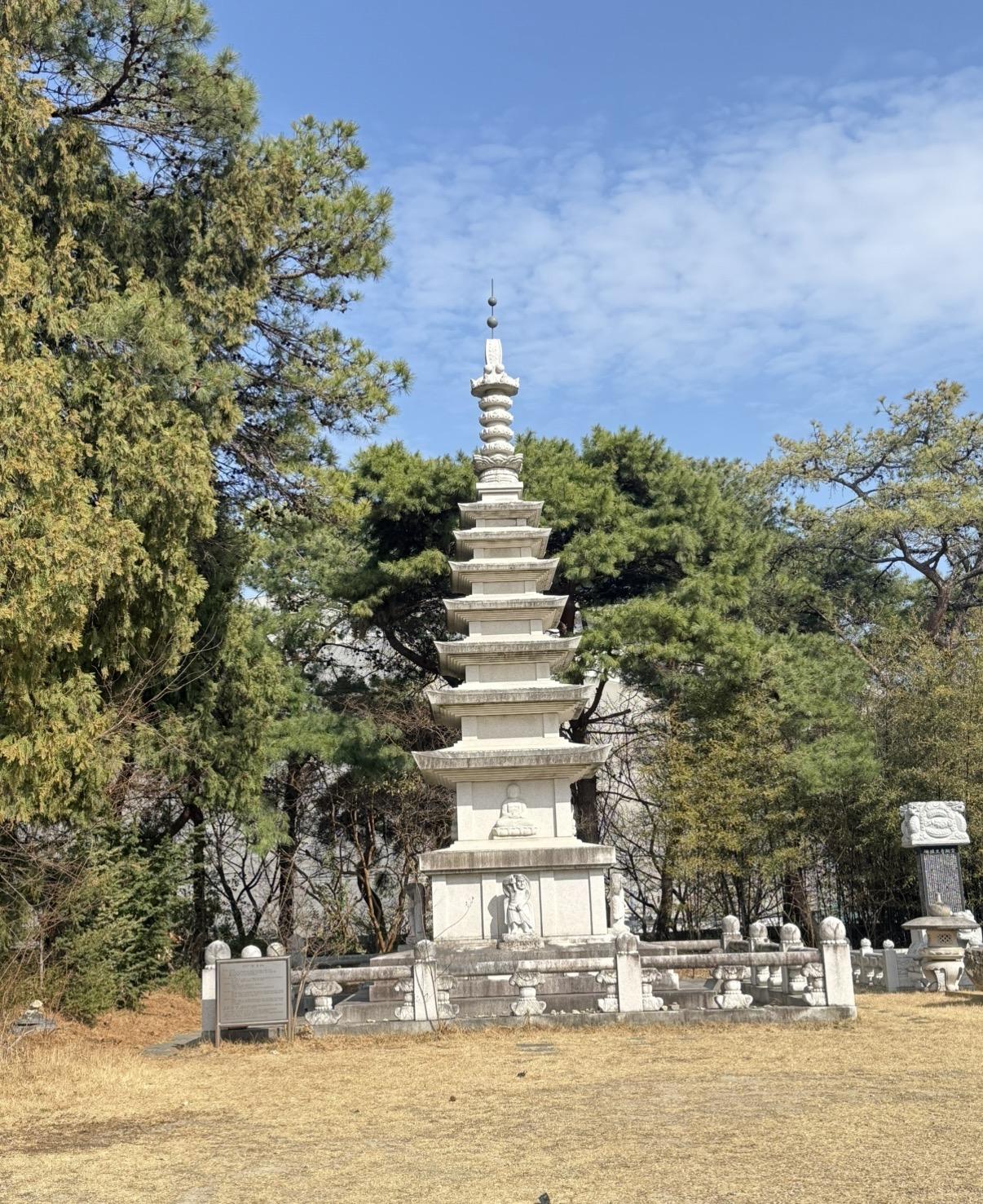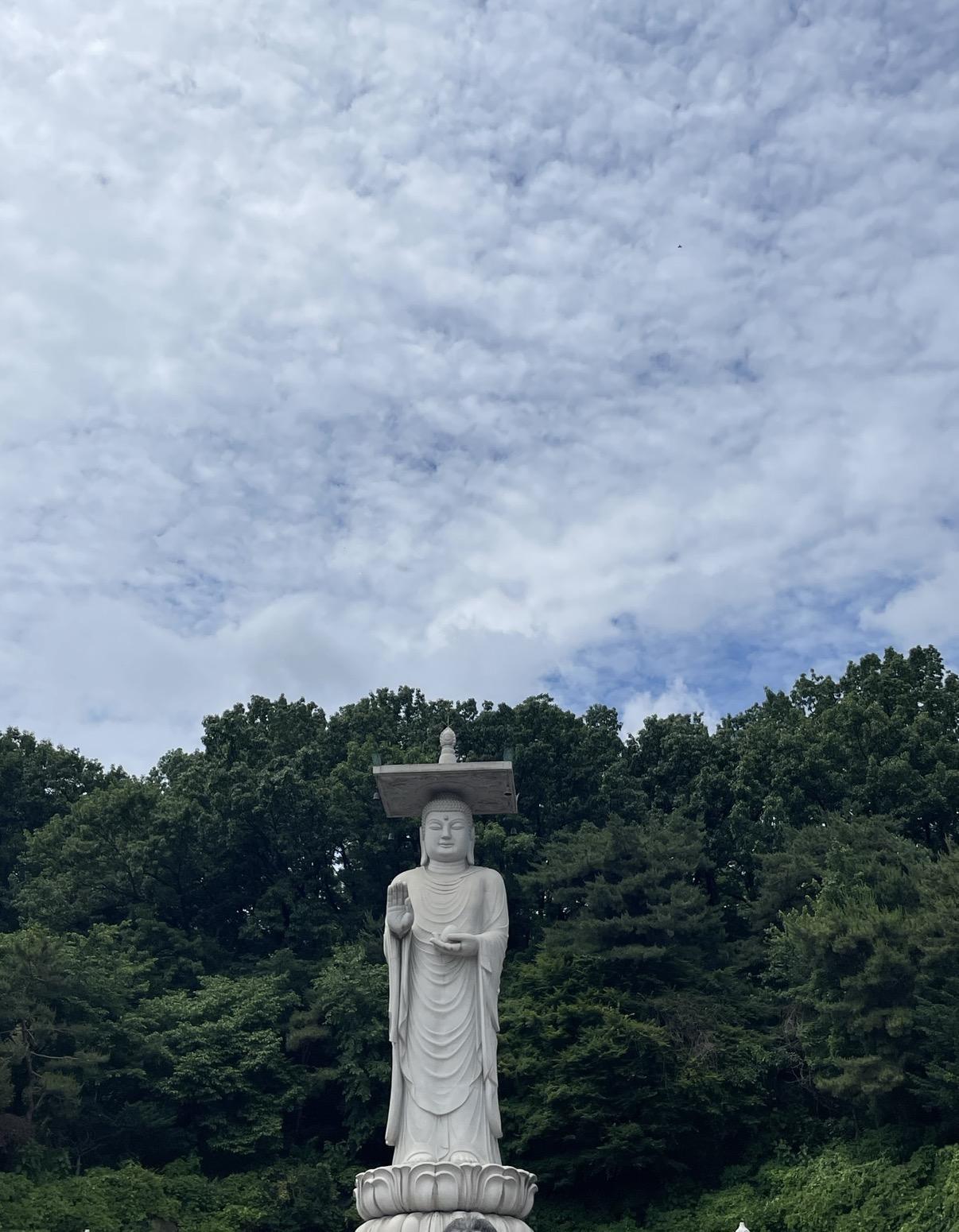
The local community and Buddhist followers have these traditions because it helps people feel focused, calm and spiritually connected with the Earth. Buddhist values also teach people to be kind to all living things, to be mindful and to respect one's ancestors. Temples are places where family and friends can come together during important holidays, pray for health and success, and learn teachings that improve daily life. Temples are also very important to Korean history, as they preserve old artwork and statues like the Buddha and paintings I saw, so future generations can learn about Korean history.
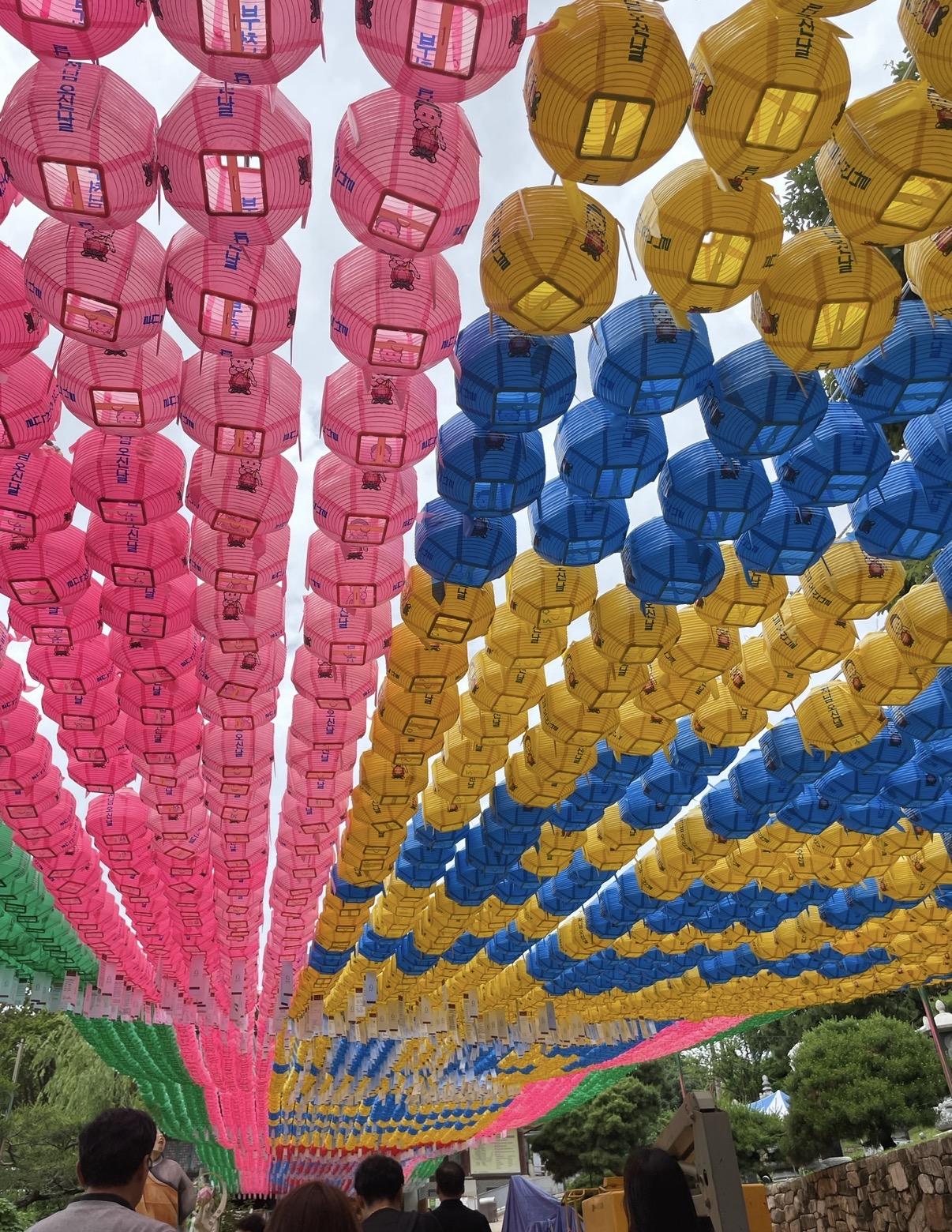
Centuries ago, Buddhism shaped almost every part of Korean life. It influenced art, government decisions, architecture, education and even the way people understood the world. Many of Korea’s famous temples, statues, and paintings were created during this time. However, Korea has changed a lot over the past 200 years and today, only about 15-20% of Koreans are Buddhist, and many people now follow Christianity or have no religion at all. Even so, Buddhism is still an important part of Korean culture. For example, Buddha’s birthday is a public holiday in May, and temples across the country hang thousands of colorful lanterns to mark this occasion. Many people also visit temples on this day to enjoy the peaceful atmosphere, to make wishes and to celebrate a tradition that has been a part of Korea’s history for over a thousand years.
Three years ago, I actually went to a very famous temple in Seoul on Buddha’s birthday, called 봉은사 (Bong-eun-sa). I got to see the colorful lanterns and learn a lot about Buddhism!