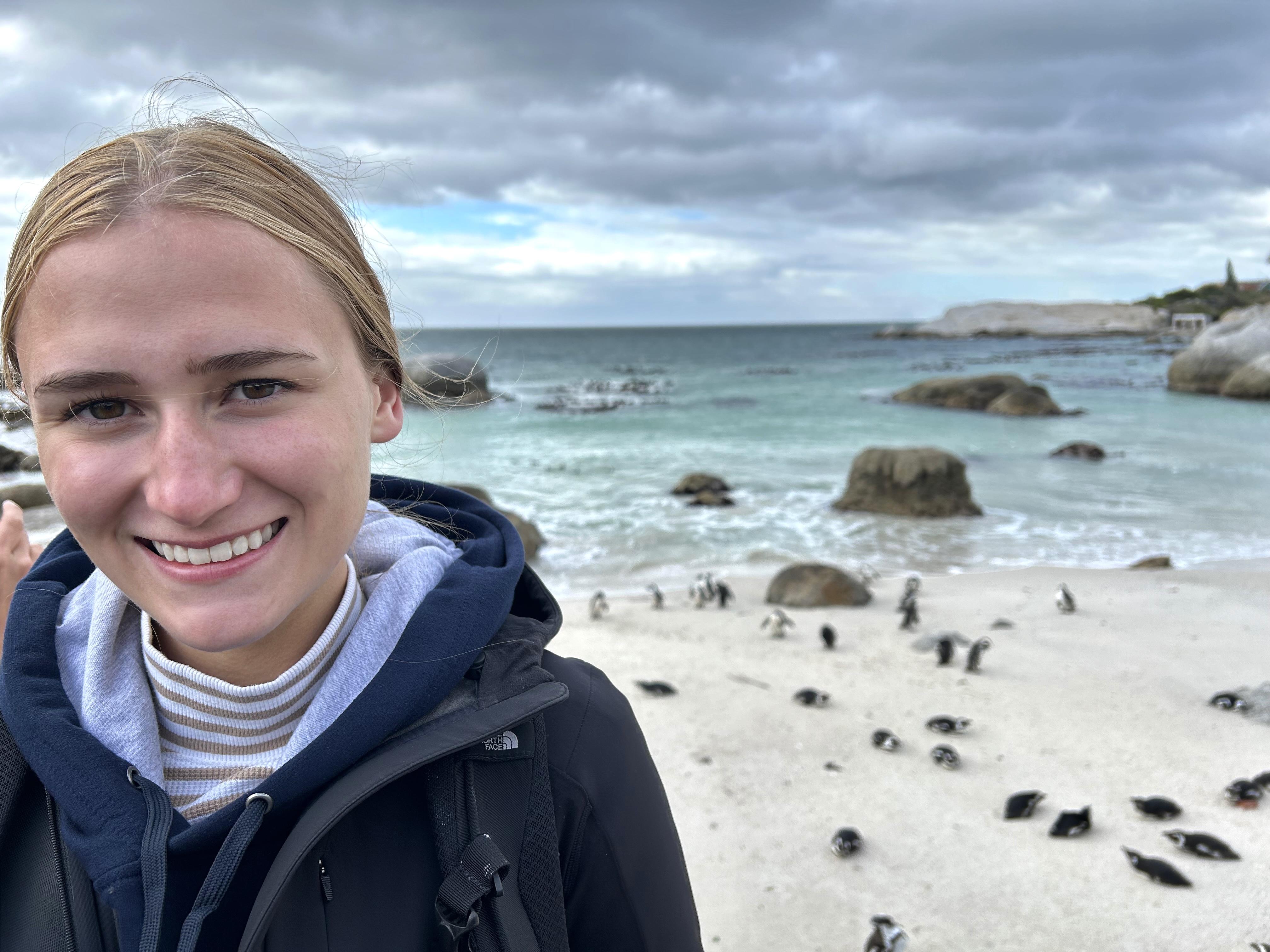
Hi! I'm Julia McDonald. I grew up in Oregon, studied marine biology at the University of Washington, and I'm currently a Fulbright researcher based in Hobart, Tasmania. My work focuses on little penguins--the smallest penguin species in the world--and how they're adapting to a changing coastline. My research has taken me from tide pools in the Pacific Northwest to burrows along the cliffs of southern Australia.
This season, I'm trading the lab bench for late nights on the beach, tracking little penguin colonies up and down the Tasmanian coast. I'll be based near Hobart, with trips out to Bruny Island and the Tasman Peninsula, where some of the largest colonies nest in burrows dug into the dunes. Along the way, we'll explore the geography, wildlife, and coastal ecosystems of Tasmania, and get a firsthand look at how researchers monitor a wild seabird population--from tagging chicks to counting nightly "penguin parades" as adults return from the sea at dusk.
Fieldwork like this comes with its own set of challenges. Weather, tides, unpredictable animal behavior, long nights, and the patience required to sit quietly and wait will all be part of the expedition. We'll see what it's really like when the data doesn't cooperate, a colony moves somewhere unexpected, or a storm rolls in and changes the whole night's plan.
Eventually, we'll reach the height of chick-fledging season, when hundreds of young penguins leave their burrows for the first time and head out to open water. It's one of the most dramatic moments in the little penguin's life cycle, and we'll be there to witness it.
Over the coming weeks, I'll bring you along with photos, videos, stories, and live conversations from the field. Bring your questions and curiosity. We know where the research is headed, but part of any good expedition is discovering everything in between!