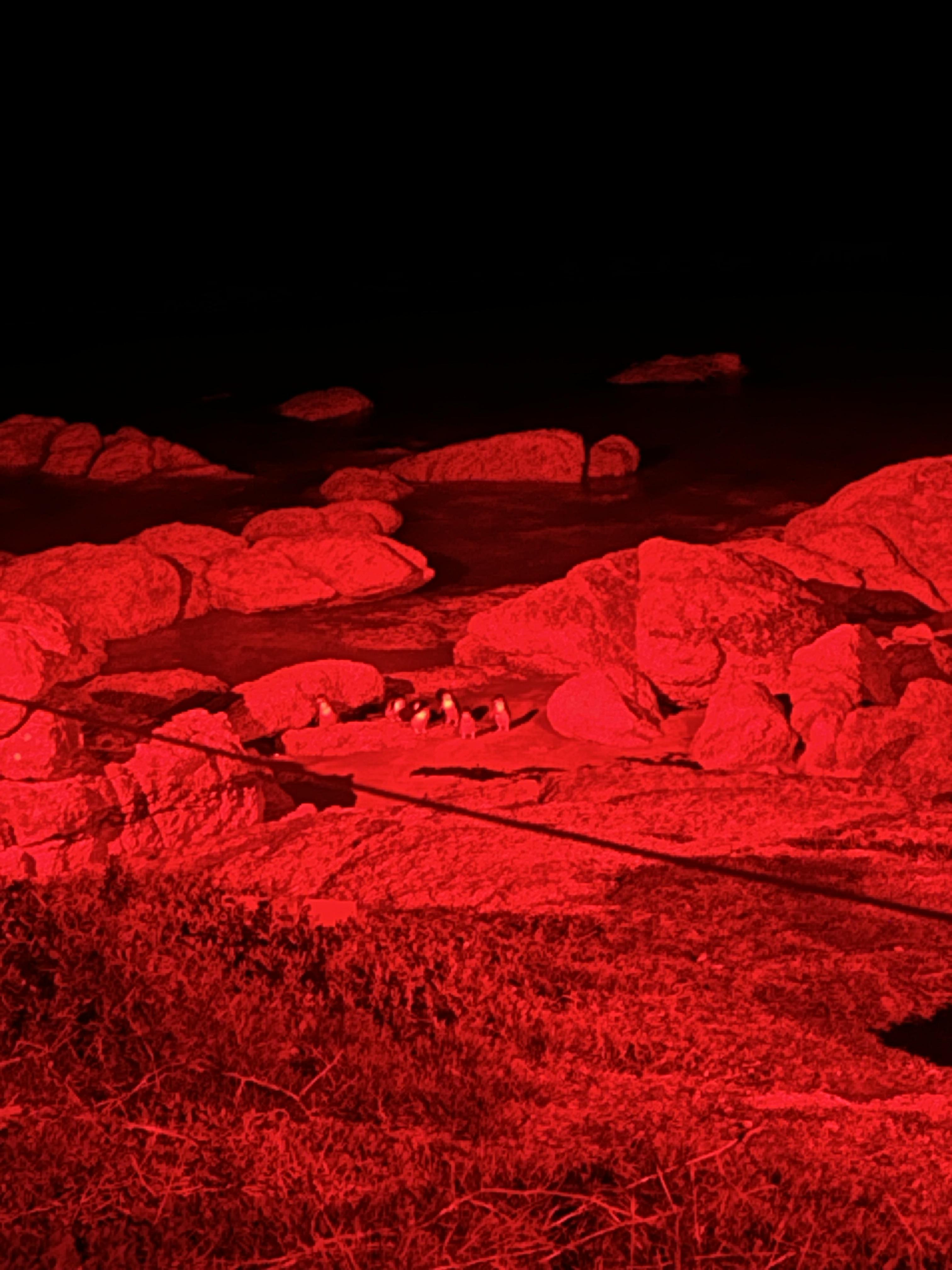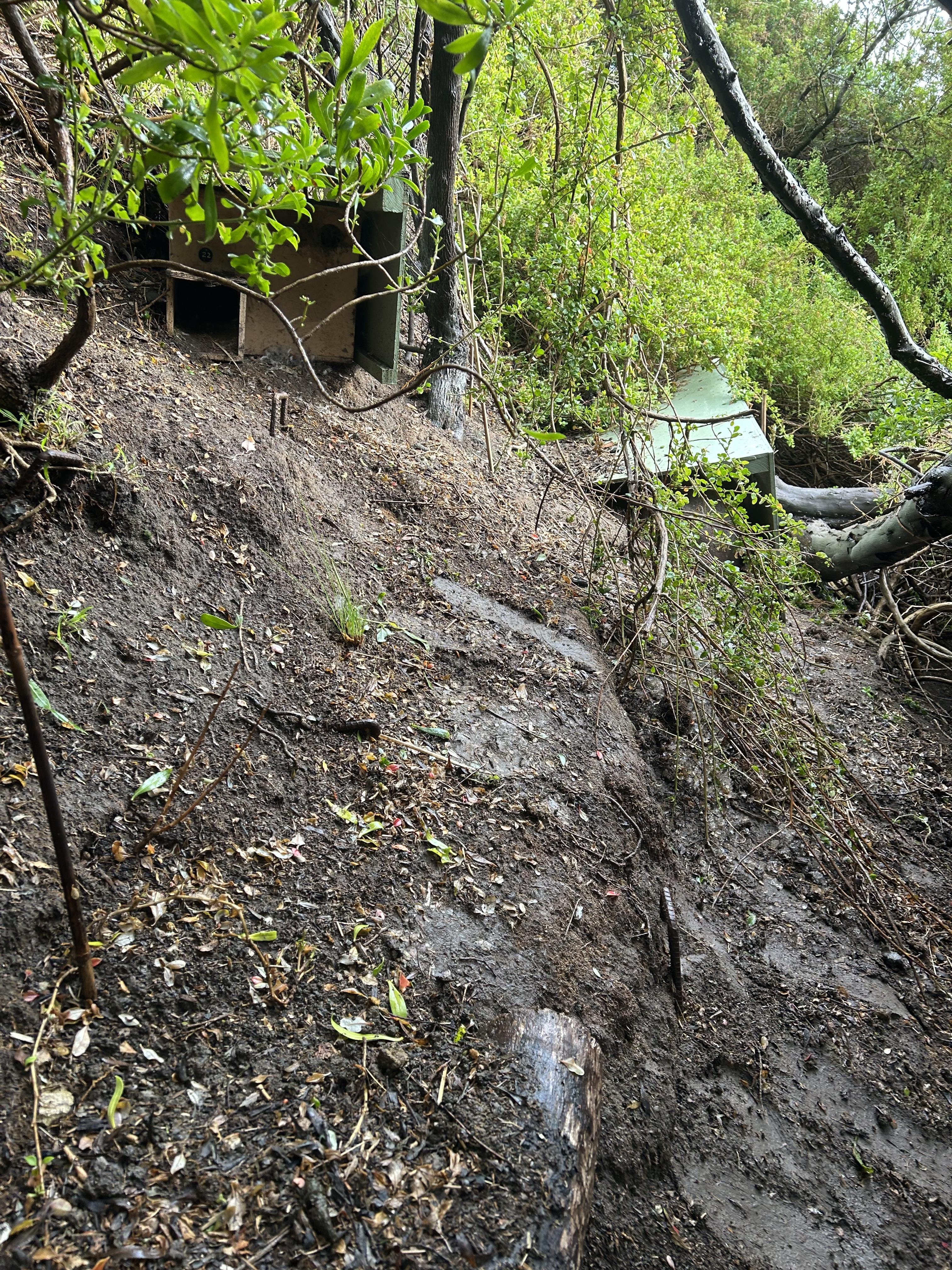
Penguins waddle on their 2 feet up from the shore to their burrows. Little penguins use their big, strong feet to dig into the soil and make a hole big enough for them, their mate, and their baby to live in. The land provides a warm, dry, safe place for little penguins to raise their chicks.
Little penguins are fierce predators and feisty defenders of themselves and their chicks, but they are also prey. Little penguins are an important part of the food web here in Tasmania. Penguins eat tiny fish, and then the penguins are food for bigger predators like seals and sharks. It’s important for the ecosystem for some little penguins to be eaten by predators, and thankfully there are so many little penguins that we don’t have to worry too much about them being eaten.
The biggest threat facing little penguins is one that their sharp beaks and agile little bodies can’t protect them from. Little penguins are losing their nesting sites as more buildings are constructed near the ocean. Here in Tasmania, little penguins live right next to houses, parking lots, and even schools. Little penguins don’t prefer to live so close to humans, but they have nowhere else to go. Little penguins are also threatened by predators on land. Unfortunately, the most common predators of little penguins on land are pet dogs and pet cats. Dogs and cats are adorable as pets, but they can be deadly predators to wild creatures like little penguins. There are lots of signs around Tasmania that remind people to keep their dogs on leashes so they don’t hurt any penguins. If you have a dog or cat, remember to keep them away from wildlife!