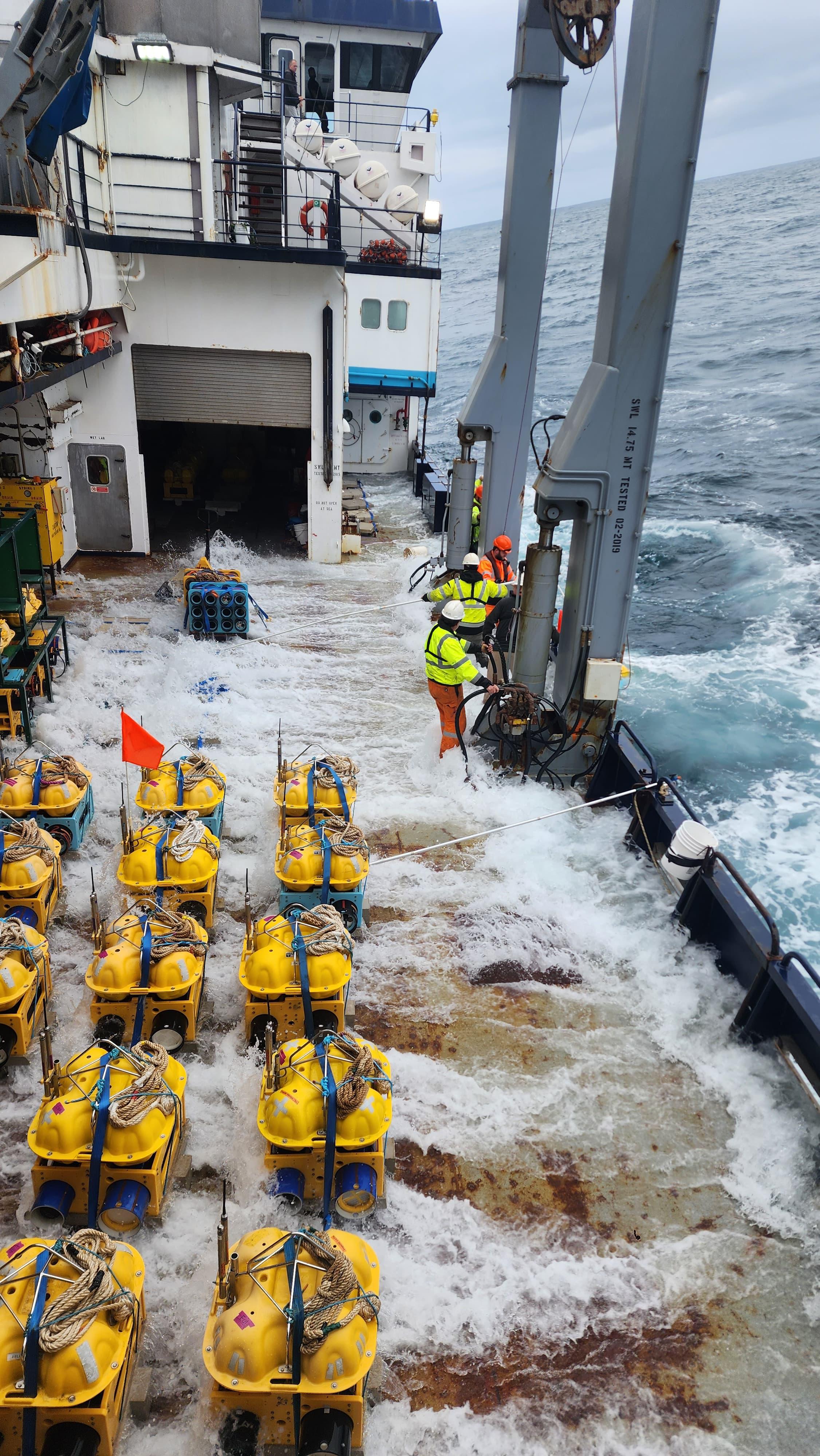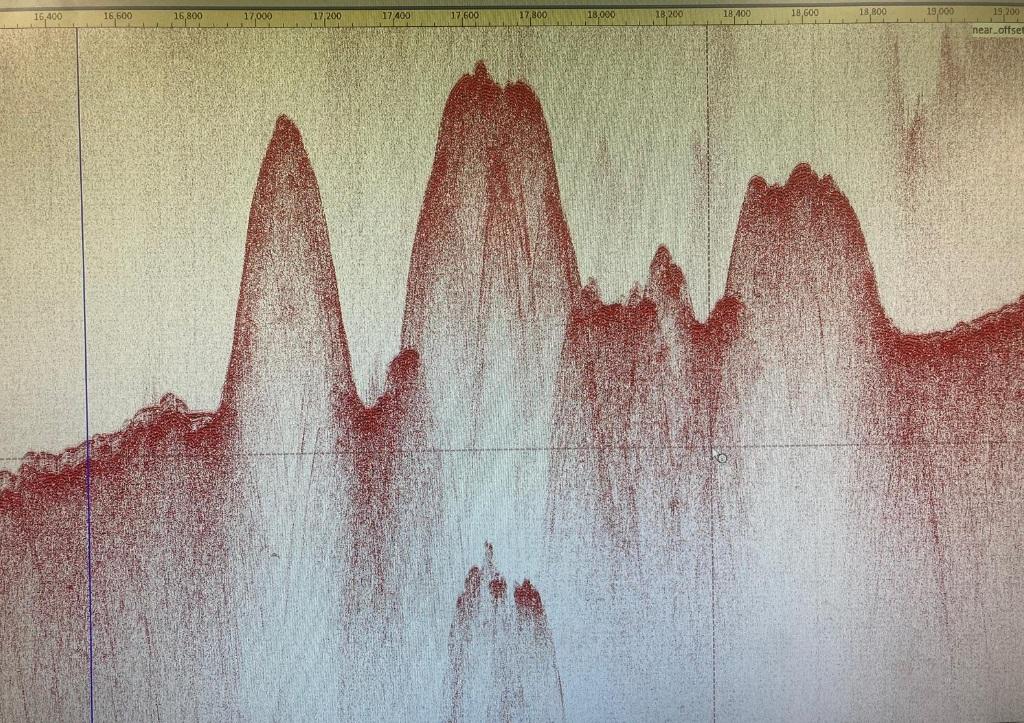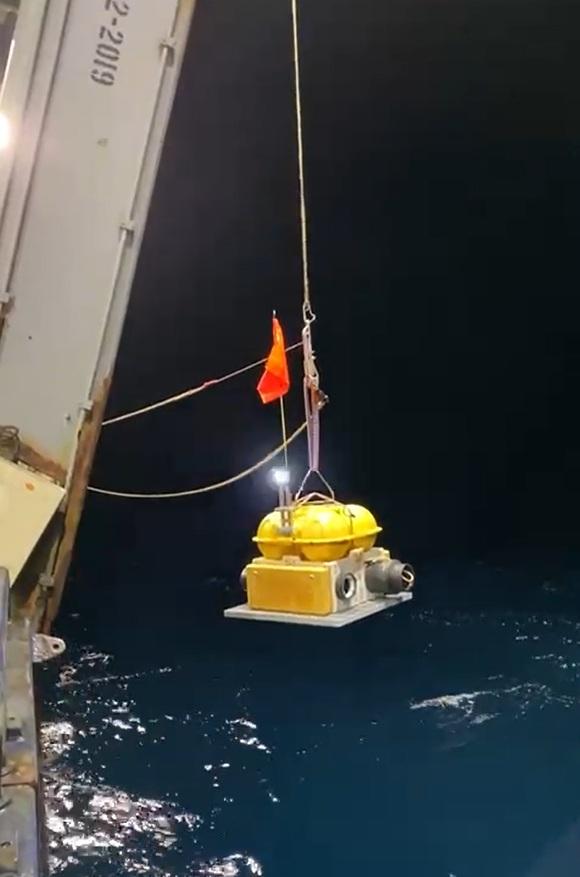
Why does this matter? Ocean currents transport heat around our planet, influence weather and climate, and distribute nutrients that support marine life. We also deploy ocean-bottom seismometers, instruments that sit on the seafloor recording earthquakes and other vibrations. Imagine discovering an underwater mountain that has never been mapped. What would you name it?
My job is Chief Science Officer. I coordinate scientific operations, working alongside the captain, crew, scientists, and technicians to complete our research safely. A research vessel operates 24 hours a day. While some people sleep, others collect data, repair equipment, navigate, or prepare the next experiment. There are laboratories, workshops, cabins, and a galley where meals are prepared. Everyone lives and works together, sometimes for weeks without returning to port.
And the ocean doesn't always cooperate! Rough seas can send waves crashing over the deck, equipment can break, and storms can change our plans. Imagine trying to work at a computer while the entire room rolls from side to side!
Exploration requires patience, problem-solving, and teamwork. Scientists understand the research, engineers maintain equipment, and sailors operate the ship. Every person has an important role.
The ocean covers about 71% of Earth's surface, yet much of the deep ocean remains poorly explored. Studying it helps us understand earthquakes, volcanoes, ocean circulation, climate, and how Earth has changed over millions of years.