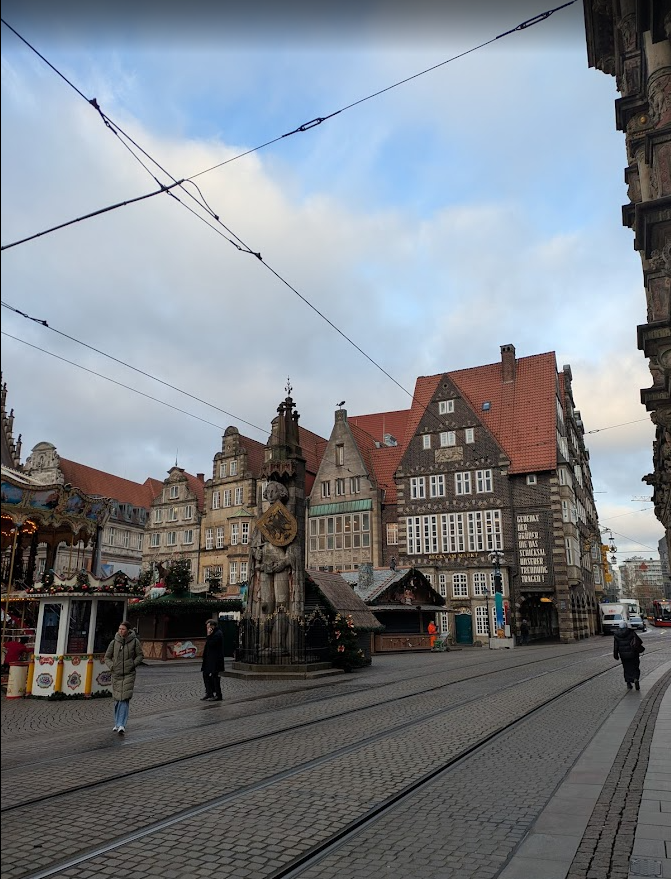
Public transportation in Germany is widely more accessible than in most parts of the United States, outside of larger cities such as New York or Chicago. Even the smallest German villages, or Dorfs, have at least a two-platform train station, like in Koserow. Bus stops, as I have mentioned elsewhere, are also very common.
While cars remain the most common form of transportation, they are generally used much less often than in the U.S. A lot of the infrastructure in Germany is pedestrian-friendly, and it is possible, for example, to walk from my town to the next without needing to trek along a highway or on the main road. Biking is another popular alternative; students can even earn a "driver's license" for biking while in elementary school.
I personally love the public transportation system in Germany and can get almost anywhere without the help of a car. The "Deutschland Ticket," or Germany Ticket, works as a subscription-based access pass for all regional transportation in Germany, including local trains, buses, underground trains and trams. It began in 2020 and only cost 9€, but has since risen to 77€. Even with the high increase, it is worth every cent.