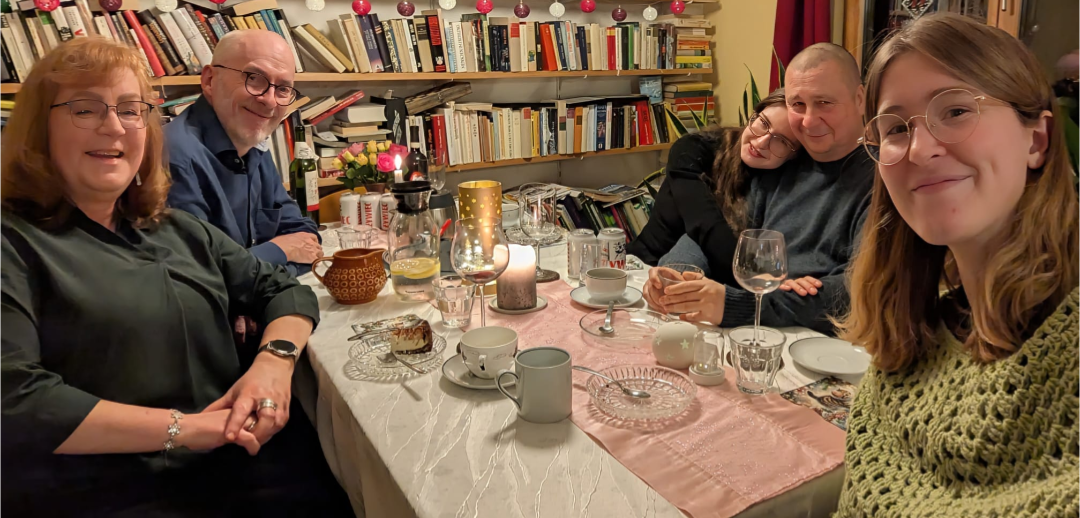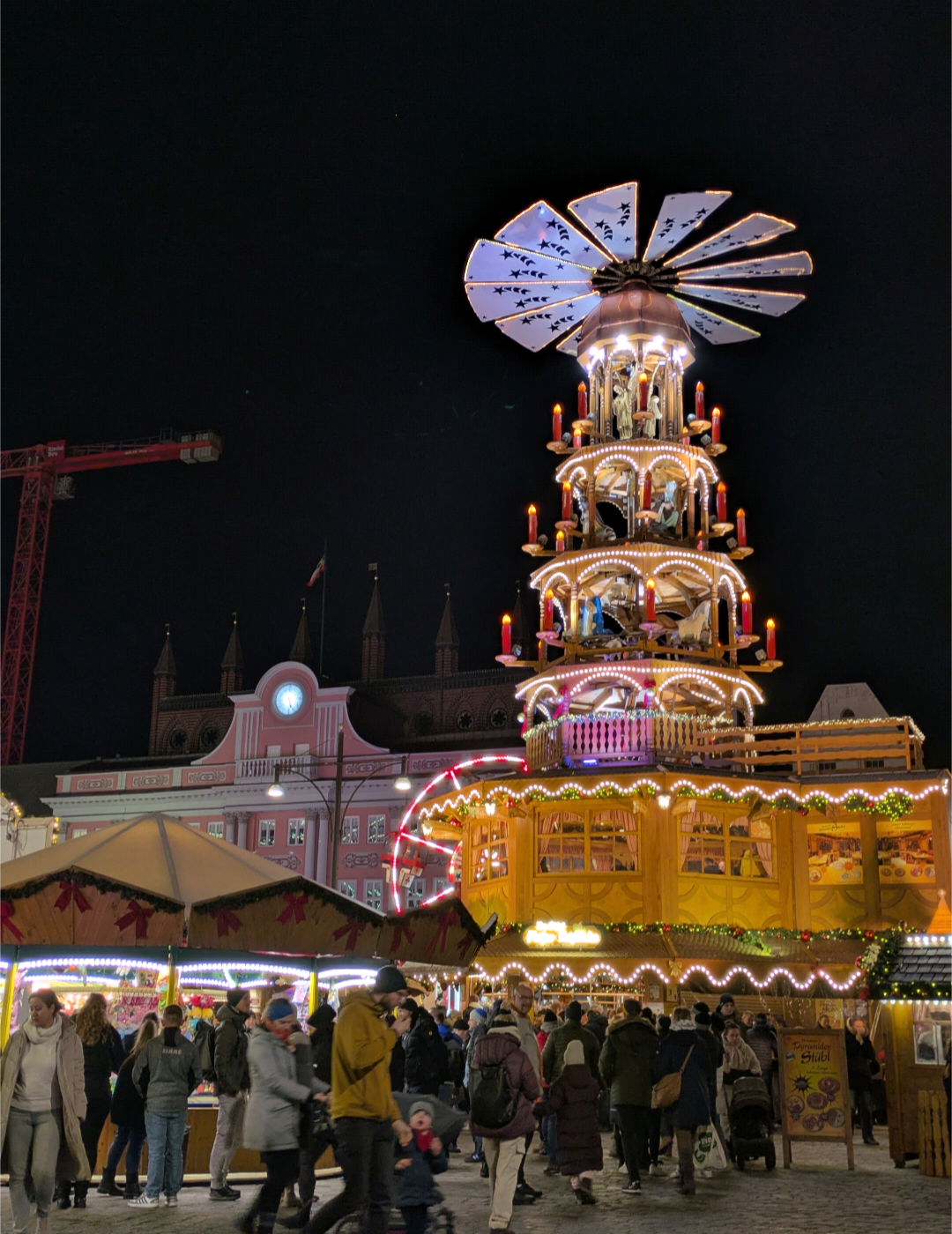
In Germany, the Christmas celebration is not limited to Christmas Eve and Christmas Day. Not only are there Christmas Markets in nearly every neighborhood throughout December, there is also the first, second and third Christmas days after Christmas Eve, or "Heiligenabend" (Holy Evening). This year I was invited to spend Christmas with my landlords, who have been more than generous since I have come, and act as a host family. We are both good friends and neighbors.
Over the course of three days, I was given the opportunity to try a variety of typical Christmas dishes. On Christmas, my landlady served us a variety of lighter appetizers, such as beet stew and a (very fishy!) herring salad. We were joined by her husband and some neighbors from around the block. My landlady, who is also a Polish teacher at the school where I work, also left a placing open, as per Polish tradition. The open space has two possibile meanings: first, it symbolizes a space for Jesus, or God, per Christian tradition. Second, it is left open for any unexpected visitors that may appear during the festivities.
On Christmas day I was invited to eat with my landlady's family. Her mother made duck, a very common Christmas dish, with Klöße (a type of potato dumpling) and Rotkohl (red cabbage).