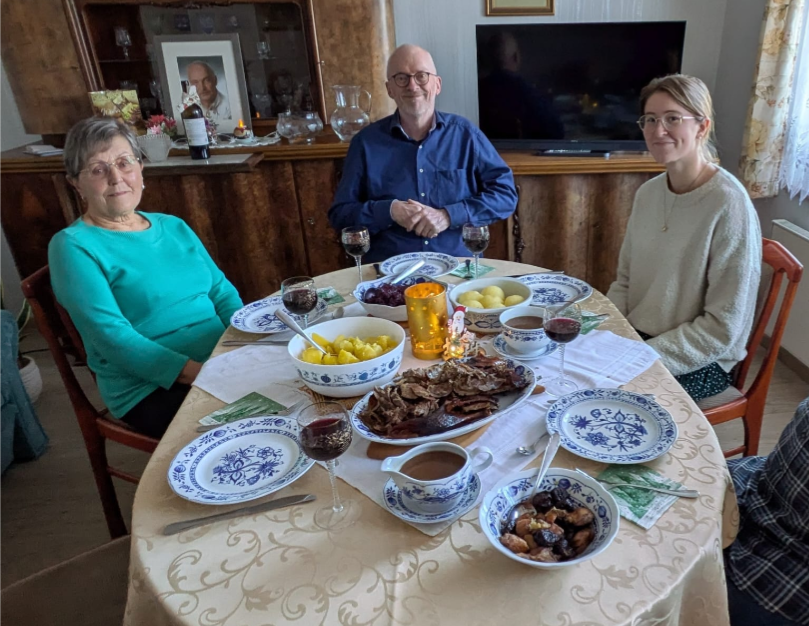
We also had fruit salad and Fürst-Pückler-Eis—Neapolitan Ice Cream. I learned then that the first recorded creation of Neapolitan Ice Cream was actually from Prussia.
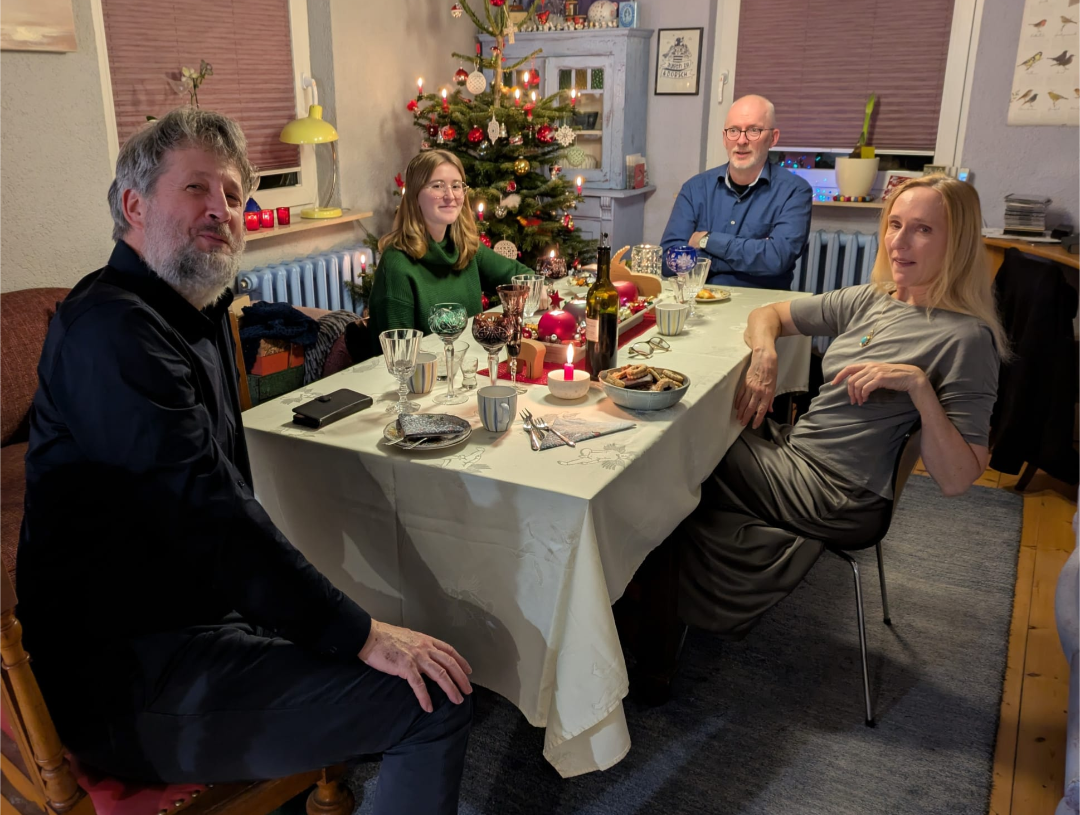
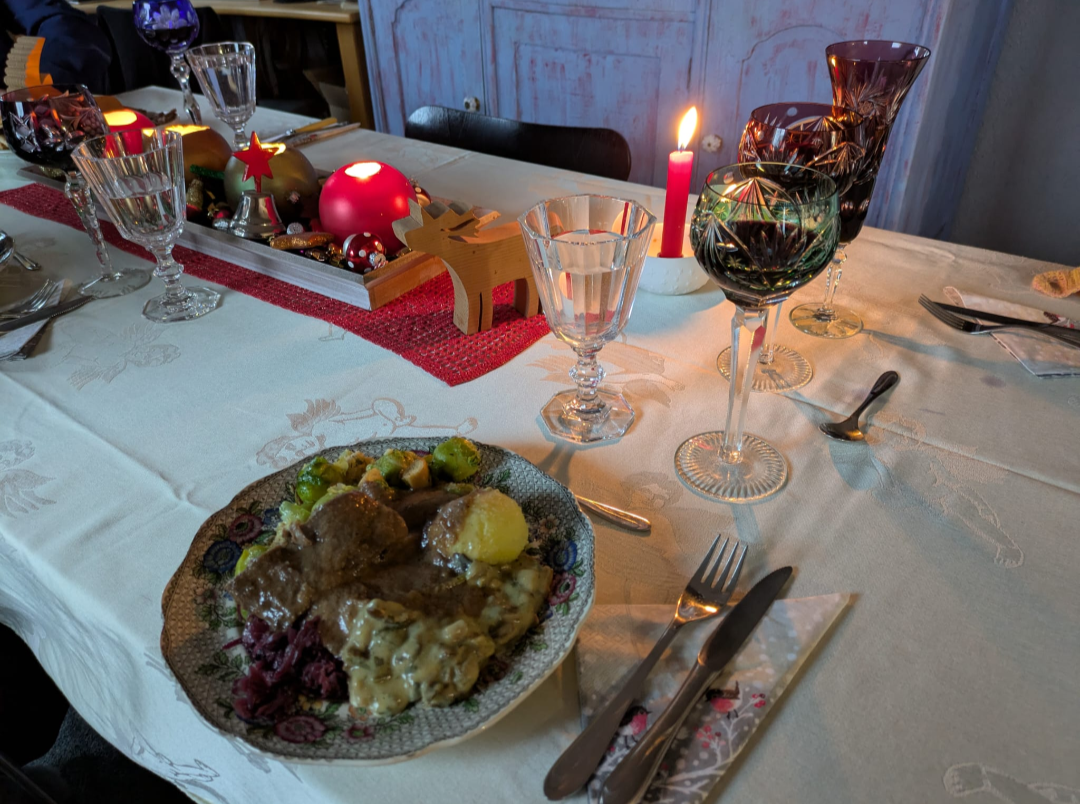
On December 26th, which Germans actually call The Second Christmas Day, we visited some family friends in a nearby city, Greifswald. I was excited that with them, for the first time, I was able to see a Christmas tree with real candles. While burning candles is a strong German Christmas tradition, most families no longer participate (justifiably so) because of the large fire hazard they pose. With the "Greifswalders" we also had Klöße and Rotkohl, but this time with Wildschwein: Wild Boar. The evening there finished with a walk around their neighborhood and exchanging small gifts around the dinner table.
Like in many other countries, Germany follows many traditions celebrated in the Christian church. Each separate day features a time to gather with immediate family, extended family, and close friends. In addition to Christmas Eve and Days, they also celebrate Tree Kings' Day on January 6th to remember the three wise men that were believed to visit the baby Jesus after his birth.
Many of the foods eaten for Christmas, especially in northern Germany, come directly from the land and agricultural scenes that make up various towns. On the Island of Usedom, where I live, fish remain a large part of the typical daily diet. While there is lots of access to other foods, herring and "Fischbrötchen" (which I'll cover in another entry) are readily available.