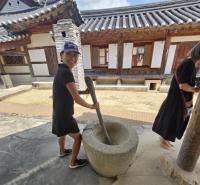
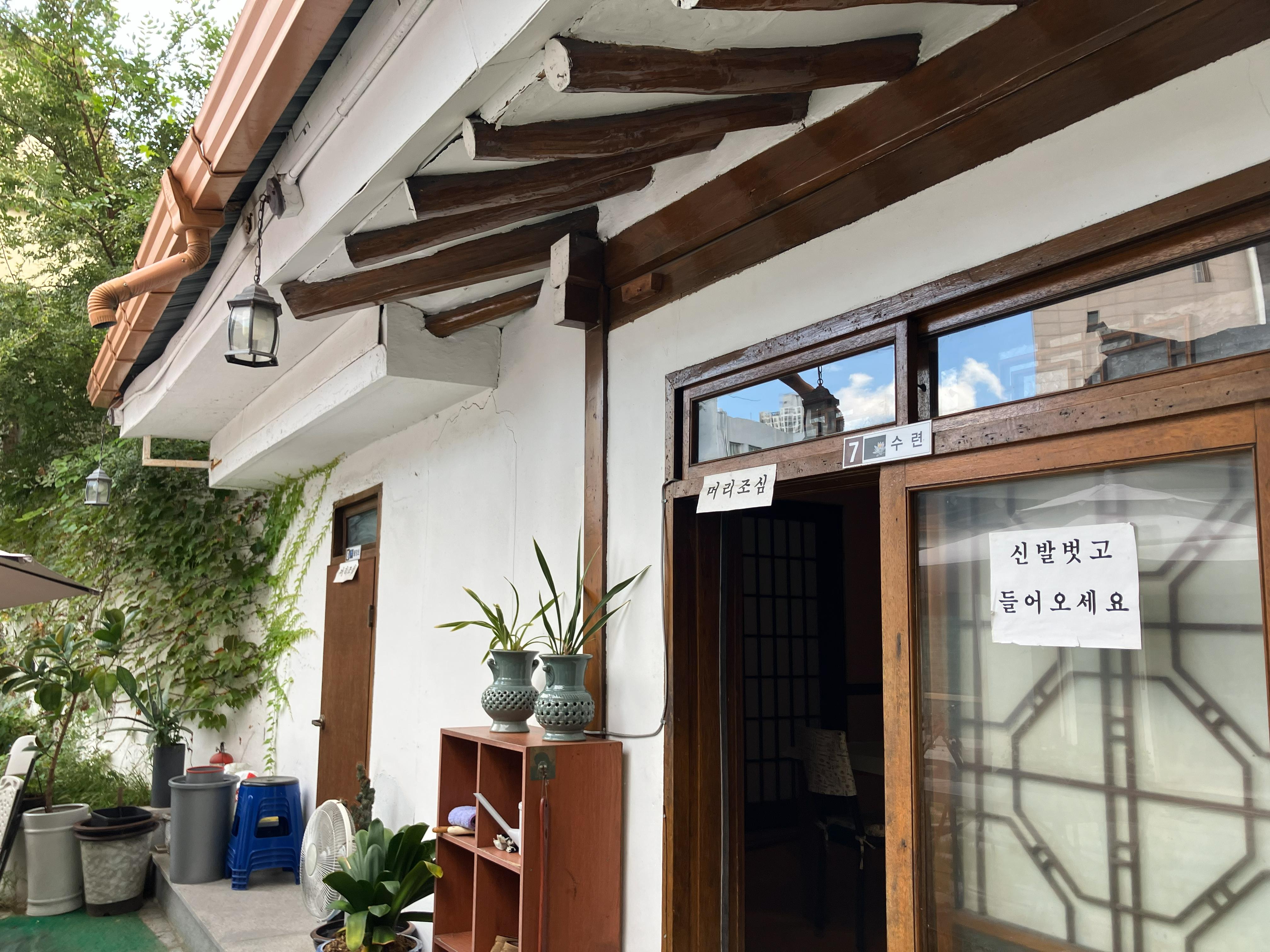
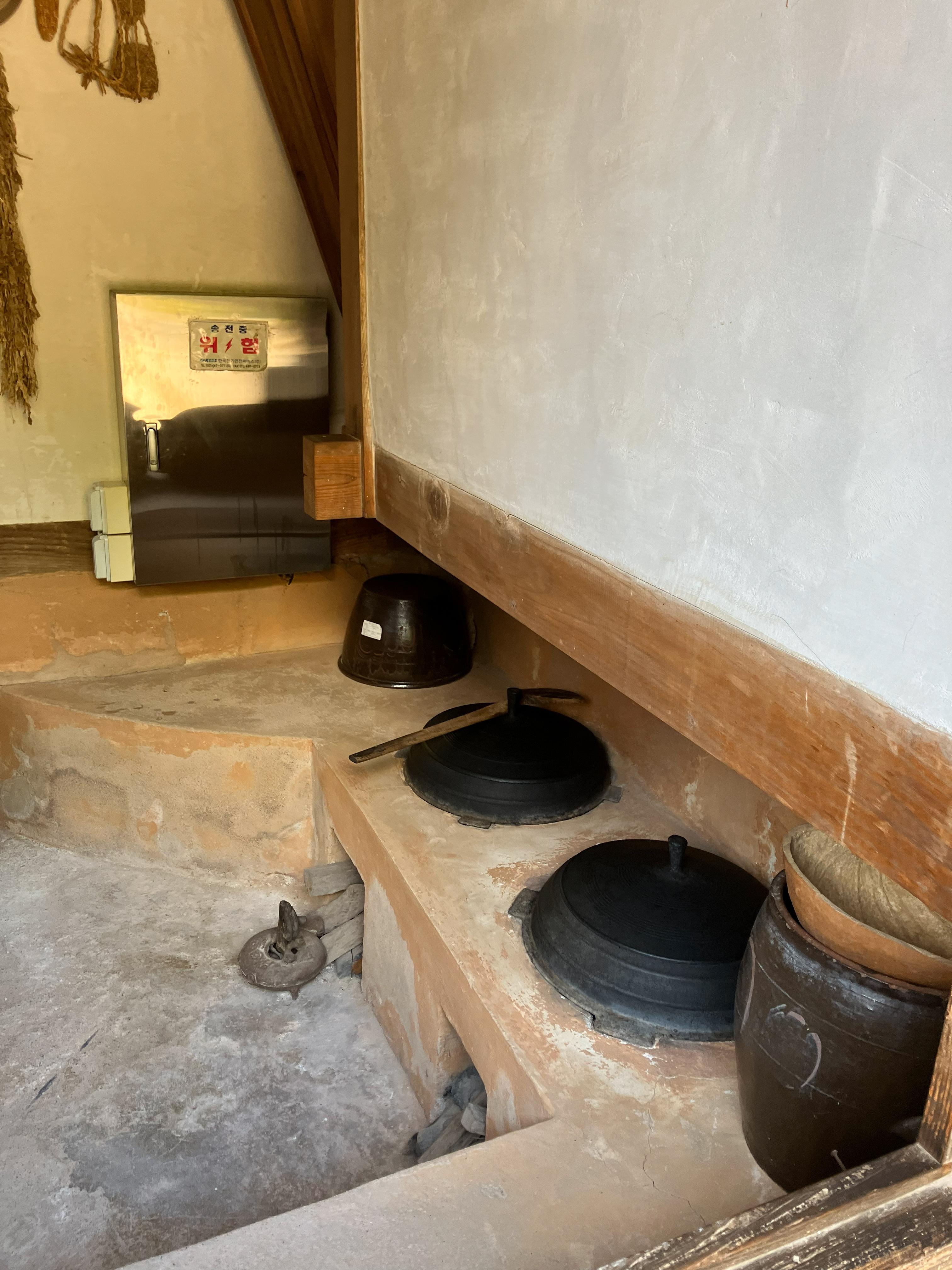
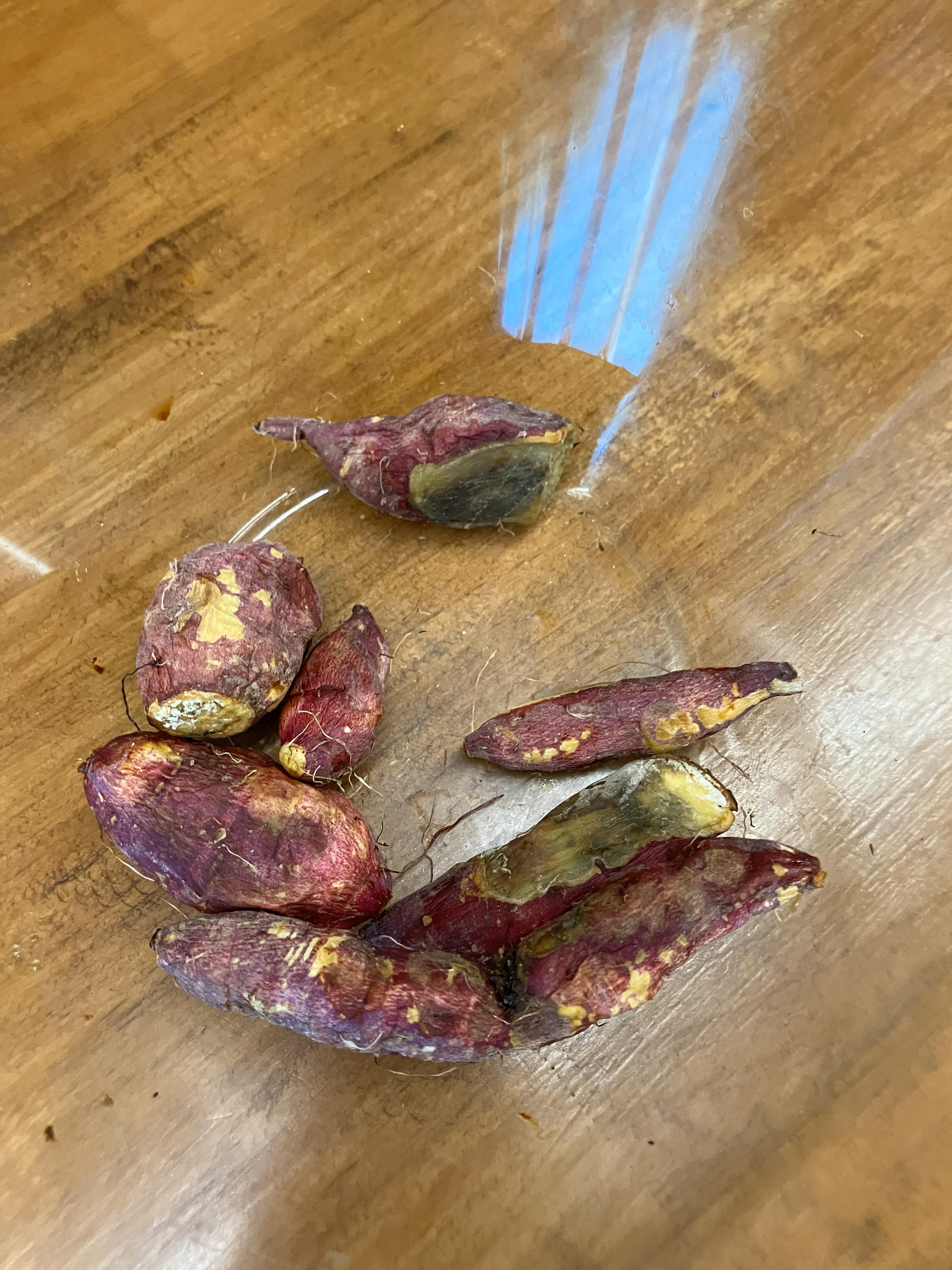
Food preparation begins long before the meal itself, with growing and gathering ingredients—especially vegetables and the spices and seasonings that form the foundation of many dishes.
Making and preserving banchan (including kimchi). Many banchan (side dishes) are soaked, seasoned, pickled, or fermented and then stored for weeks or even months. Kimchi is one of the most well-known examples of this process. While I had always assumed kimchi was made only from cabbage, I learned that the word kimchi actually refers more broadly to vegetables preserved by soaking or fermenting. Cabbage kimchi is simply the most famous version. In reality, kimchi can be made from many different plants, including radishes, perilla leaves, cucumbers, green onions—even pears. These various kinds of kimchi, along with other preserved or seasoned vegetables—such as yellow pickled Korean radish (sweet), lotus root (crunchy and lightly sweet), or seasoned soybean sprouts—often appear together as banchan. The word banchan means “accompanying dishes,” reflecting how Korean meals are traditionally organized around bap (rice) at the center, supported by guk (soup) and banchan. Historically, banchan were not extras but essentials, helping stretch limited ingredients while providing balance, nourishment and variety. This stage of preparation often happens communally. Families or neighbors come together to make large batches at once, turning food preservation into a shared activity and a form of community-building.
Cooking the main meal (the day of).Pages