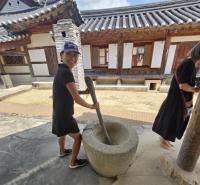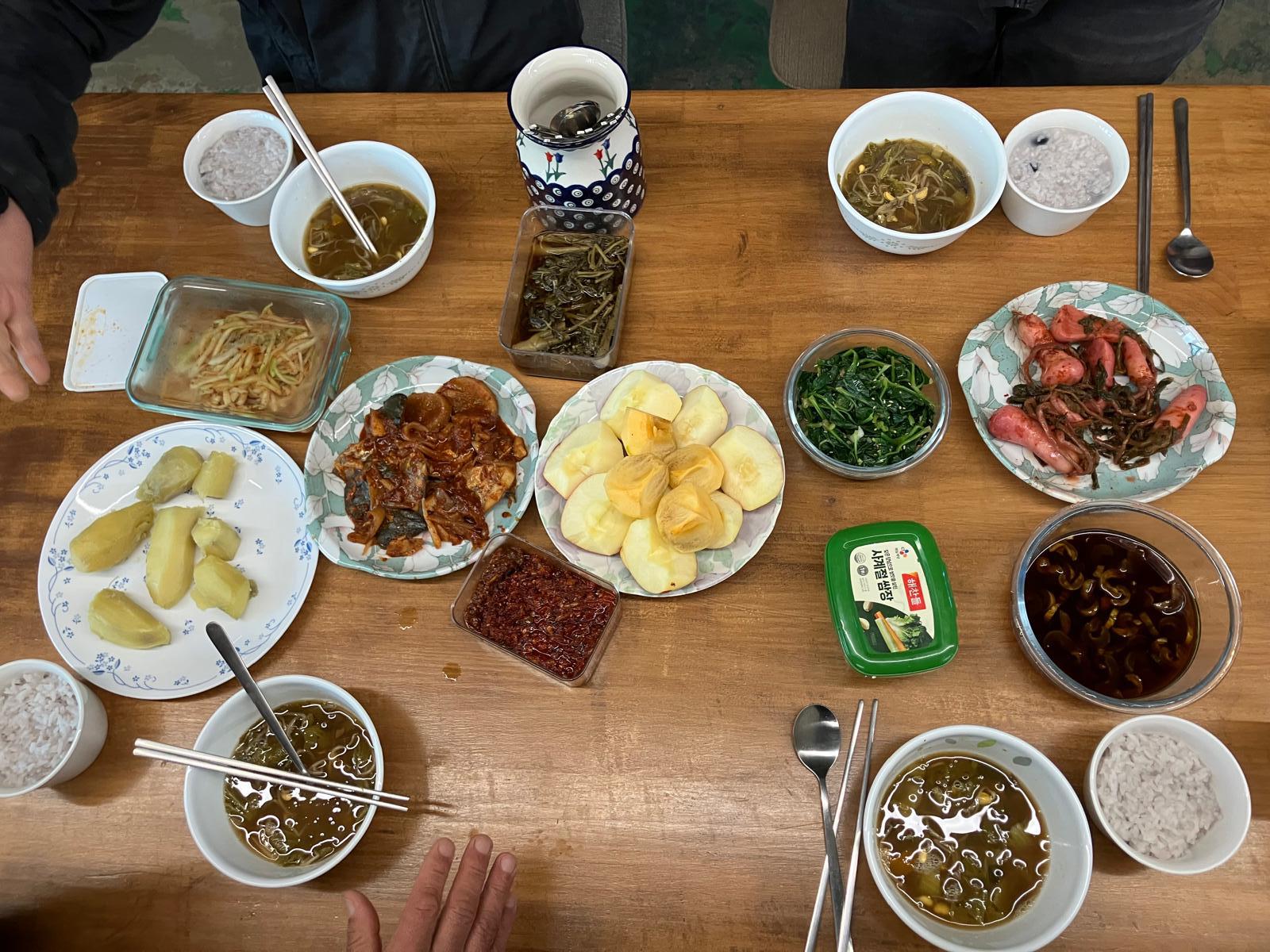
One of the first times I met up with a new friend in Korea, we planned to go for a walk around a traditional hanok-style village in Seoul. We were meeting around 1:00 p.m. and hadn’t made plans for lunch. So when we greeted each other, I was surprised when the first thing she said to me was, “Have you eaten?” (밥 먹었어? bab meogeosseo?).
Korean can be tricky for beginners. While it does have past, present and future tenses—like many other languages—people often default to the present tense in everyday speech. So with my beginner-level Korean, I wasn’t sure what she meant. Was she asking, “Have you already eaten lunch?” Or was she suggesting, “Should we go eat now?”
I had eaten brunch earlier that day, but I didn’t want to misunderstand our plans (or accidentally ignore an invitation to eat!), so I just nodded, smiled, and said something like, “Yes, yes, I’m fine—anything is fine.” She smiled back, and we walked to the village to explore as originally planned. No lunch.
Later, I asked a Korean friend about it. Was this normal? Why would someone ask that as a greeting? He laughed and explained: in Korean, “Have you eaten?” is often more like asking someone, “How are you?”
He said this has roots in Korea’s long history of food scarcity--from the Joseon dynasty, through Japanese colonial rule, to the devastation of the Korean War.