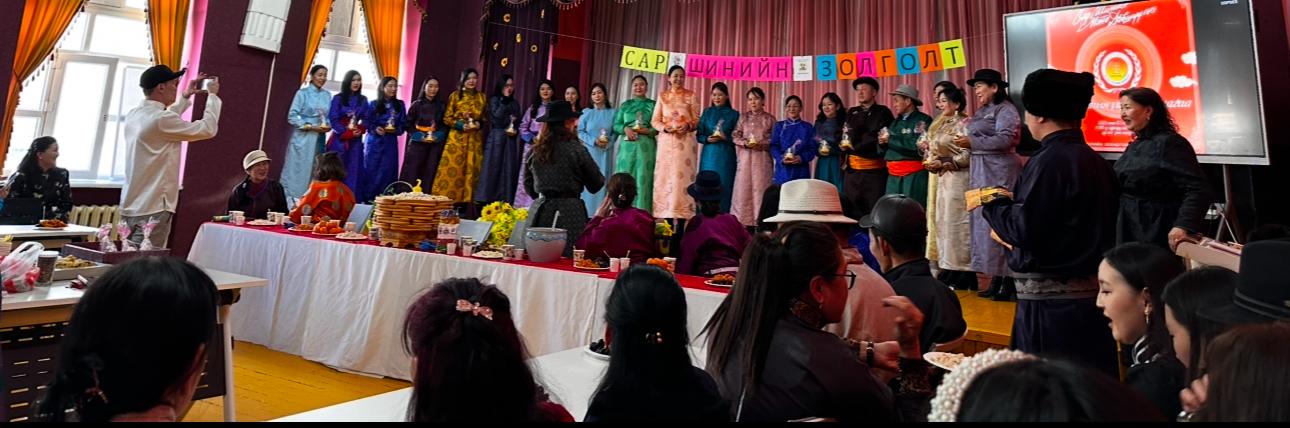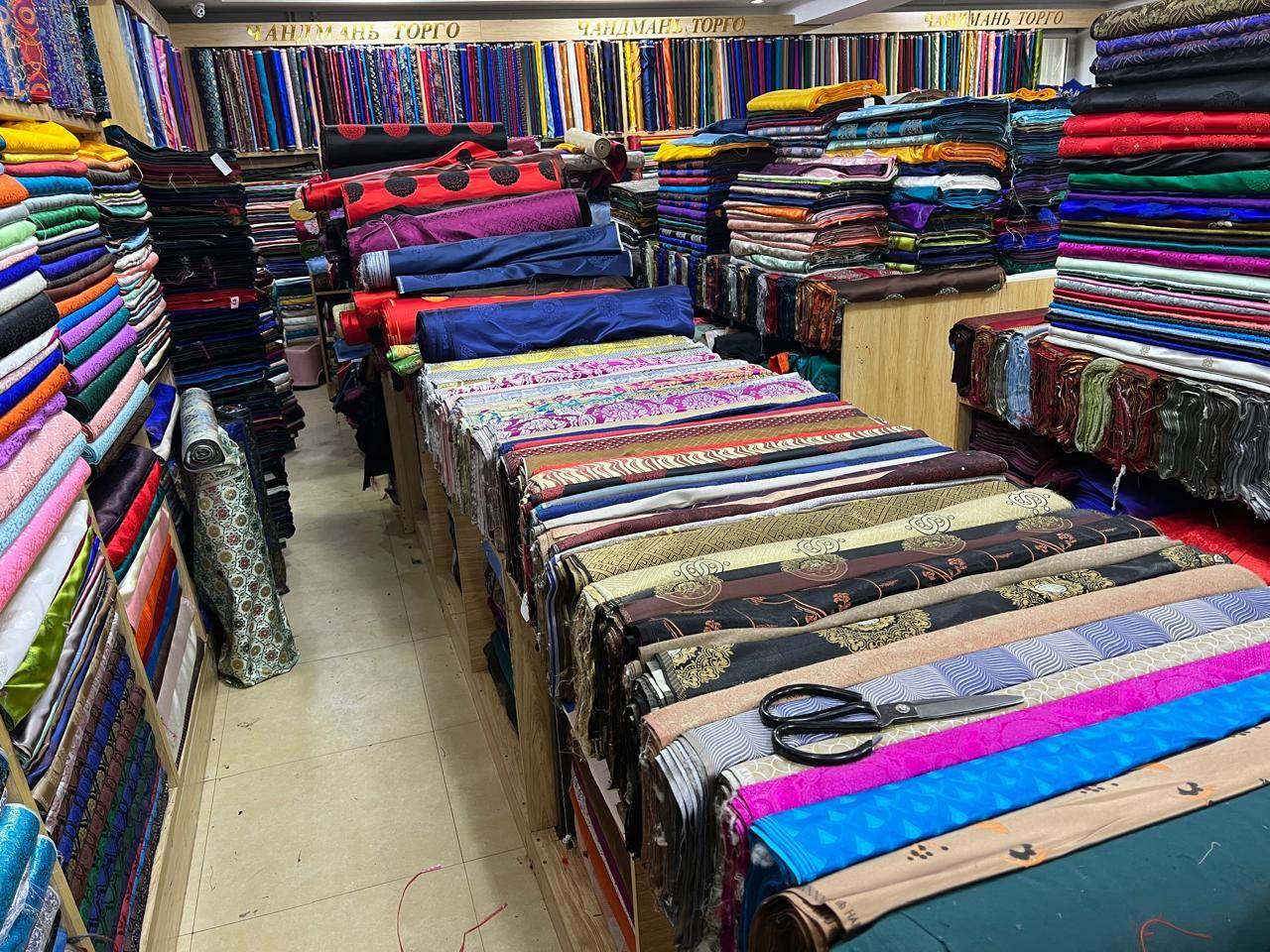
So many buuz are made because it is customary to visit each other's homes during Tsaagan sar and share a meal. Lots of visitors = lots of food. So much food is eaten that you may need to loosen the belt on your deel, the traditional Mongolian clothing. Luckily, if you’ve eaten too much, people won’t notice your belly because the focus will be on the colorful and intricately designed deels.
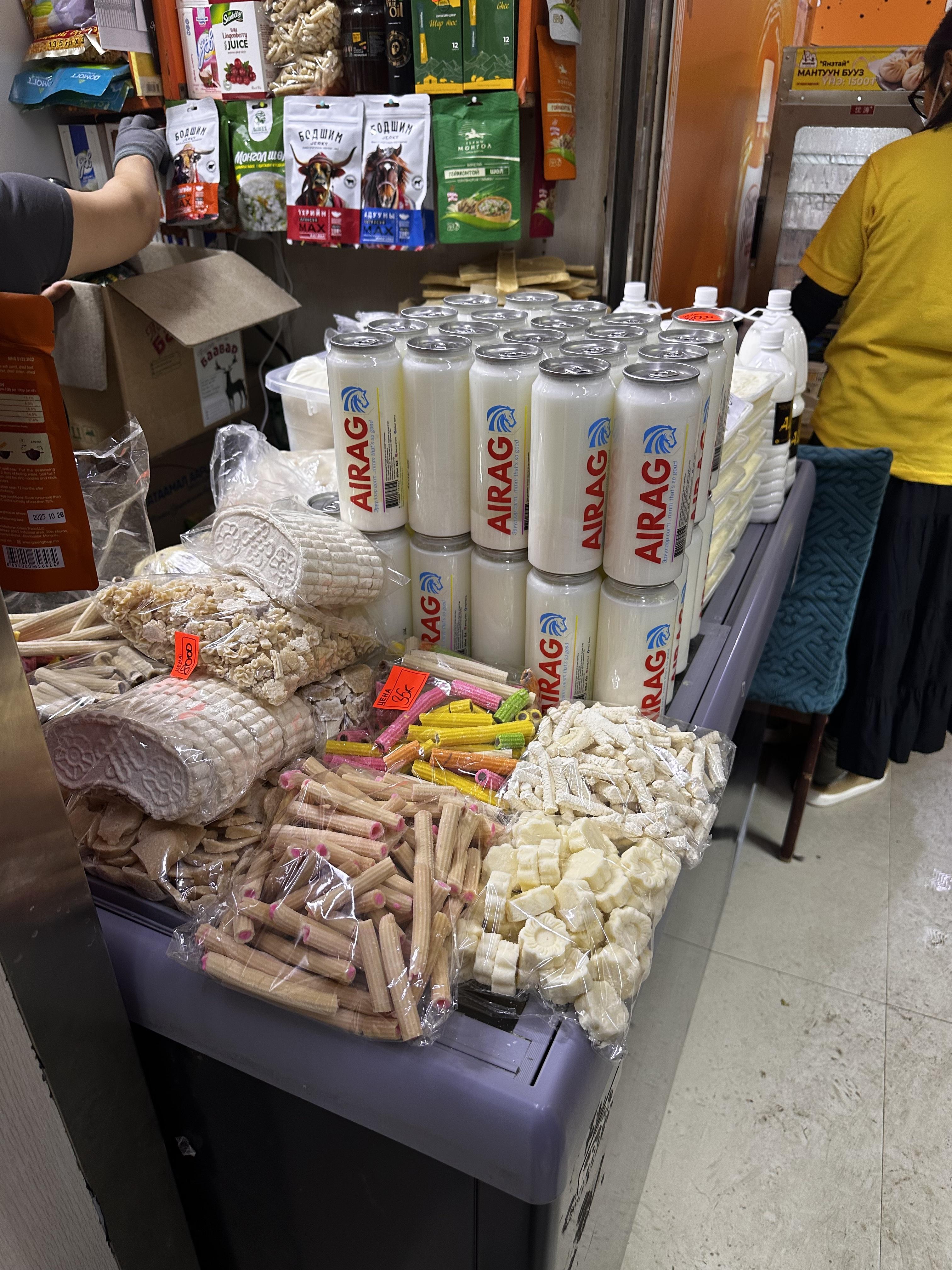
Something special you might notice on the table is a layered biscuit cake, decorated with dairy sweets (aruul) and candies, called ul boov. Importantly, these are always stacked in odd numbers. My teacher explained to me that the stack is always in odd numbers because the first layer is happiness, and the second is suffering or unhappiness; so, you want to start and end with happiness!
Before getting to the eating and small gift exchange, it is important to do the formal greeting called zolgokh. Here is where age is important: younger people must greet with their forearms supporting the older person, which symbolizes support. After greetings and eating, it is also common for the host to give small gifts, such as money or small gifts.
Moving into the summertime and the other major holiday here in Mongolia, we will discuss Nadaam. Different provinces celebrate Naadam at different times, but it is usually celebrated in July. Naadam is a time for celebrating Mongolian history and culture. You have the opportunity to see some traditional sports and games, including: horse racing, archery, Mongolian wrestling and ankle bone shooting.
While food is not the focal point of Naadam, you will still be eating lots of good food.