Under these conditions, starvation and illness increased, resulting in the death of one million people. Another one million people emigrated from Ireland. Ireland's population never returned to its pre-famine level.
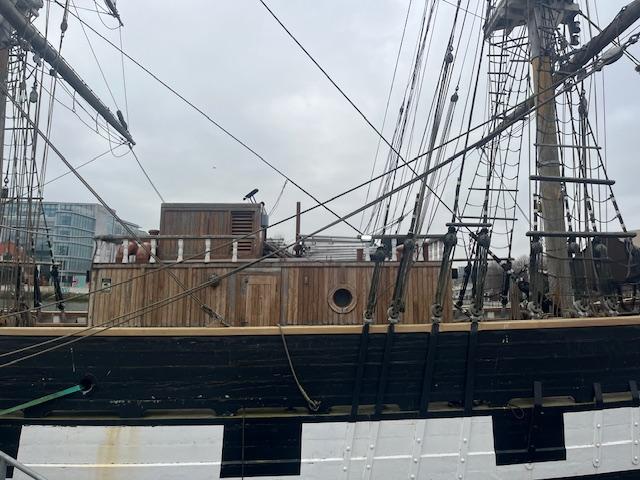
For those who emigrated, the vast majority sailed to North America. Many landed in the U.S. or Canada. The Jeanie Johnston became one of those boats. It transported 2,500 people over 16 trips. All the passengers on those 16 trips survived. Establishing themselves in the new country once they arrived was another story. As I am sure you will read in Nory Ryan's Song, there are countless examples of courage and resilience despite this incredible hardship in the journeys of emigrants from Ireland.
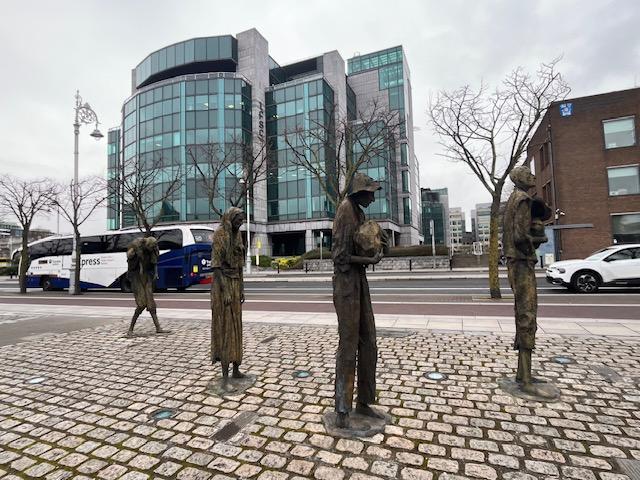
Further along the quays, there is a sculpture that commemorates those who left Ireland during this time of extreme deprivation. It was designed by Rowan Gillespie, an artist from Dublin, and presented to the city in 1997. It marks the spot where one of the first boats of emigrants during the famine was launched. The artist created a second memorial in Toronto, Canada, where they landed.
Behind these markers is the EPIC museum. This museum tells the stories of emigrants from Ireland to all parts of the world. It details why they left, what they hoped to find, and the impact they had on their new homes, as well as the influence of Irish culture internationally. I visited this museum with my family in the fall. We found it both informative and resonant as descendants of Irish emigrants ourselves. It is also very interactive and fun!
In the city and its museums, references are made to the Irish famine. It plays a significant role in the shared history of Ireland and North America.