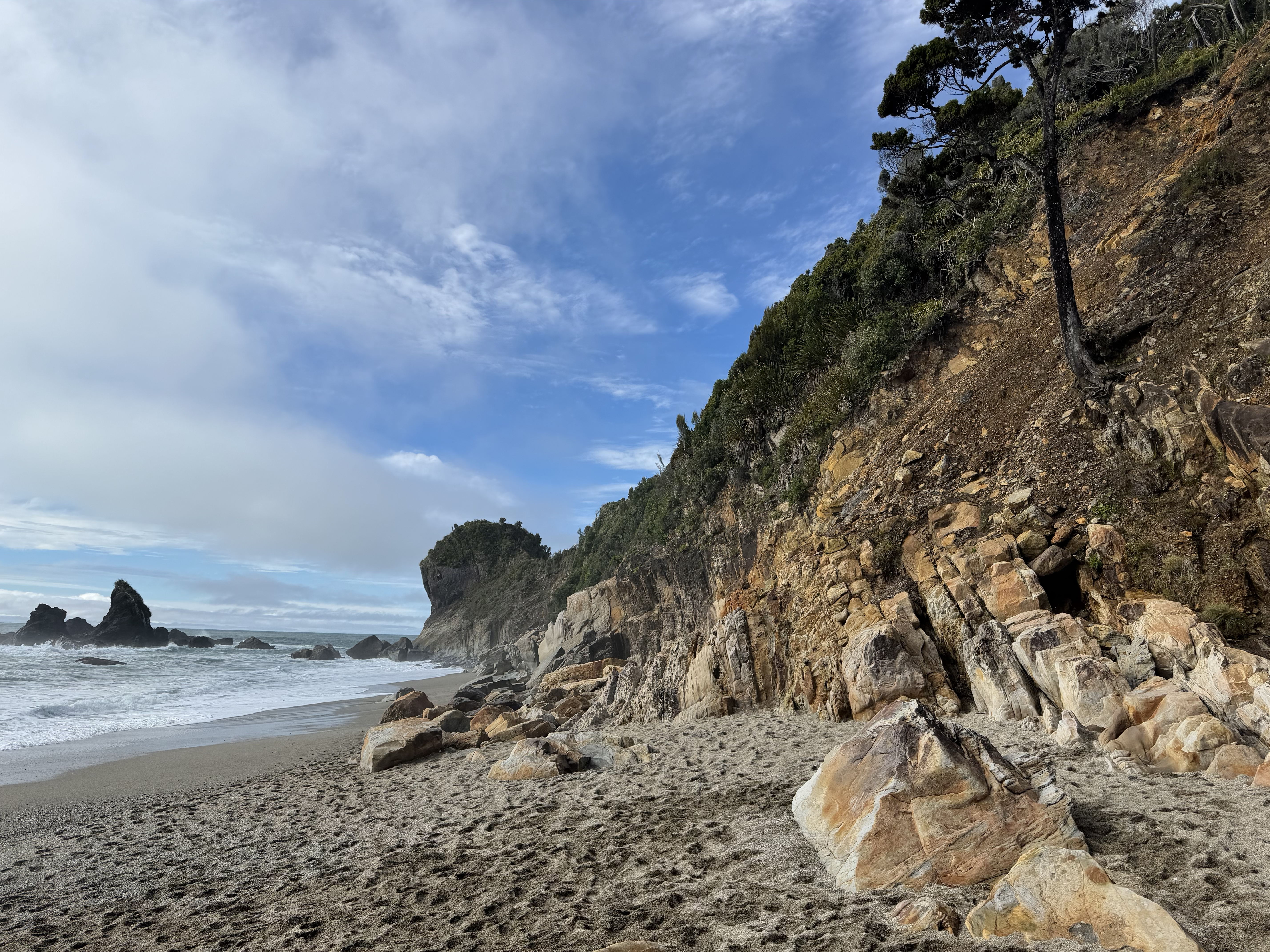
This weekend, I joined a field trip to the West Coast of the South Island. We were hoping to see rock exposures, or outcrops, that relate to processes we have been studying in class. As we drove from the east coast to the west, we crossed the Southern Alps, which are being uplifted along the Alpine Fault at the boundary between the Pacific and Australian plates. Moving west across the fault, you transition onto the Australian continental plate. The change in landscape is noticeable. The terrain becomes steeper, vegetation shifts to dense temperate rainforest and the weather changes constantly. It rained heavily, cleared, and then rained again within short periods. The high rainfall on the western side of the Alps helps explain how glaciers like Franz Josef can exist at relatively low elevations.
Franz Josef is a small town built around access to the glacier. It developed in the 1800s during the West Coast gold rush. As mining declined, tourism centered on the glacier became the main activity. Today, most of the town’s infrastructure is tied to visitors. The glacier has advanced and retreated multiple times over the past century.