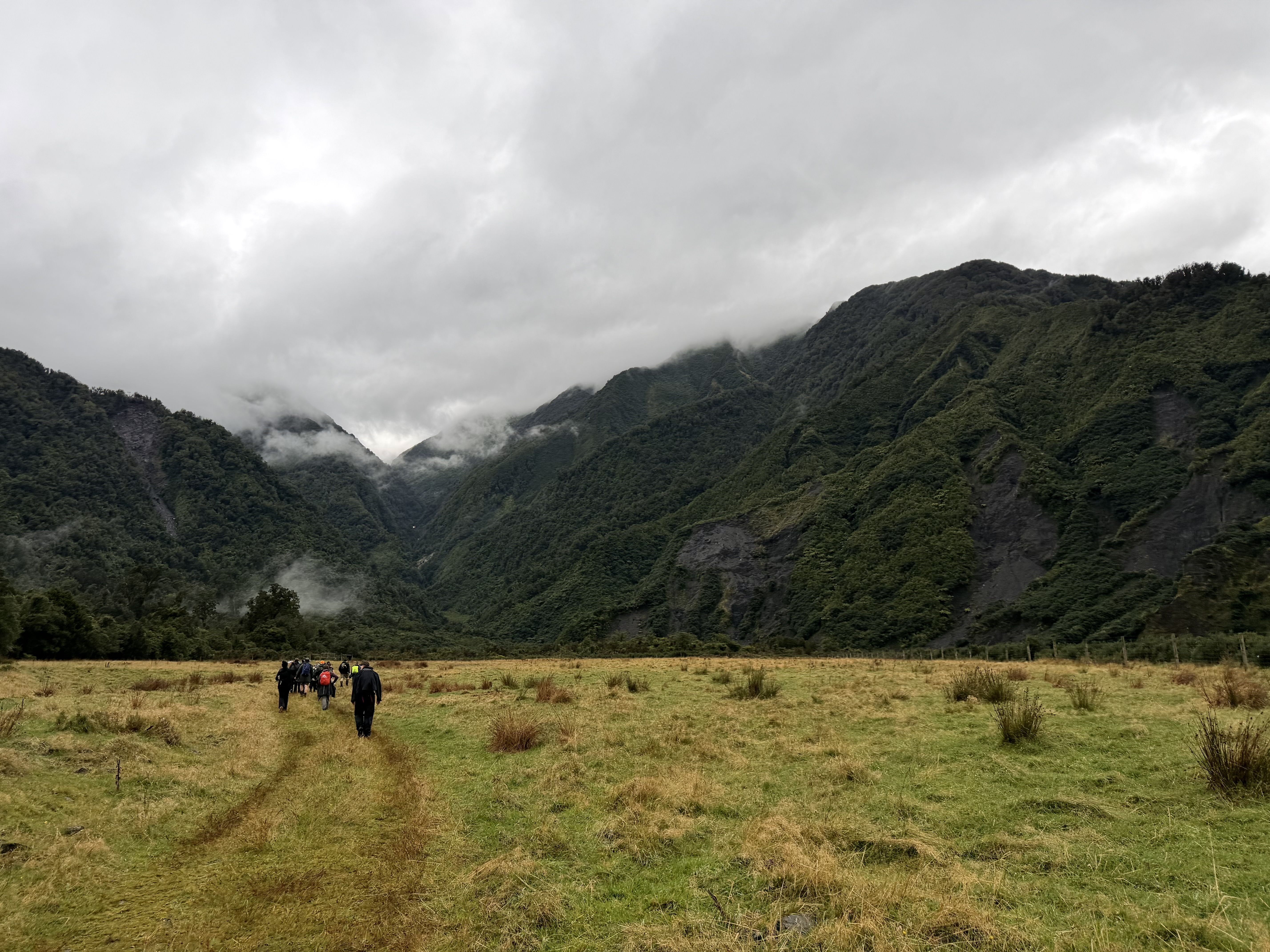
Along the access track, there are clear markers showing where the ice reached in the past, particularly during its late 20th century advance. These markers now sit well below the current terminus (the lowest end or edge of a glacier). The valley is distinctly U-shaped, with moraines (glacial sediment) left behind, making the scale of the glacier’s retreat easy to see.
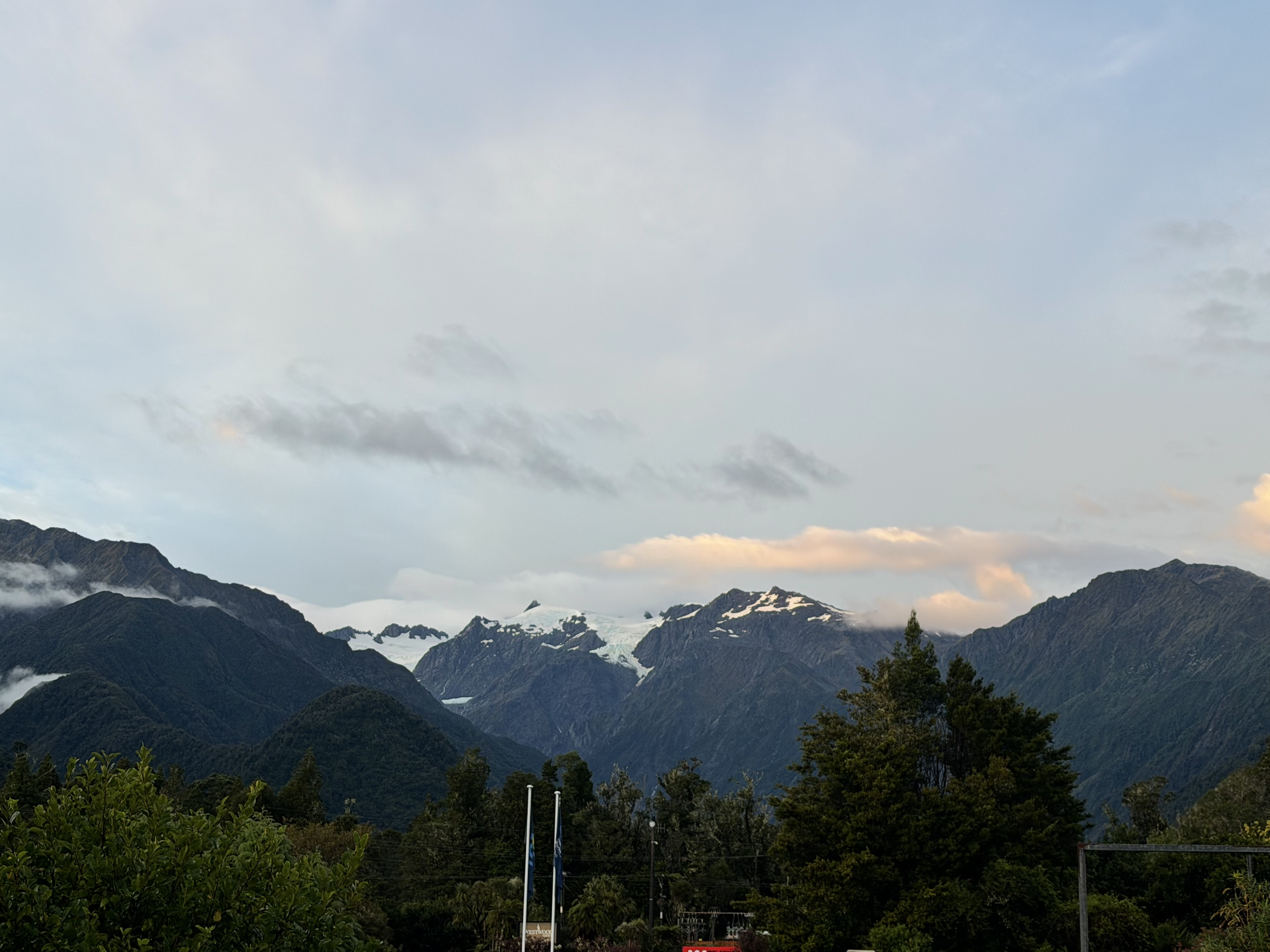
Living in New Zealand has made me feel much more aware of natural hazards than I did in the United States. Processes like earthquakes, landslides and rapid weather changes are not abstract; they directly affect daily life. Buildings are designed to meet earthquake standards because of the country’s active faults. On the West Coast, high rainfall regularly causes flooding and landslides, and road closures are common. Access to Franz Josef Glacier has changed over time due to shifting river channels and hazard risks, and walking access to the ice is not always possible. Even basic plans like hiking depend on conditions that can change within hours. On the 4th day, we could not reach an outcrop because a river had risen rapidly after heavy rainfall the day before. Daily life is shaped by these factors, and the landscape has a direct influence on what is safe and practical to do which feels different from my life at home that is more insulated from natural factors.