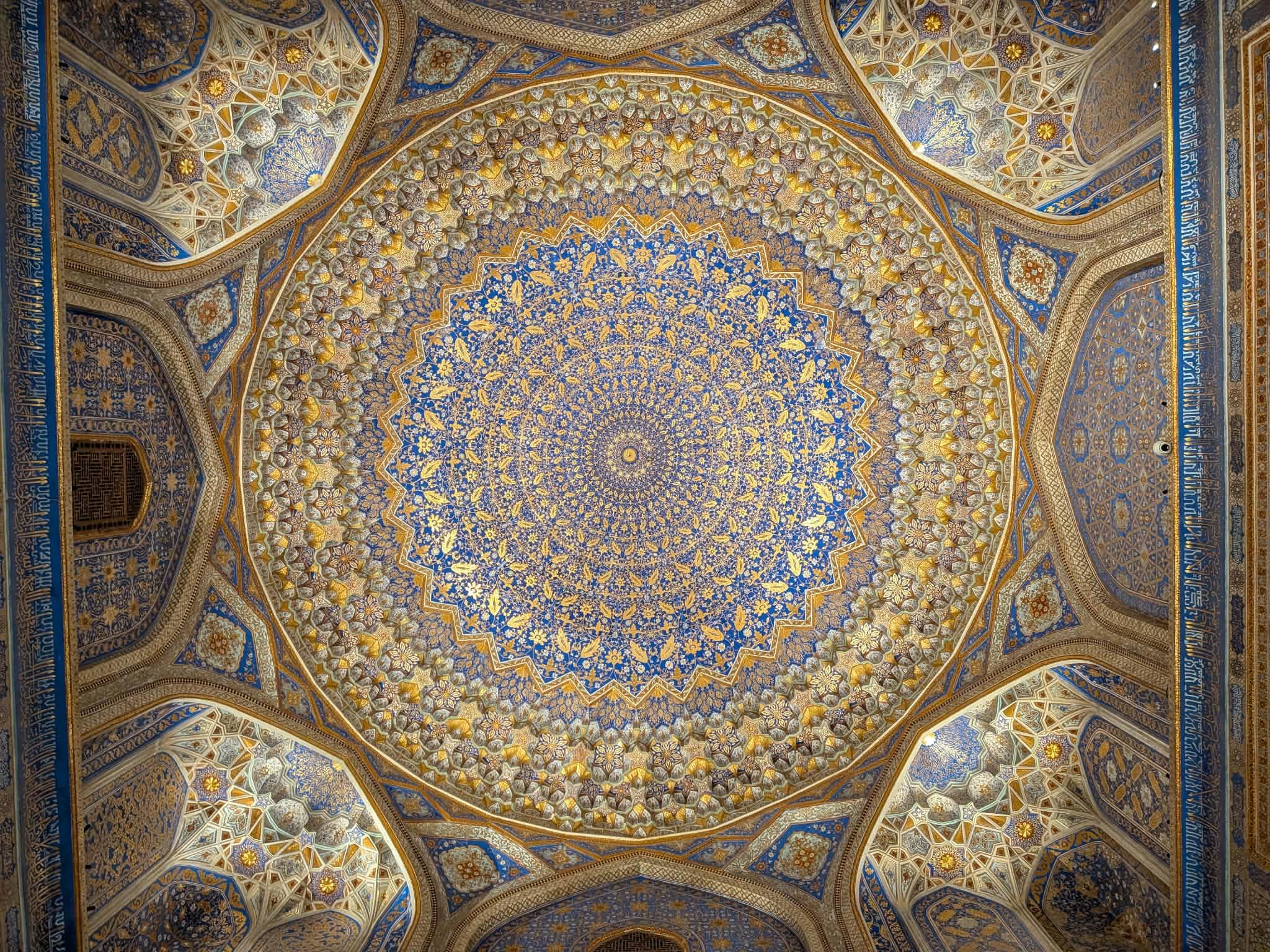
Now the current Uzbek government (again seeking legitimacy) is also hard at work restoring—some might say “Disneyifying”—the grand mosque. It’s truly a sight to behold, as if a spaceship crowned with turquoise domes had somehow fallen to Earth.
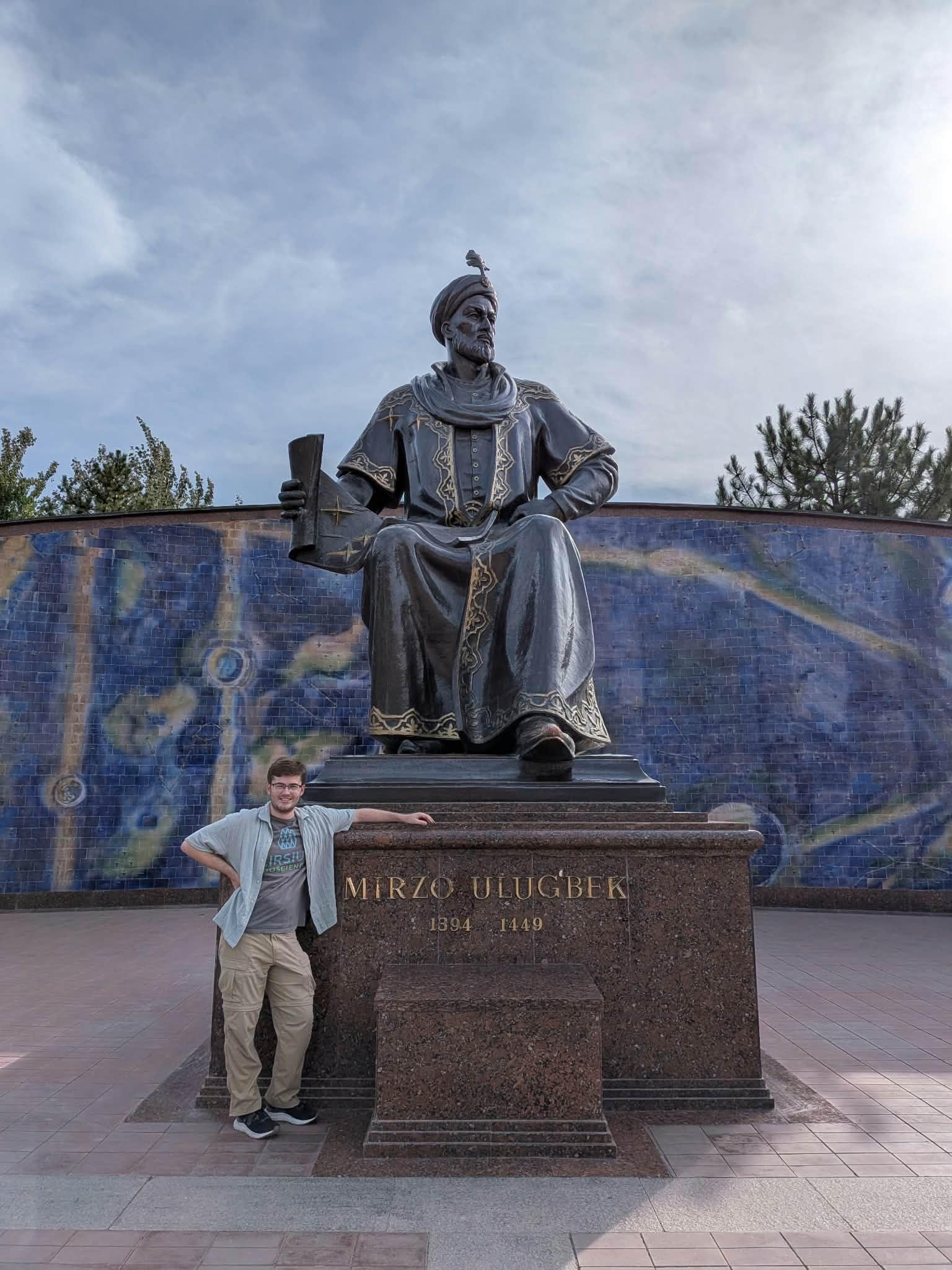
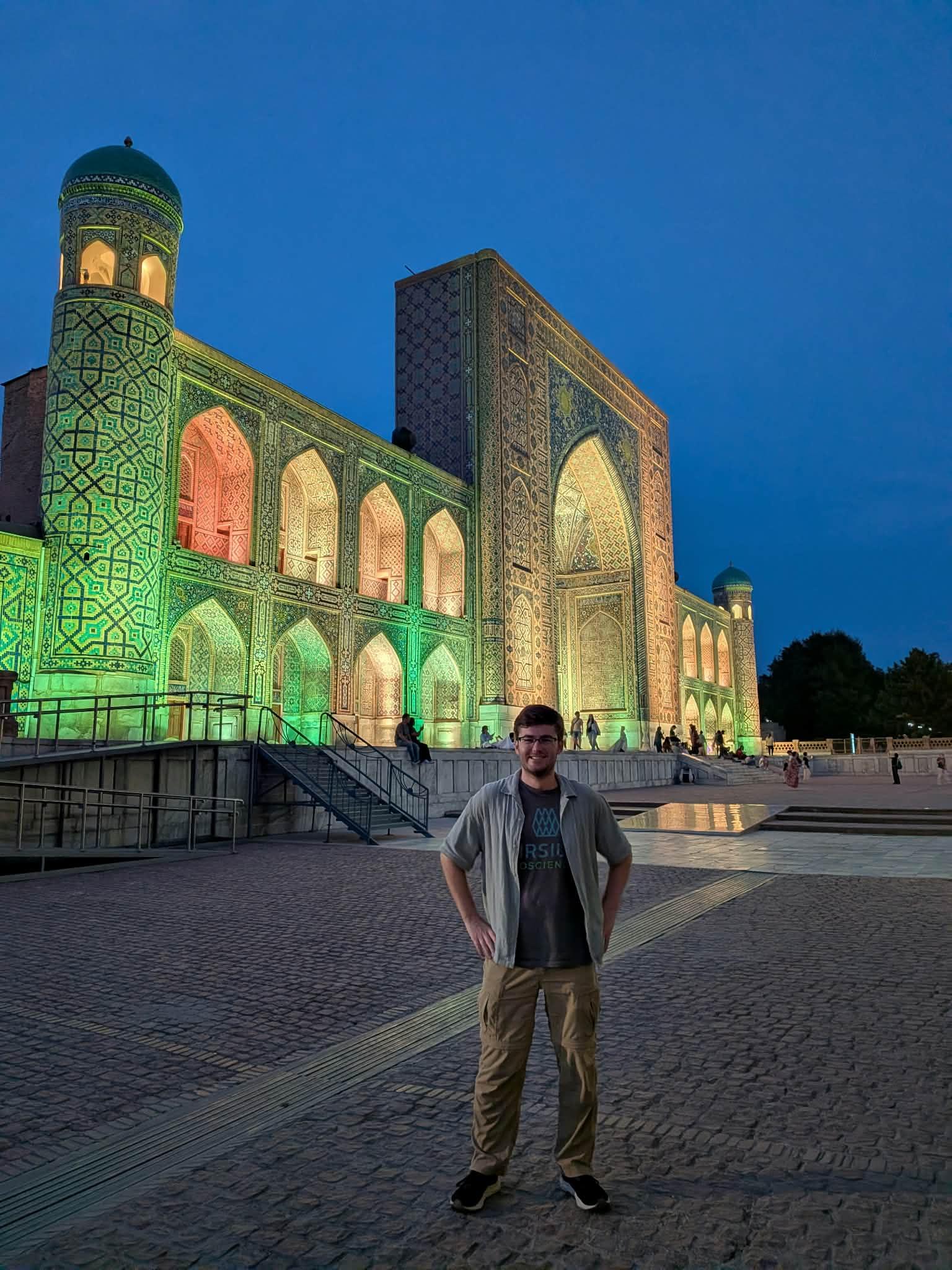
After Timur’s death in 1405 CE, Samarkand came to be ruled by his nerd grandson, Ulugh Beg, while Timur’s great empire splintered as his sons and grandsons fought amongst themselves for the spoils (just as the Mongol Empire once had). Ulugh Beg was a smart man, but not a wise one, concerned more with the arts and sciences than the vicissitudes of political power. He built great Islamic schools, madrassas, where he could teach Islamic law and jurisprudence, and observatories, where he could chart the course of the stars and sun. His madrassa, at the center of the old town of Samarkand, would become the Registon—the beautiful heart of Samarkand to this day. His successors would build two more madrassas, forming a trio of beautiful facades that form one of the most beautiful public squares in the world. Ulugh Beg also constructed a massive observatory on a hill north of the city, where he could chart the sun and the stars. Alas while Ulugh Beg gazed at the heavens his sons plotted, and he would be overthrown in the 1440s, assassinated by his own progeny. The Registon remains though—for centuries the marketplace, university, and execution square of Samarkand.
These days the government of Uzbekistan has latched onto the legacy of the Silk Road. It doesn’t matter that the term only came about in the 19th c., crafted by German historians.