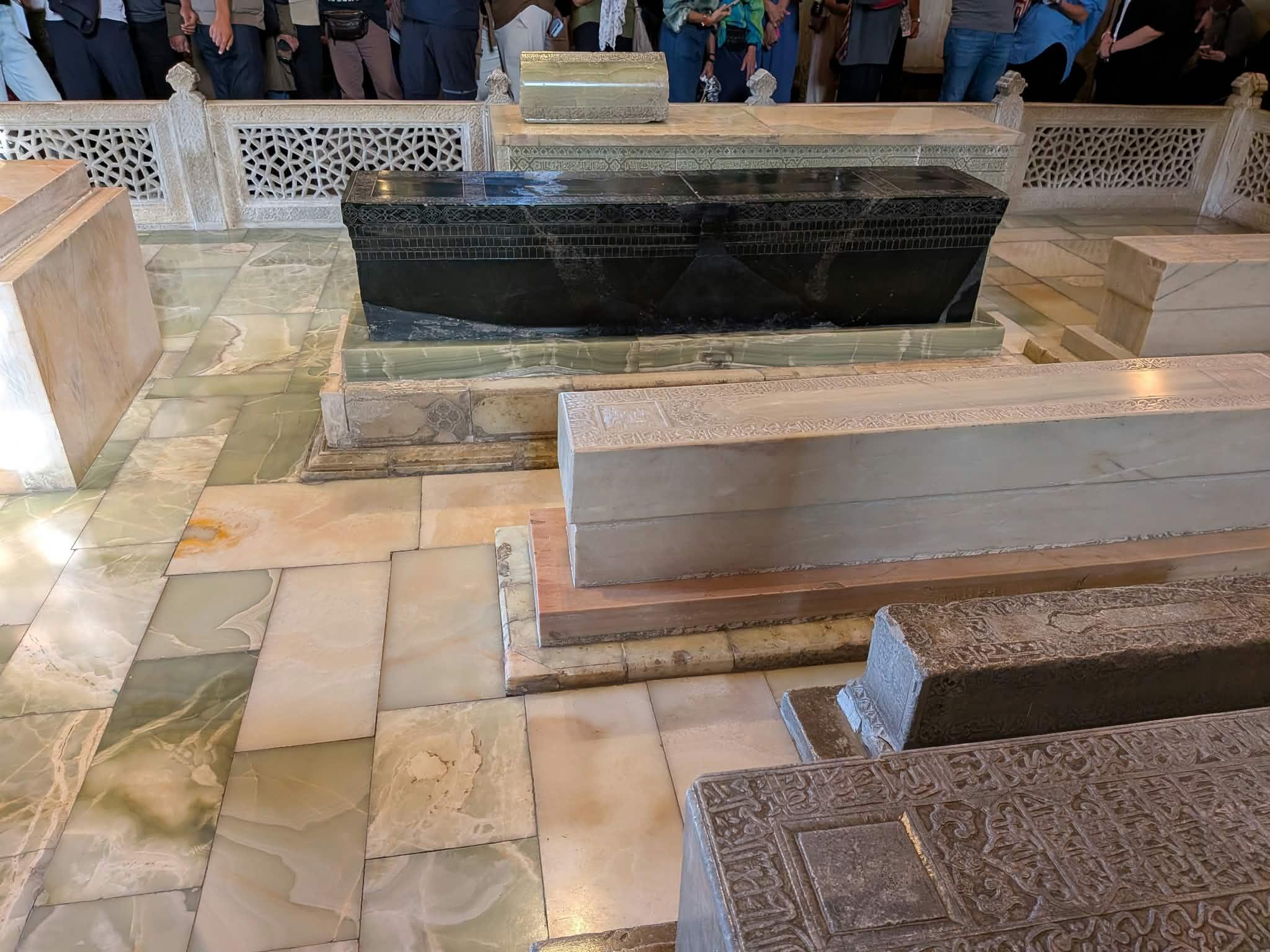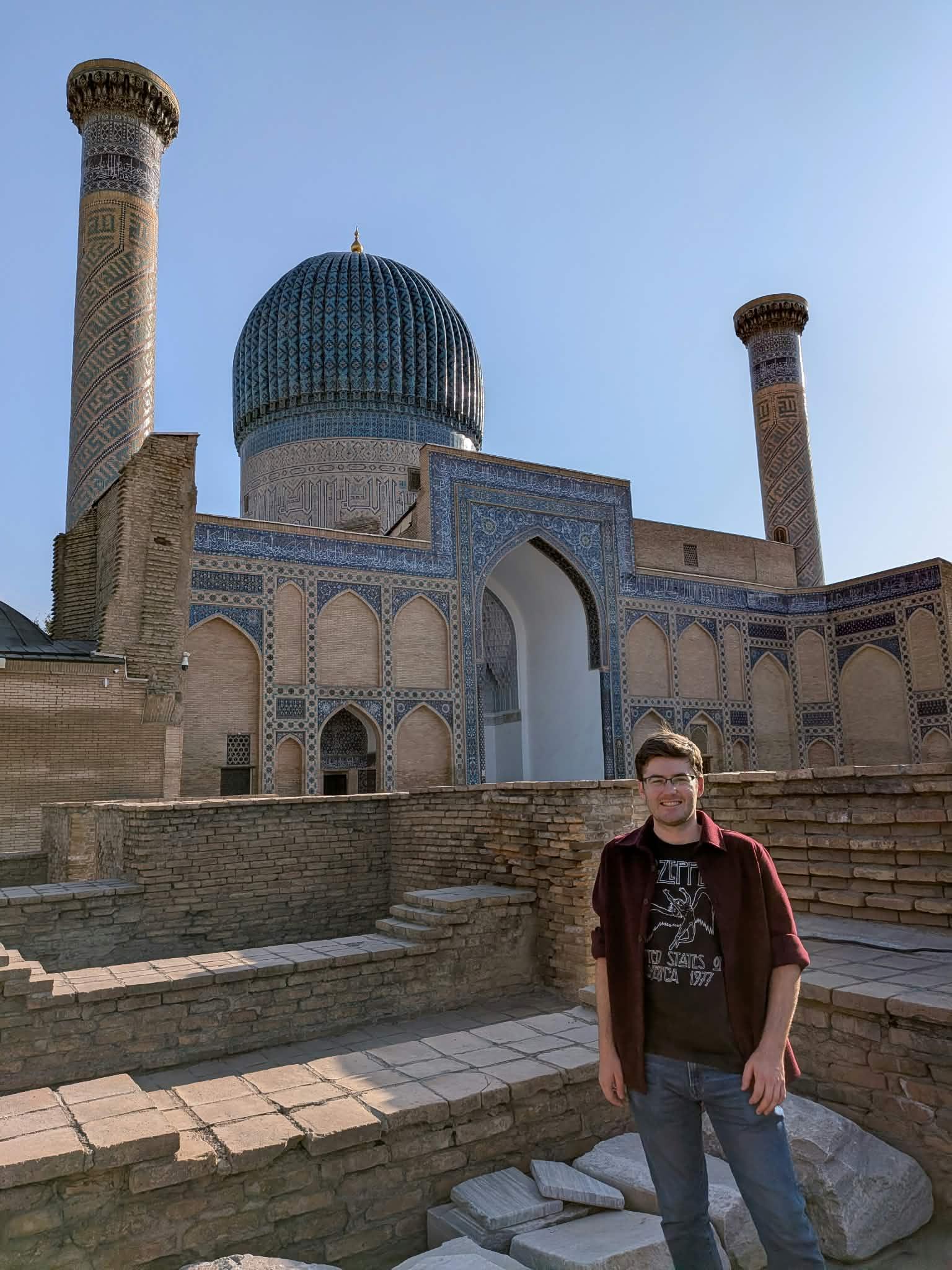
In the aftermath of the collapse of the Mongol Empire in the early 14th c., various warlords of Turko-Mongolic origin, both Muslim and Shamanist, battled for control across the length and breadth of Asia. It was Timur in the late 1300s who emerged triumphant, reforging the Mongol Empire atop the corpses of anyone who dared opposed him. His English name Tamerlane comes from his lame right leg, the consequence of an arrow to the thigh as a young man out raiding. His conquests, stretching from Turkey in the west to New Delhi in the southeast, bound the empire of the Mongols into a new form—the Timurid Empire. Millions died. Tens of thousands of artisans and craftsmen were brought from around the world. The wealth of all of Asia flowed into Samarkand. All this enabled Timur (in between his conquests) to build on a vast scale. A pious Muslim, Timur desired to glorify his achievements as the heir of Genghis, the Sword of Islam, Conqueror of the World. He sought to legitimize his reign, as every government here has done since, through monuments.
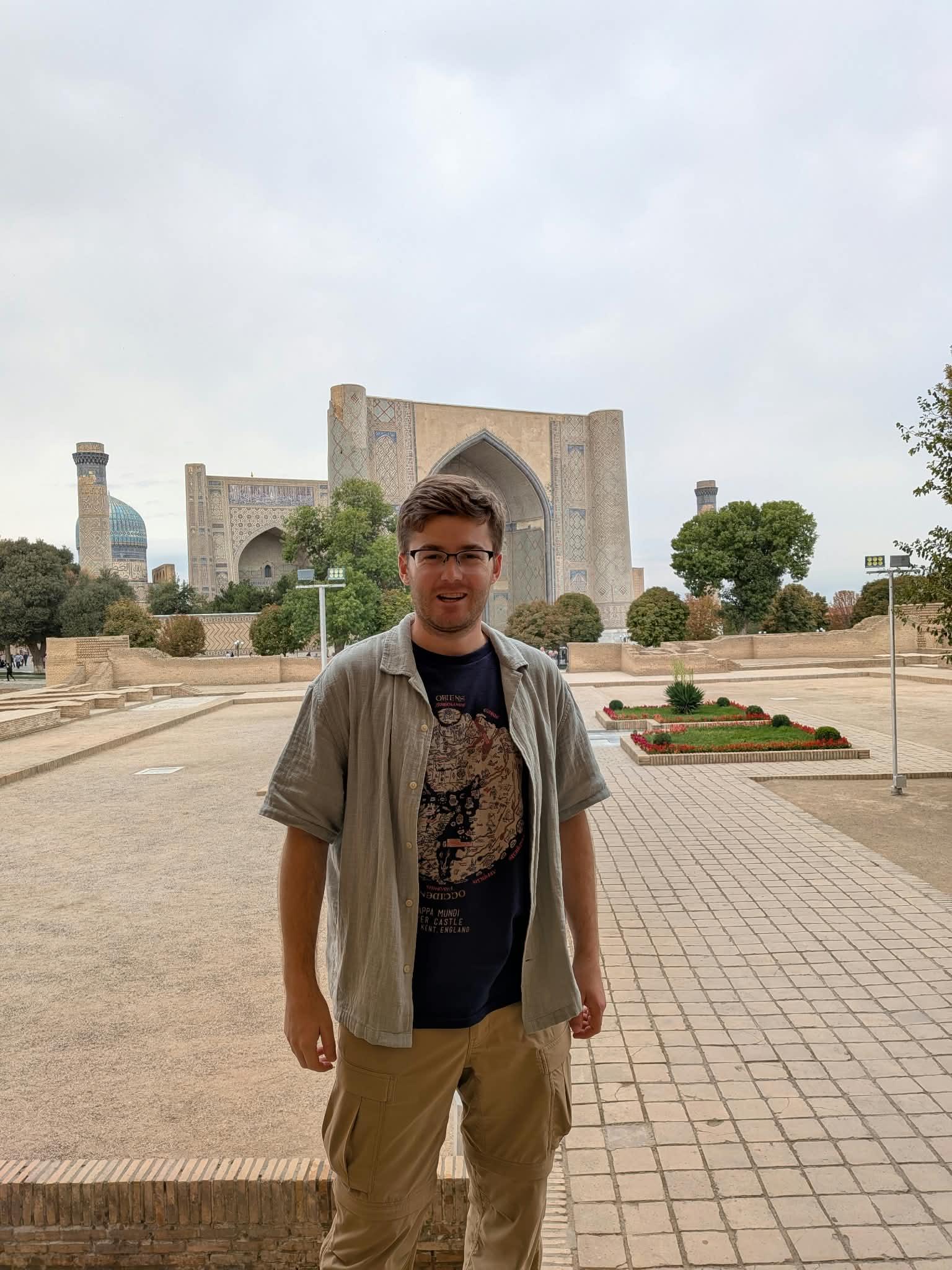
Bibi Khanym Mosque, named after Timur’s favorite wife, dominates central Samarkand. Bibi Khanym was a direct descendant of Genghis Khan (unlike Timur, who was probably completely unrelated), and as such marrying her cemented his legitimacy—once he got the pesky business of killing her first husband out of the way. Timur’s captured laborers worked on it, raising massive minarets and domes—too massive, as they began to crack under their own weight even before construction was finished. Earthquakes, always a problem in Central Asia, would damage the mosque further, leading to it being half-ruined by the 20th c. Fortunately the Soviets, seeking a little legitimacy of their own, invested a bit into restoration.