Drill into the earth here and you’ll find Soviets, the Russian Empire, Tamerlane (the Sword of Islam, Conqueror of the World), Mongolians, the Islamic Golden Age, Persian Empires, Alexander the Great, and the great prophet Zoroaster (thus spoke he). Samarkand is the crossroads of the world, and all that the world contains can be found here.
I just returned from two days in Samarkand, staying with friends, but I wish I had had a week. The city is huge, vibrant and varied. As you walk the streets you can hear tourists speaking in every language, in addition to the native Tajik and Russian of the city's residents--historically, Samarkand had a majority ethnically Tajik population, but that has started to change as rural ethnic Uzbeks move from villages to the city. The city is surprisingly hilly, with low slung mountains looming on the horizon. Most locals wear variants on the same costume--black or grey slacks, white collared shirts and blouses, with traditional hats (the do'ppi) perched on the men's heads. Some women wear the hijab, but most do not, a legacy of a century and a half of Orthodox Russian and atheist Soviet rule.
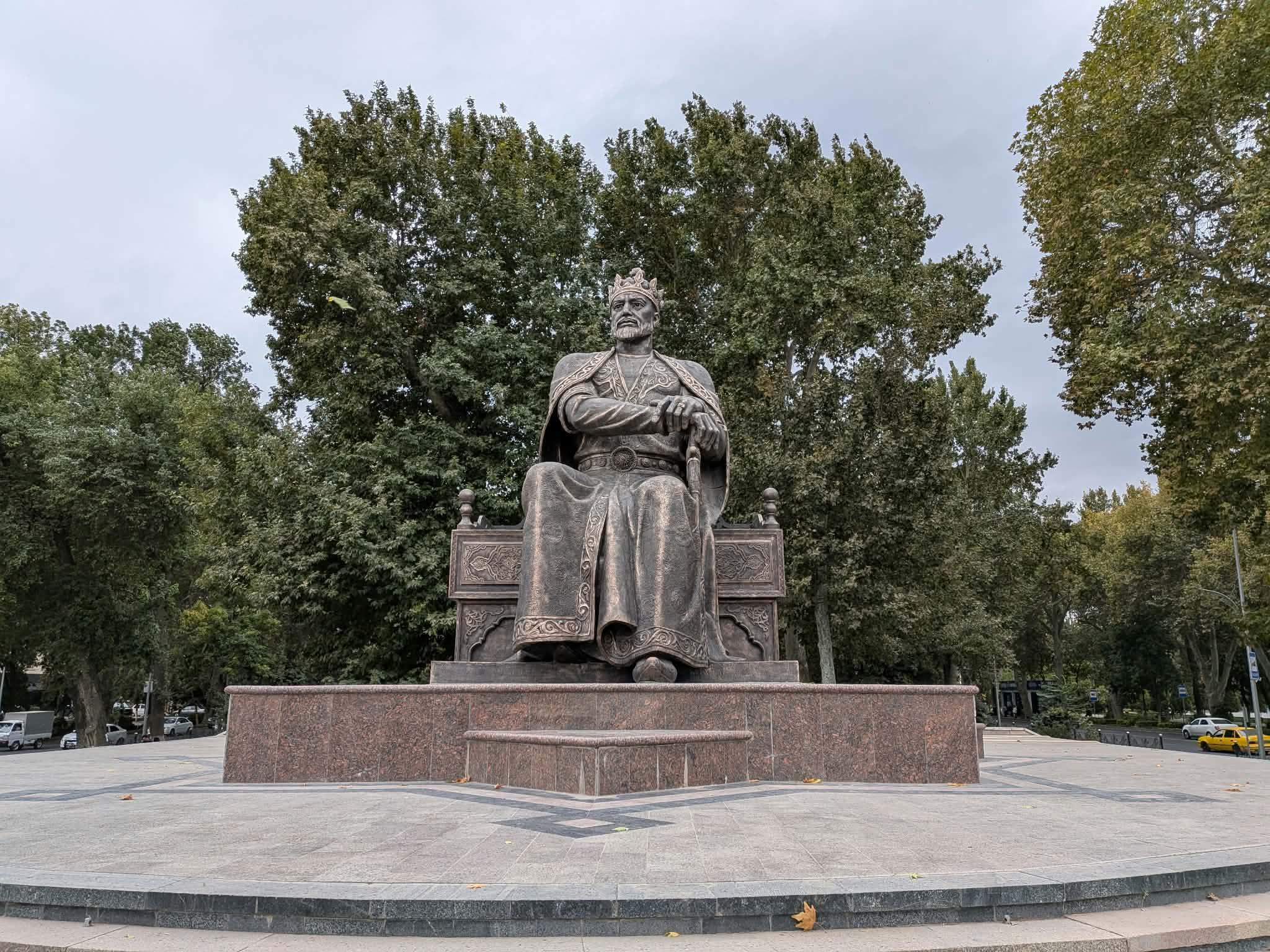
The trade routes across Asia converge in this city. You can set off over the mountains to Persia in the west and China in the east, over the steppe to Siberia to the north and cross the Hindu Kush to India in the south. It has been “continuously” inhabited for three thousand years, even if there have been a few bumps/intermissions in that journey (Alexander the Great sacked it, and Genghis Khan burned the city to the ground). The city saw its greatest flowering under Genghis’s (spiritual, although not quite blood) heir Tamerlane—Timur the Lame, or as the Uzbeks reverently refer to him as, Amir Timur.