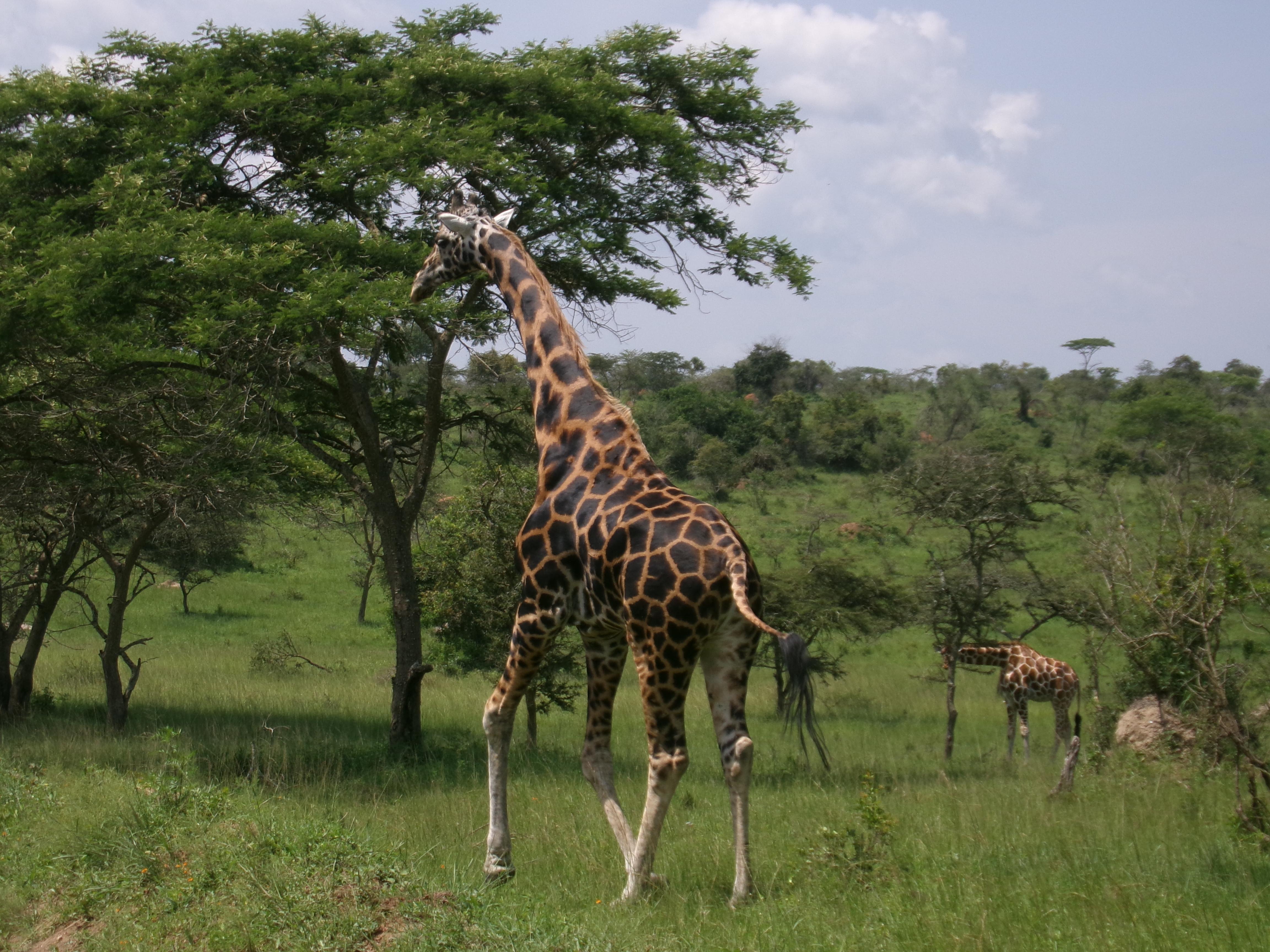
Giraffes use their height to reach leaves and vegetation that other animals cannot access. They also have very long tongues, almost two feet long, which help them navigate around thorns and pull leaves from trees. Their excellent eyesight allows them to see over a mile away, so they prefer open areas where they can easily spot predators. Their spotted coats also help them blend into their surroundings.
Like many animals, giraffes can be affected when they lose their natural habitat. Much of the savannas and grasslands where they live have been lost to agriculture and human settlement. This is why, in Uganda, most giraffes are found in one of the country’s ten national parks. Climate change has also had an impact, as severe droughts can force giraffes to move in search of food. In addition, predators such as lions, leopards and crocodiles can pose a threat.
Many conservationists and wildlife organizations are concerned about giraffes. While they are not currently considered endangered, habitat loss has caused their population to decrease. However, in Uganda, you can still find giraffes living in the wild within protected conservation areas.