To truly ensure every bit of the sheep doesn't go to waste, the mixture of sheep's offal and oats is traditionally cooked within the lining of a sheep’s stomach. Although the exact historical origins of the dish have been lost to the mists of time, it has been popular among the working classes of Scotland for many centuries, as it was affordable and used parts of the sheep that were normally discarded by wealthier members of society.
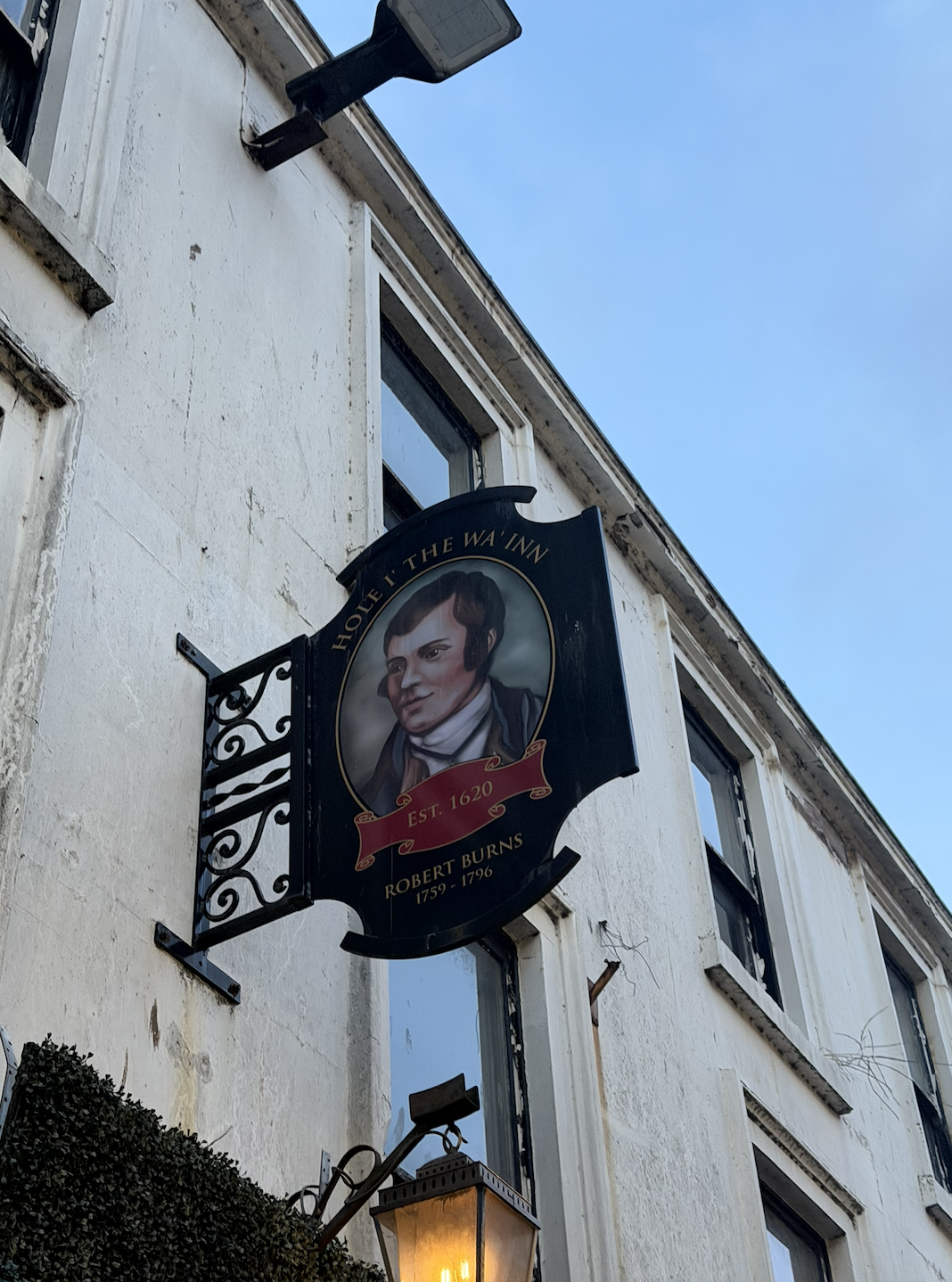
When served with neeps and tatties (mashed turnips and potatoes), the dish is known as a Burn’s Dinner, named after Scotland’s national bard, Robert Burns (1759-1796).
In the same way you can’t walk into a Scottish supermarket without stumbling upon various forms of haggis, you can’t walk around Dumfries without spotting multiple signs, murals, statues and museums honoring Robert Burns. Born in Alloway to the northwest, Burns spent a good portion of his life here in Dumfries, where a mausoleum also marks his final resting place. A farmworker as well as a poet, Burns wrote poems about the everyday concerns of the Scottish working classes, using Scottish vernacular rather than conventional English. These qualities allowed him to serve as a spokesperson for the Scottish people, especially the poor and downtrodden. As his poems rose in popularity, he became of beacon Scottish cultural pride, especially amidst the domineering powers of English colonialism which aimed to enforce English cultural hegemony.