People talk, music plays, and the ride feels more alive compared to the quiet buses I’m used to in the U.S.
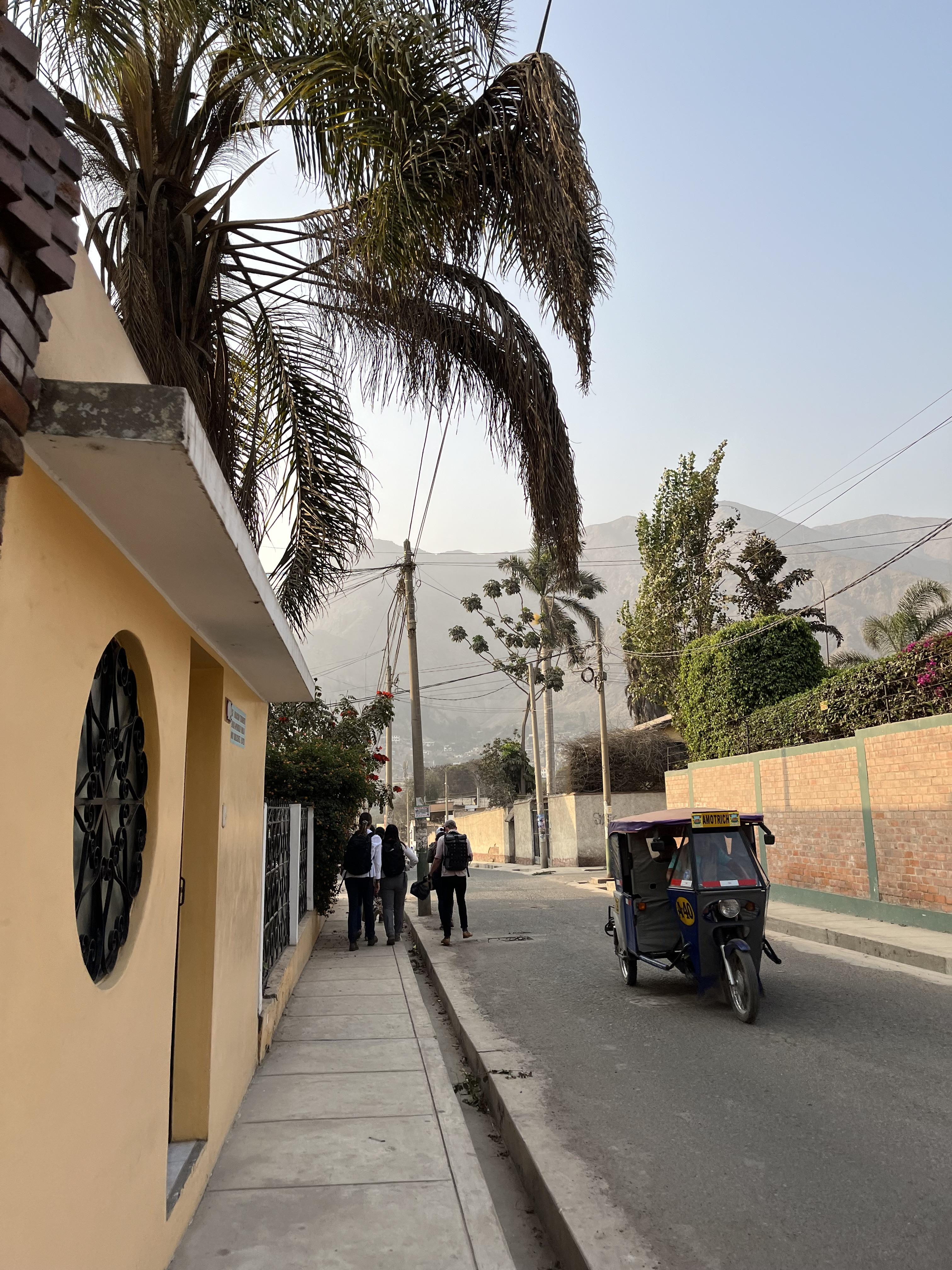
Riding in a mototaxi was one of my favorite experiences. It’s a little chaotic but exciting, especially when the driver is blasting music. It made me feel more connected to my surroundings. I also find it funny when drivers try to overcharge me because they can tell I’m not from here—but I tell them I know the price and that I live here.
Yes—transportation in Peru is deeply connected to both the environment and the culture.
In the Andes, the mountainous terrain makes it harder to build large roads or train systems. Smaller vehicles like mototaxis and combis are better suited for narrow, winding streets. For longer distances, one very common form of transportation is double-decker buses. This is how I travel to the capital, Lima. They’re very economical—about 40 soles (around $18) for an eight-hour trip. Walking is also more practical in areas where vehicles can’t easily go.
Culturally, transportation reflects a strong sense of community. Shared rides are common, and people are used to being flexible—stopping wherever needed and adapting to changing conditions. One time, I was taking an overnight bus from where I live to Lima, which is something I do often. It started snowing, and we ended up stopped in one place at 17,000 feet for six hours with zero service. Experiences like that have taught me to be patient and flexible when it comes to travel here.