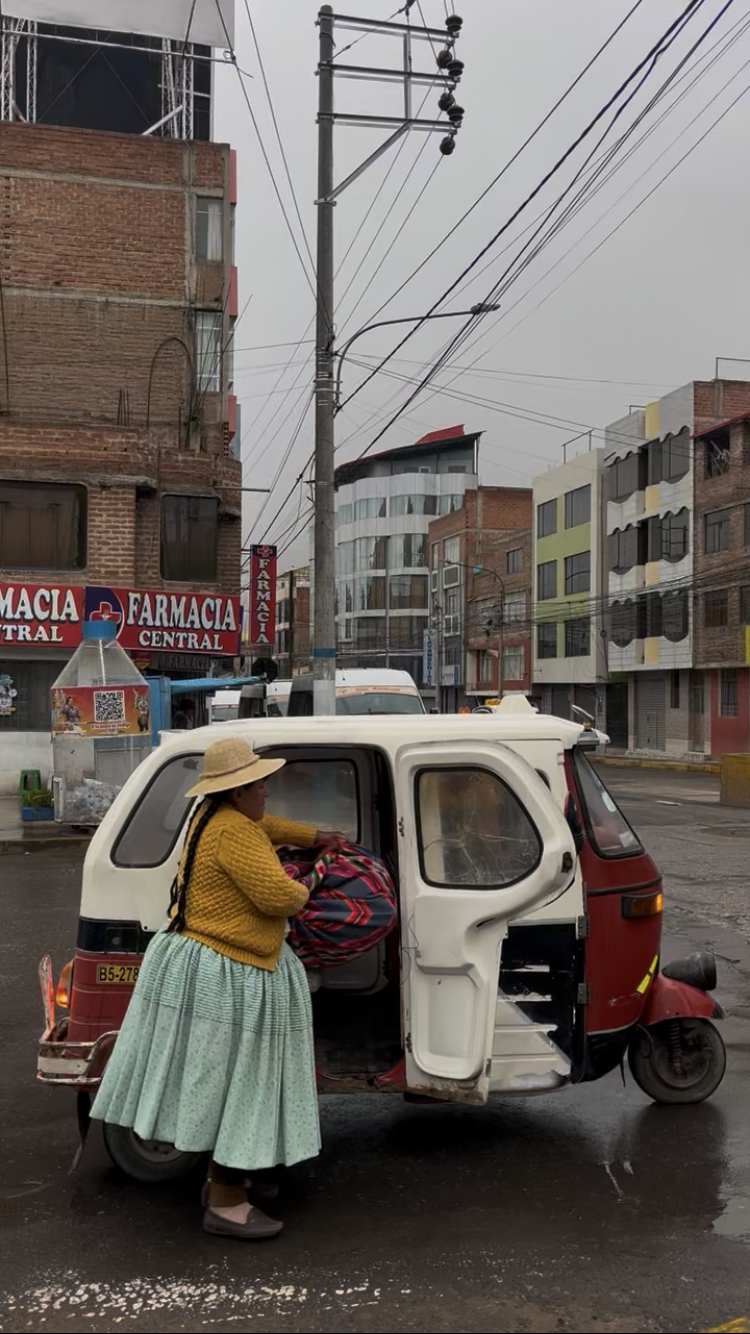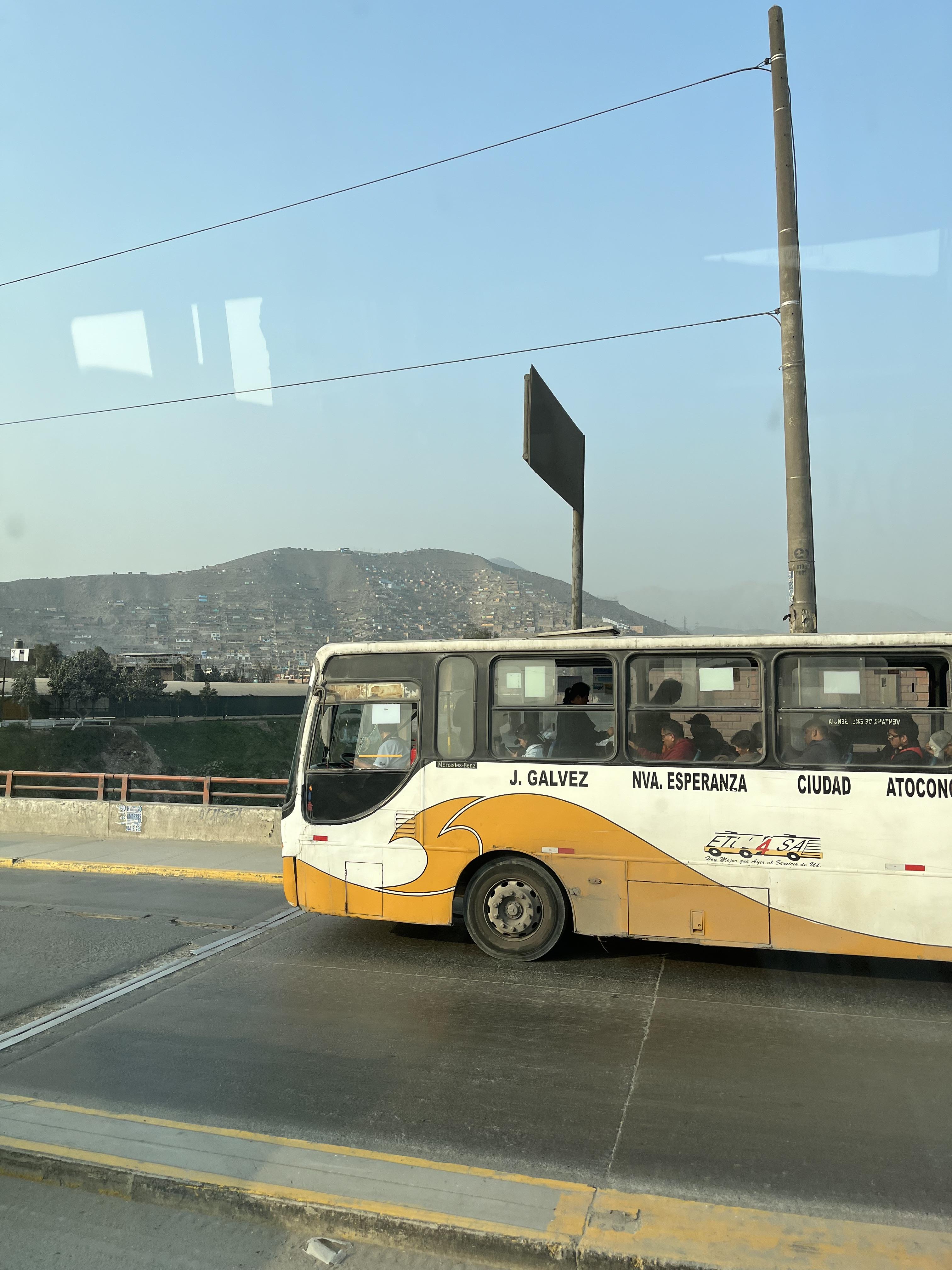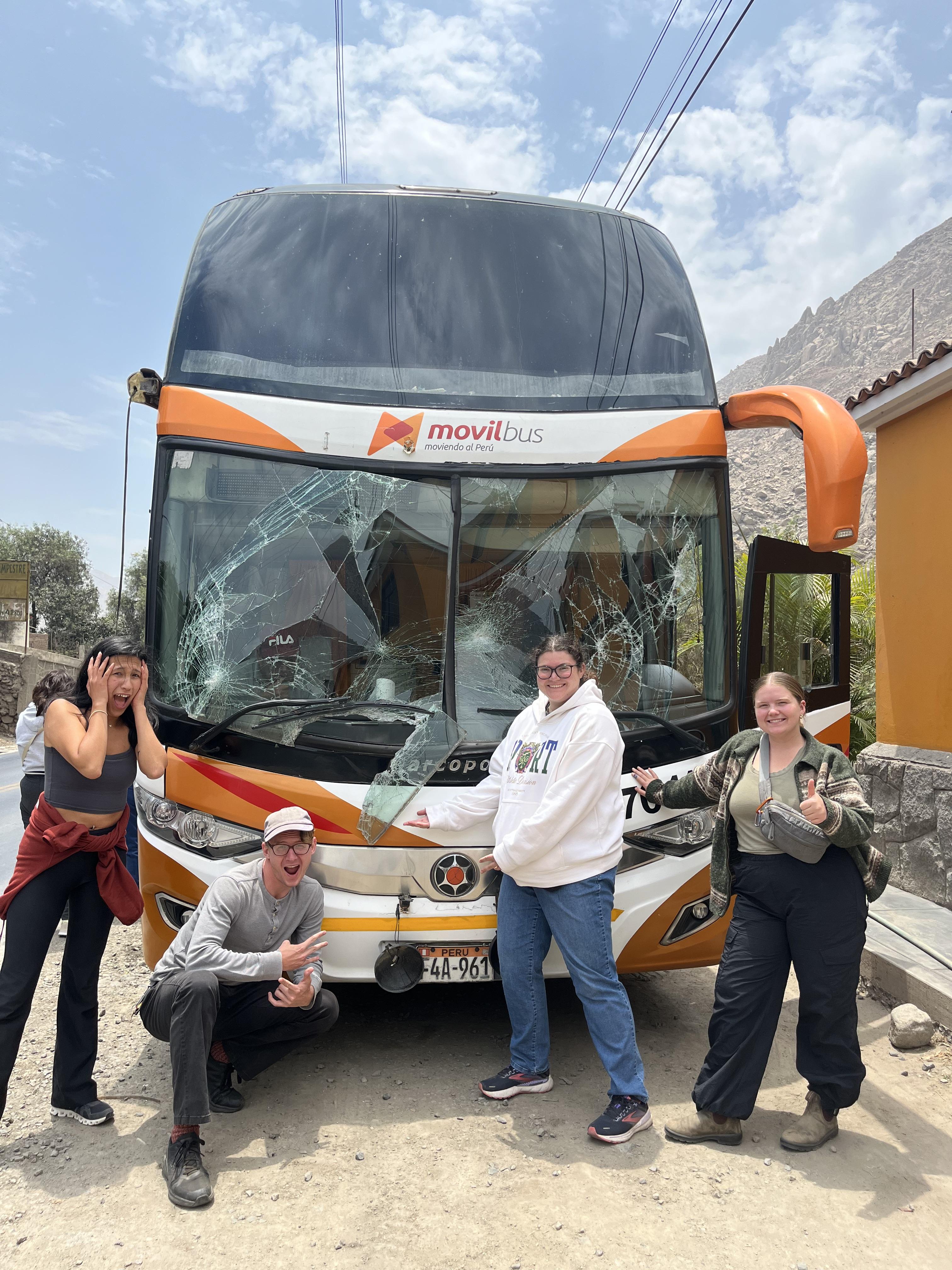
What if getting to school or work didn’t involve a set schedule, a bus stop, or even a clear route? In Peru, especially in smaller towns in the Andes, transportation looks very different from what many students in the United States are used to. Instead of organized systems with fixed stops, people rely on flexible, shared forms of travel like combis and mototaxis. Through my experience living here, I’ve learned that the way people get around isn’t just about transportation—it reflects the environment, the economy, and the culture of daily life.
In Peru, transportation depends a lot on where you are. In big cities like Lima, people often rely on buses, taxis, and ride-sharing apps. But in smaller towns like mine in the Andes, getting around looks very different.
One of the most common ways people travel is by combis—small vans that function like buses. They follow set routes but don’t always have fixed stops. Instead, you can hop on or off almost anywhere by waving down the driver or conductor. During the ride, a person called the cobrador comes around to collect your fare, which depends on how far you’re going.