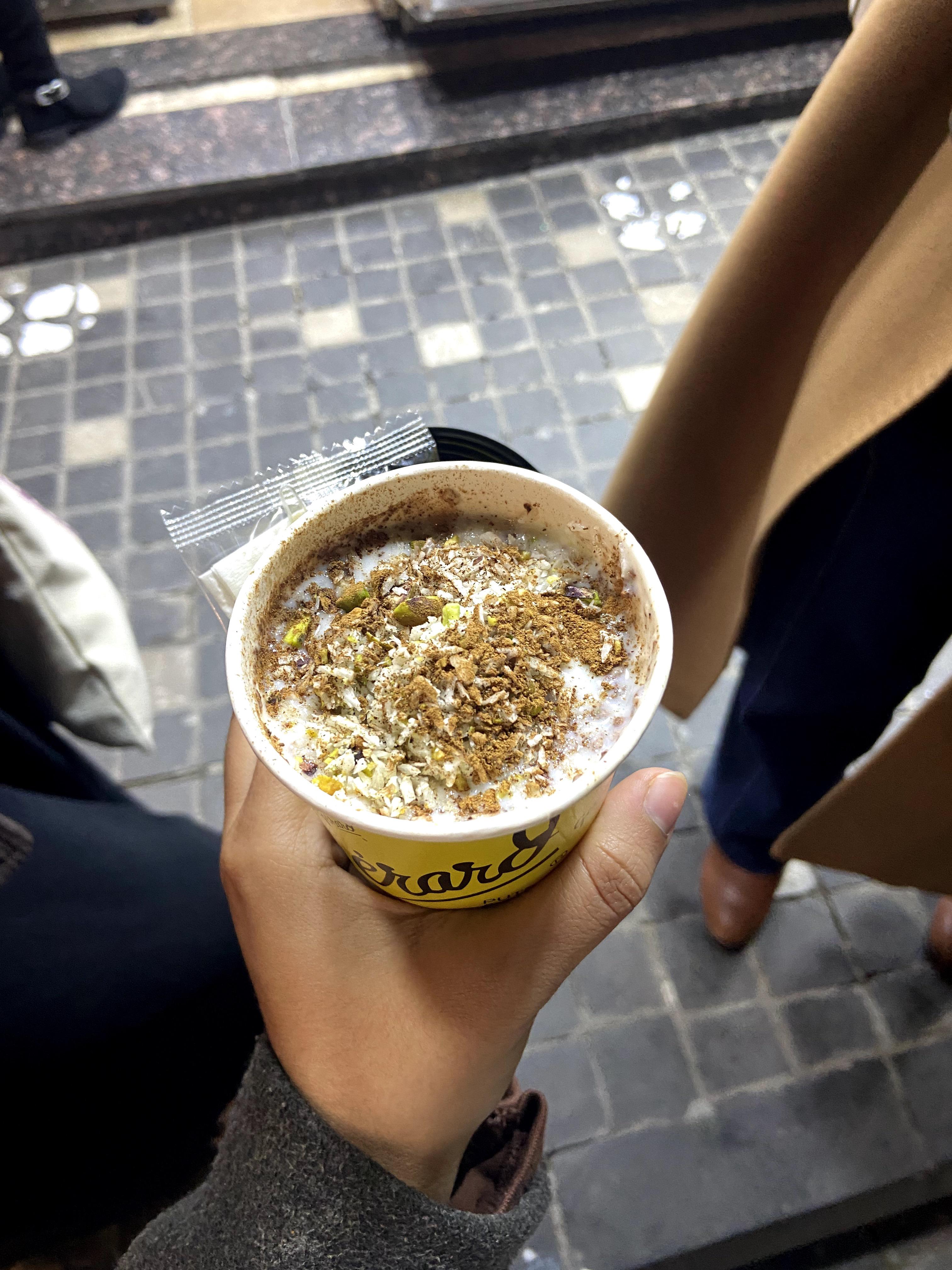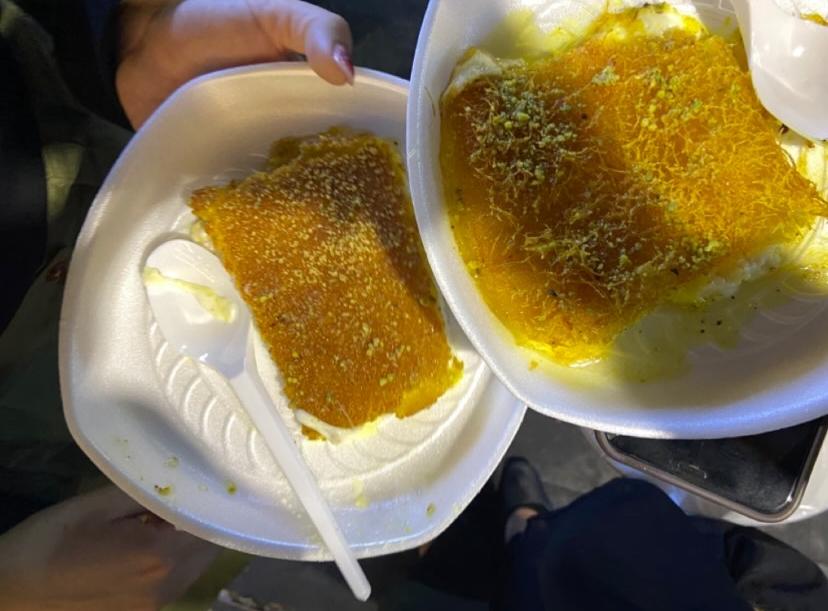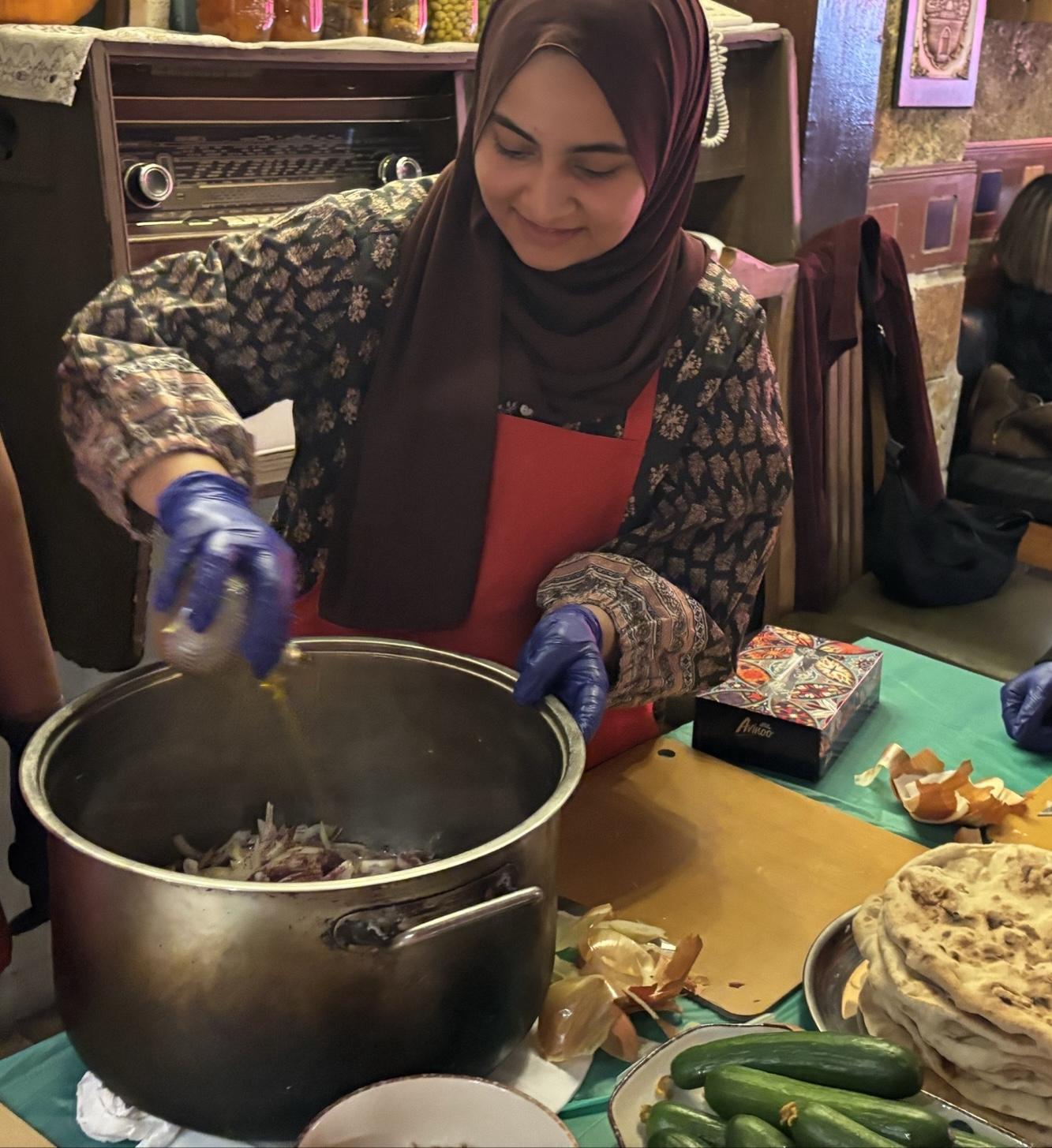
Some ingredients were reminiscent of elements that I can find in my own culture's cuisine, but because they were seasoned and prepared differently, it brought out a completely different flavor. I particularly loved the tart notes in Jordanian cuisine, which sometimes comes from ingredients like lemon juice, pomegrante molasses, yogurt, zaatar (a spice blend), as well as sumac because its sharpness paired especially well with more savory elements in food. I found that lentil soup and molokhiyeh, with a drizzle of lemon juice, was incredibly healing when I felt under the weather or needed something warm on a cold night. Overall, I loved how there was always a vibrant and nutritious aspect about each food, along with the way the ingredients, spices, and textures were so perfectly balanced with one another.
The preparation for these dishes varies. For complex dishes that require multiple steps and assembling, such as for rolled grape leaves, mskhan rolls or kibbeh, family members often gather together and prepare them by hand. For lighter meals such as salads, spreads and soups, the process takes relatively less time but it is key to gather good quality base ingredients and practice patience to layer, develop and delicately balance flavors.
Many of these foods are shared among Levantine countries due to proximity. Some dishes are more unique and have origins in countries across the Levant, North Africa, the Gulf and other neighboring regions, finding their way to Jordan through migration and cross cultural exchanges.