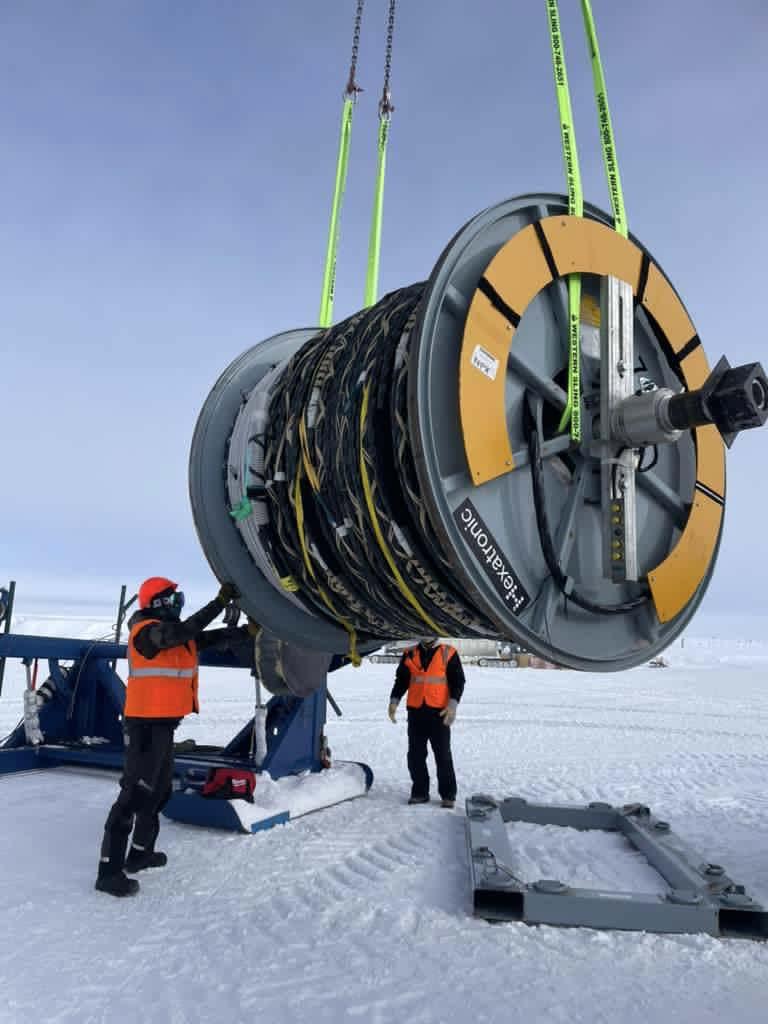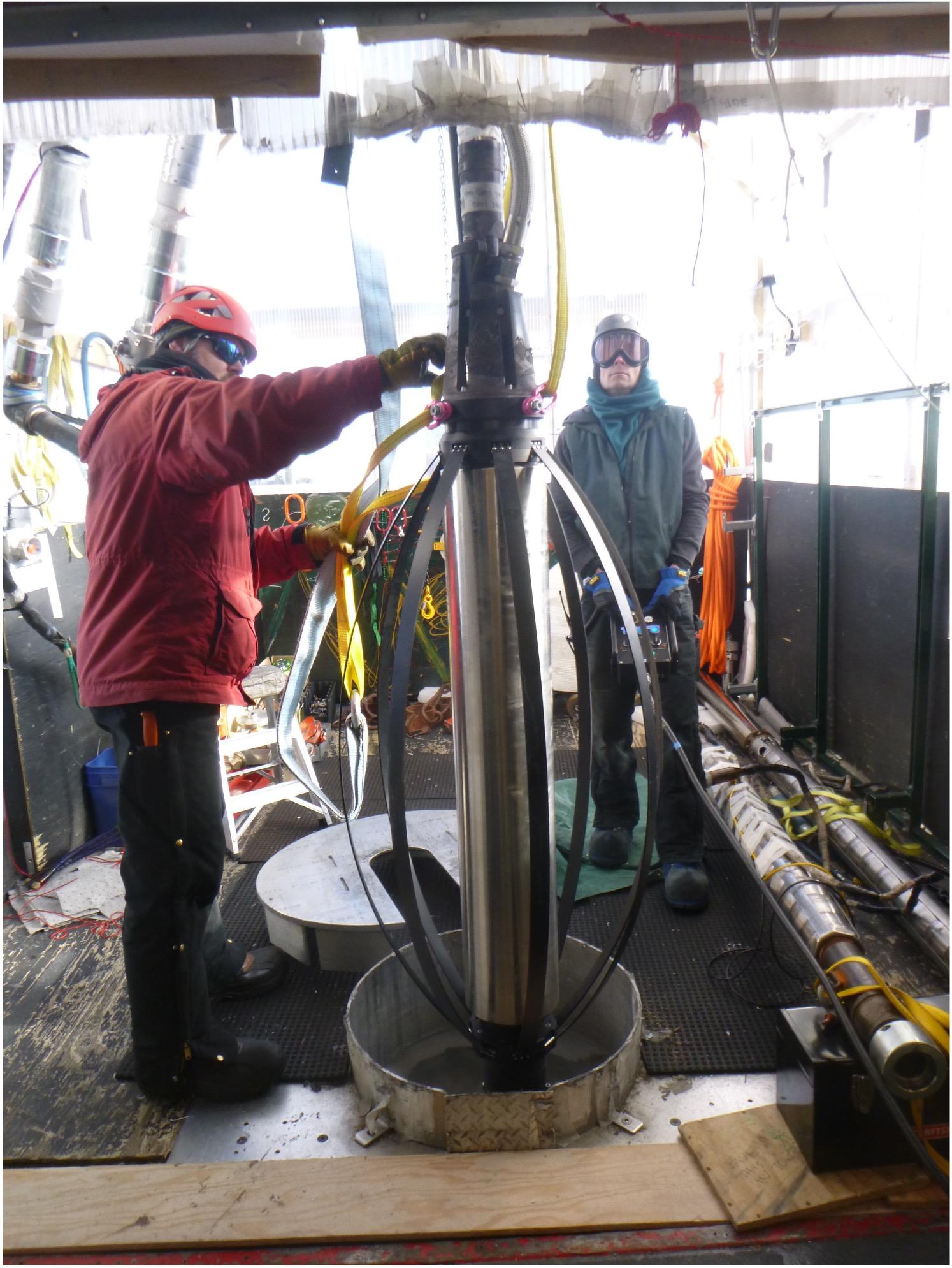
So how do we do it? First, there was an enormous amount of preparation carried out over several years to get our drill camp ready. Last year marked a major milestone, as the first 50 meters of each hole were drilled through the firn layer. Firn contains many air bubbles, which means we cannot use hot water at that stage — it would spread outward rather than penetrate downward effectively. This year was the real push: drilling deeper into the ice using the hot water drill.
For the hot water drill to work, we first need water, which is not an easy resource to find on the driest, coldest continent on Earth. To solve this, we create what is called a Rodwell: a self-propagating water bulb. It starts with a small amount of seed water that melts the surrounding ice. That water is then used to melt more ice, and the process continues until we have a bulb of water about 80 meters beneath the surface. From there, we pump the water into holding tanks with a total capacity of 10,000 gallons.
Next comes the heating process. The preheat system warms one of the tanks to 20°C, but that is only the beginning. The main heating plant then brings the water up to 84–86°C. We never let it exceed 88°C, which is the boiling point at this altitude.