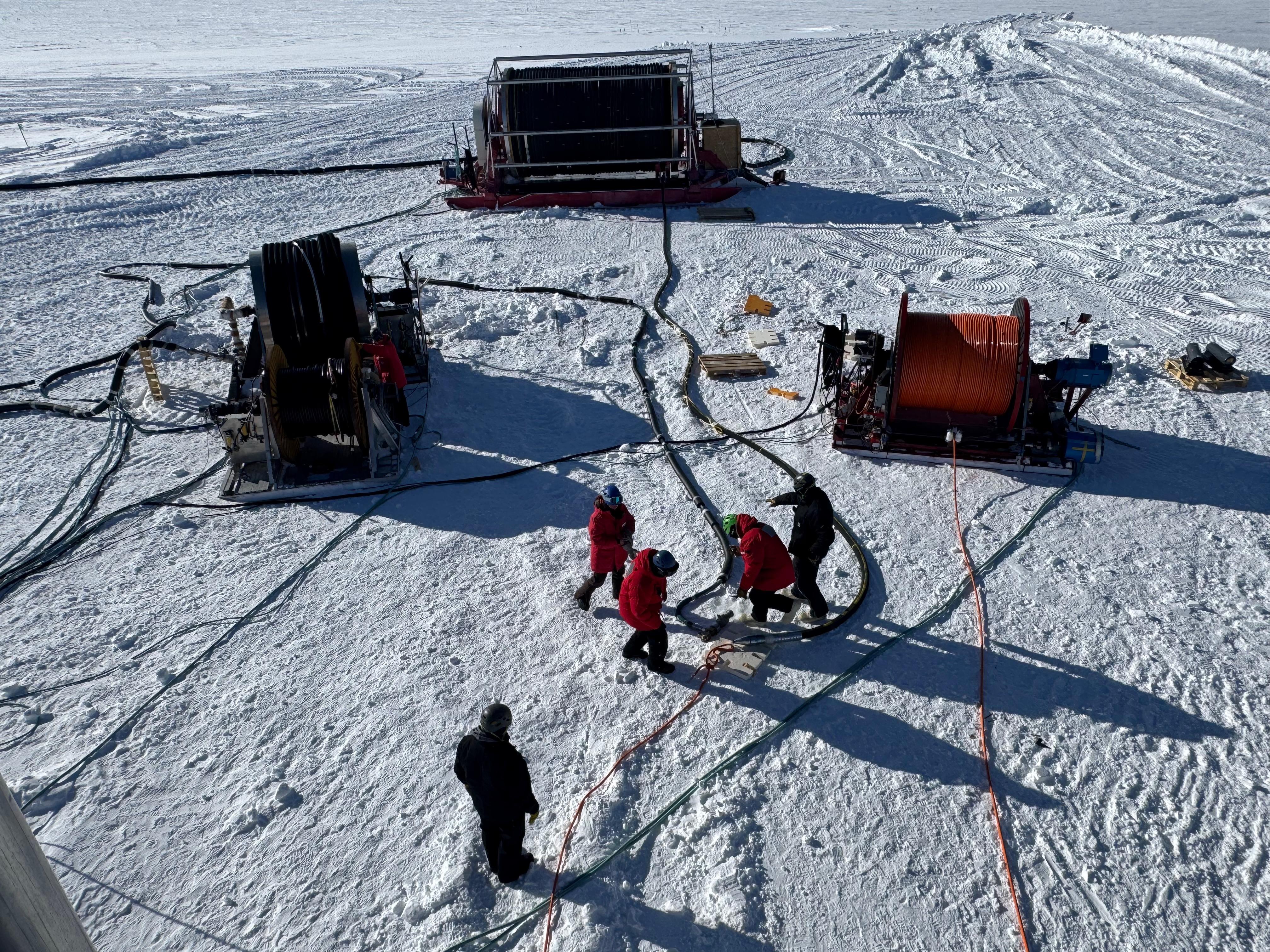
Steam carries much more energy and becomes significantly more dangerous to manage. Once heated, the water is transported through Ferrari-grade rubber hoses made in Italy to the main drill hose. The hose travels up and over the crescent of the tower and then down into the hole. We also use a return water pump, which pulls cold water out of the hole and cycles it back through the heating system so it can return warm and ready for reuse. The main drill hose is extremely heavy but cannot support its own weight, so it is attached to the main cable reel, which provides structural support.
Now we can drill. Hot water flows through the hose, allowing us to descend at about one meter per minute, sometimes reaching up to 1.7 meters per minute. It takes roughly 60 hours to drill down, including several stops to adjust cables and hoses, and another 12 to 18 hours to bring the system back up. We move slowly and carefully to ensure the hole is wide enough to accommodate all the instruments. Once we begin pulling back up, the clock starts ticking. The deepest parts of the hole immediately begin to refreeze, giving us a 54-hour window before it closes.
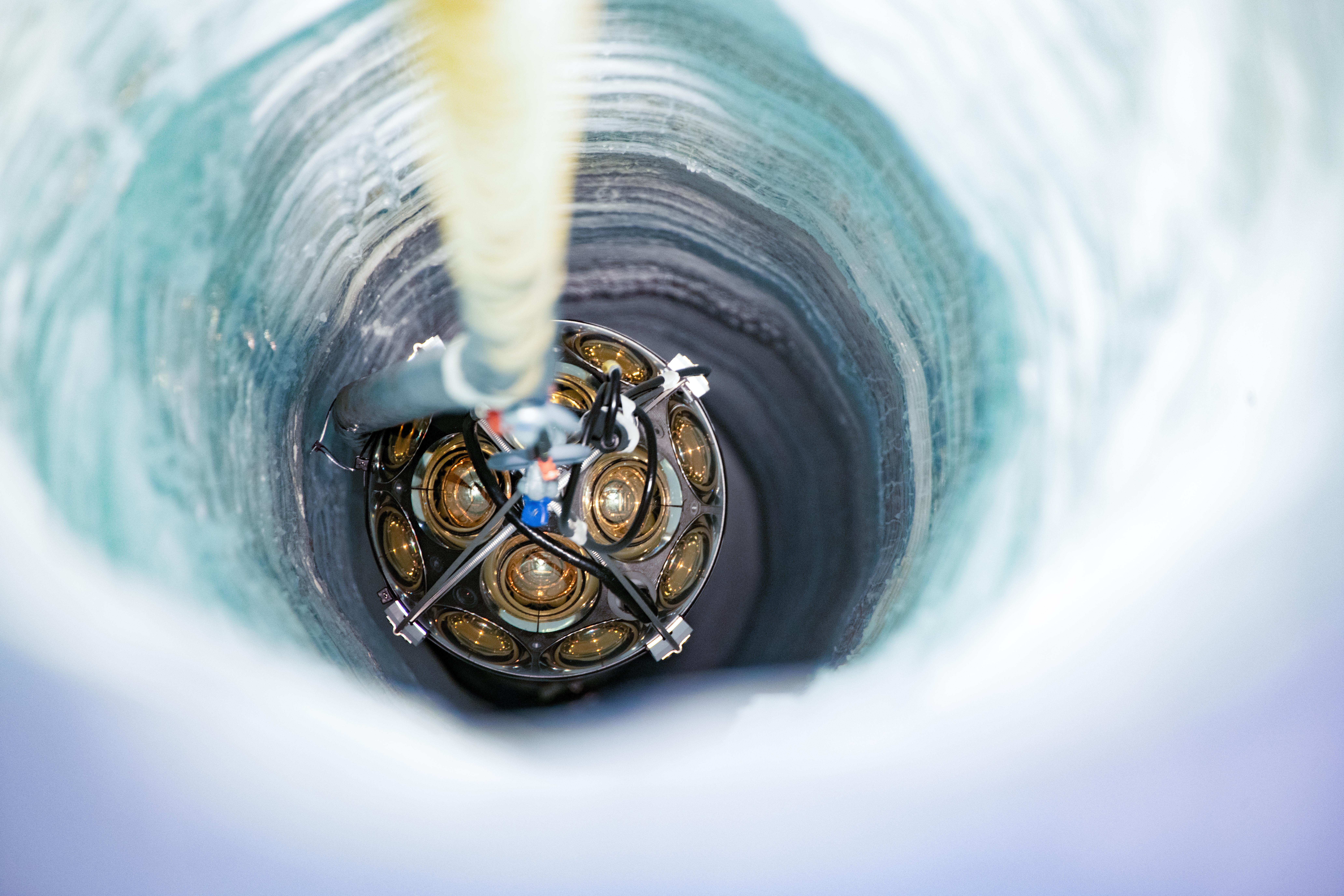
Fortunately, we have an incredible installation team. They consistently install over 100 detectors in less than 22 hours for every hole. And let me tell you, not everything goes smoothly. Their work involves opening fragile boxes, unpacking sensitive detectors, attaching chains and shackles, cleaning delicate electronics, and connecting cables — all while standing near a deep, open hole in the ice. And yes, they must be careful not to fall in.
I am constantly impressed by this team.