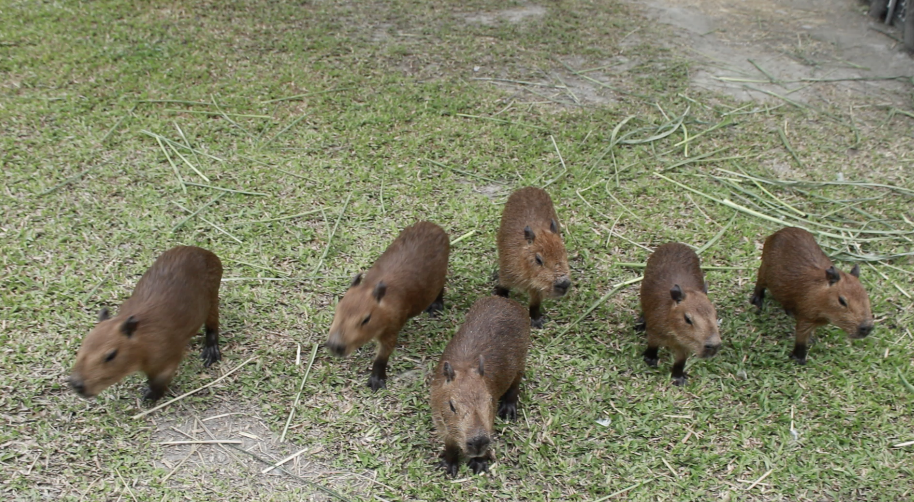
They also have webbed feet and longer hind legs to help with swimming and paddling.
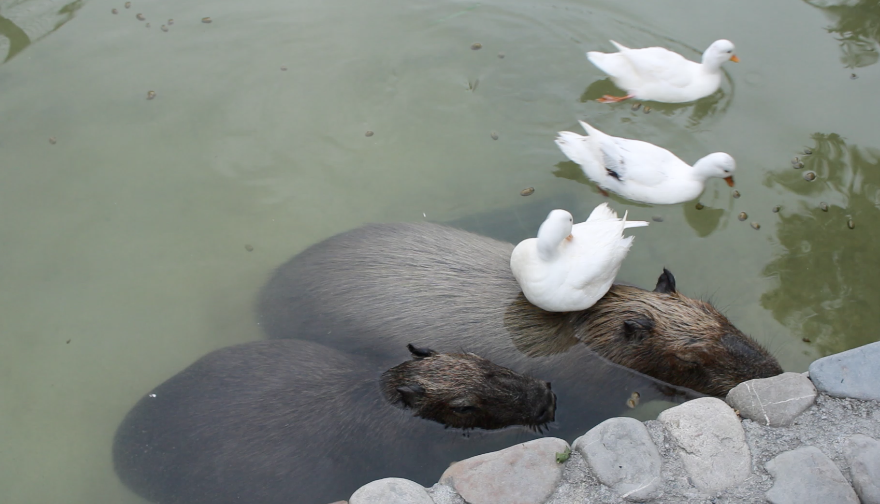
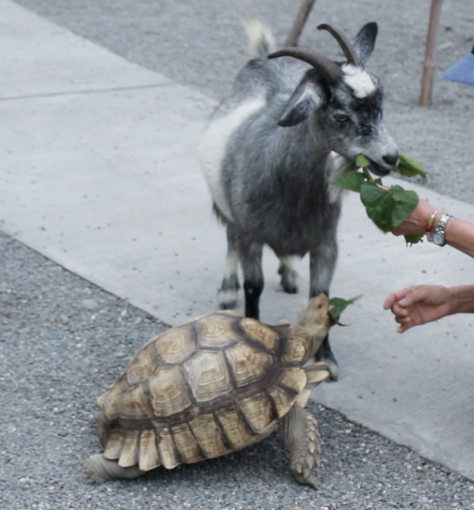
Seeing the capybaras filled me with an immediate sense of calm and delight. Most of them were lounging in a small, shallow pond shared with a group of ducks, and many of the ducks had perched on the capybaras’ backs, riding along as the larger animals paddled leisurely through the water. In fact, this kind of coexistence is not unusual for the species. In the wild, capybaras are semi-aquatic and famously tolerant. Even in their natural habitats, they are often seen sharing spaces with birds and other animals, which has helped earn them a reputation as one of nature’s most easygoing creatures. The rest of the petting zoo reinforced the mood: surrounded by a variety of animals in an open, rural setting, I found the atmosphere soothing and grounding. This was a welcome contrast to the pace of my urban life.
My encounter with these capybaras reminded me of something I had seen a few weeks earlier. While exploring Taipei’s Ximending (西門町, xī mén dīng) urban shopping district, I stumbled upon performers in giant capybara costumes dancing as part of a street act in the square. In fact, the popularity of capybaras in Taiwan has surged in recent years, among tourists and in popular culture alike. Standing at the pond in Yilan, it made me wonder what it is about this calm, unbothered animal that has captured so many people’s imaginations.