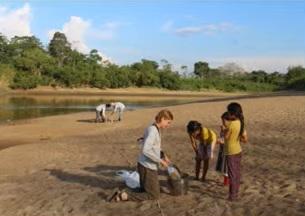
Due to a recent increase in population and industry combined with insufficient wastewater management, however, the use of the Amazon’s water reservoirs and the health of its inhabitants are currently being threatened by microplastic pollution. As a Fulbright scholar, I am quantifying the magnitude of microplastic pollution in the northwestern Amazon basin in order to create a pathway to manage this problem. By measuring the extent of microplastic pollution in this river, we can work effectively with SUNASS, the national water utility regulator in Peru; local and regional governments; land users; and local civil society groups to develop efficient wastewater treatment plans and robust environmental legislation to limit plastic pollution in this area.
When I complete my year as a Fulbright scholar, I will begin to work toward my PhD in environmental engineering. Engineers are equipped with the skills to design cutting-edge technology that can provide a basic human need, such as clean water, to our communities. Climate change and infrastructure failure have caused a growing drinking water crisis that threatens communities around the world, and I intend to use my research knowledge to continue to lead sustainable water resource management in communities where waste-water treatment is insufficient. Environmental engineers further aim to build more effective communication lines between the engineering innovations that drive policy and the general public that is impacted. Therefore, as a future environmental engineer, I will continue to study water pollution through scientific analysis and develop real-world solutions to protect both the human and natural world.