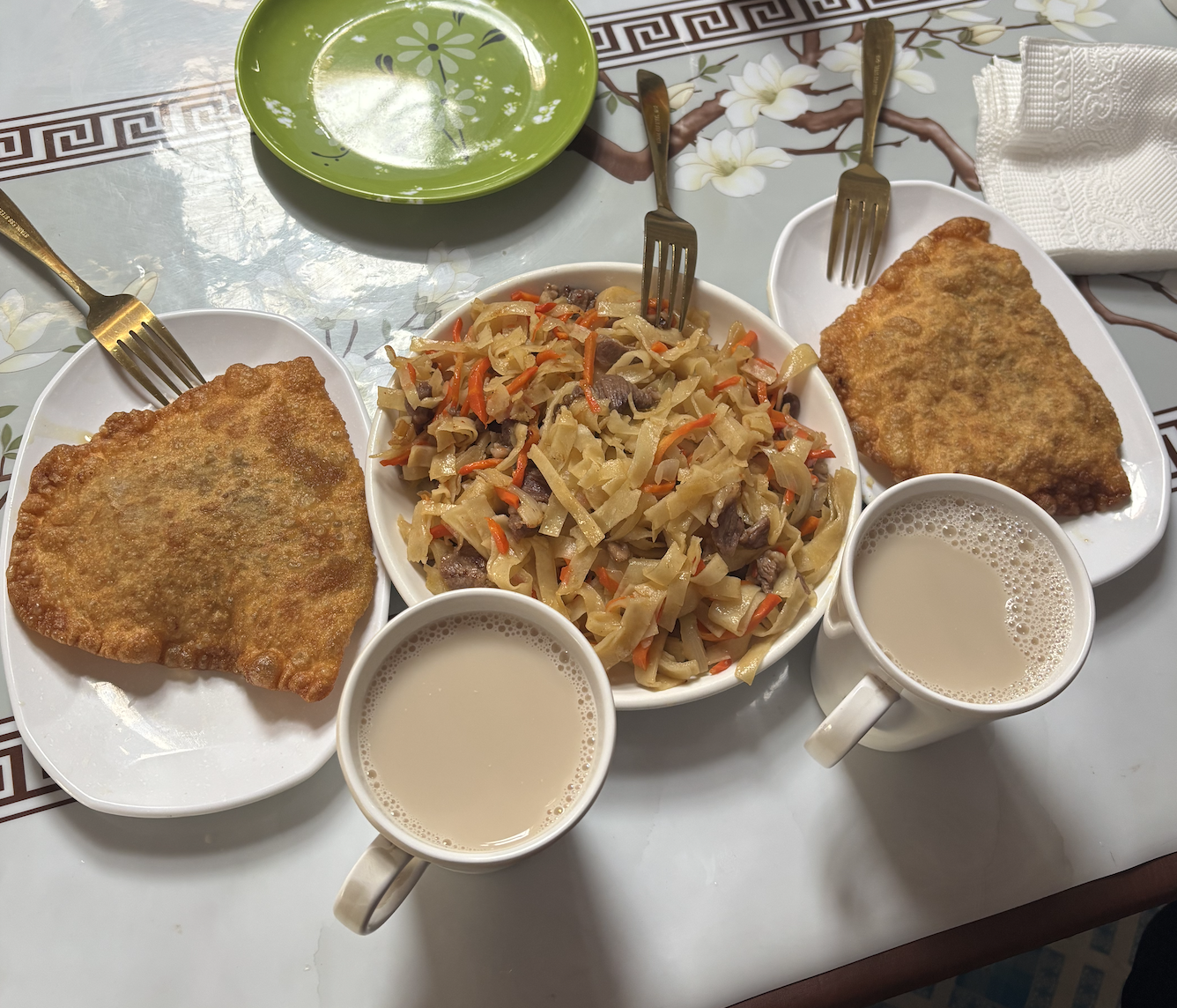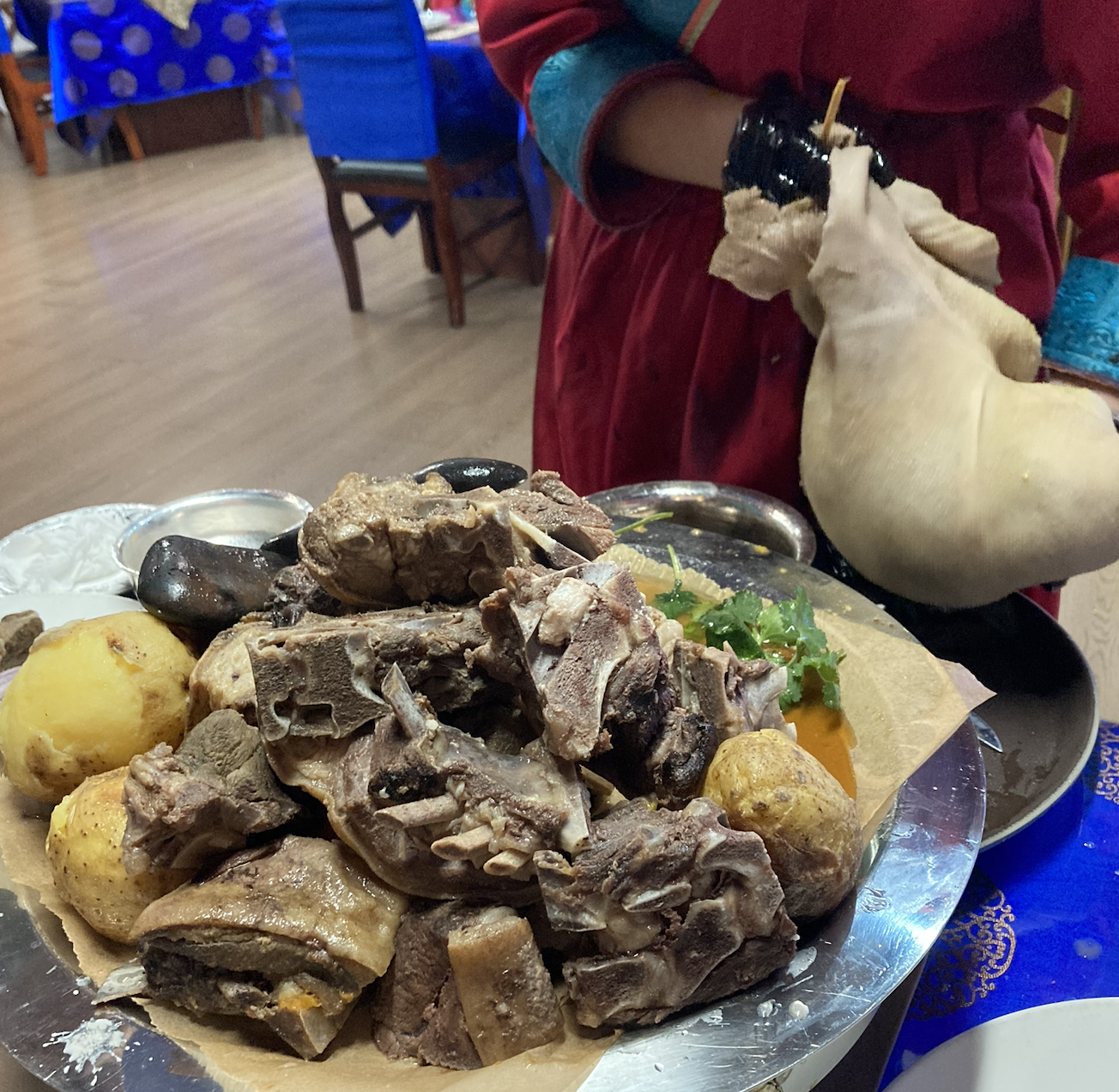
Popular foods like мантуу бууз (mantuun buuz, steamed dumplings) also show this Chinese influence.
Russian influence can be seen in Mongolian food as well. Foods such as пирожки (piroshki, filled baked buns) and гуляш (goulash, a meat stew) have become part of everyday meals in Mongolia. Just as Mongolian food has been shaped by nearby cultures, many American foods also come from or are influenced by other cuisines. Can you think of any examples?
I’m a huge foodie! I love trying new foods wherever I go because food is one of the best ways to learn about a place and its culture. Even if it’s something I might not end up liking, I always try it at least once to understand what it’s like.
I’ll start with my favorite category: dairy. In Mongolia, people make Ааруул (aaruul, dried milk curds). Aaruul can be found fresh in gers (traditional round felt tents) or sold packaged in markets and stores. The ones I tried were chewy and yogurt-like, though aaruul can range from soft to very hard. I’ve also tried Өрөм (urum, milk skin). It is a rich clotted cream made from boiled milk and tastes similar to butter, but creamier and slightly sweet. It is sometimes eaten with sugar or honey and served with toast or fried dough.
My absolute favorite is Сүүтэй цай (suutei tsai, Mongolian milk tea). This is very different from the sweet milk tea with boba pearls you might be used to.